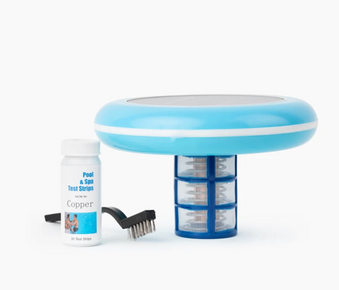
In an era of rising energy costs, environmental consciousness, and growing concerns about chemical exposure, solar pool ionizers have emerged as a compelling long-term solution for pool owners seeking sustainability, cost savings, and simplified maintenance. These innovative systems harness sunlight to power electrolytic cells that release natural copper and silver ions into pool water, creating a clean, effective sanitizing environment without the ongoing expenses and chemical handling associated with traditional pool systems. This comprehensive analysis explores why solar ionizers represent not just an alternative, but a genuinely smart long-term investment for forward-thinking pool owners.
The appeal of solar ionizers extends far beyond their environmental credentials. While their solar-powered operation offers obvious green benefits, the true long-term value lies in their remarkable combination of reduced operating costs, minimal maintenance requirements, extended equipment lifespan, and superior water quality. Unlike chemical-based systems that require constant monitoring and adjustment, solar ionizers work continuously and automatically, maintaining consistent sanitizer levels through varying weather conditions and usage patterns. This creates a pool ownership experience that's not only more sustainable but also significantly more convenient and predictable over the years of ownership.
Table of Contents
- 1. Comprehensive Economic Analysis: Breaking Down the True Costs
- 2. Environmental Impact: Beyond Carbon Neutrality
- 3. Maintenance Simplification: From Daily Chore to Occasional Check
- 4. Superior Water Quality: The Sensory and Health Benefits
- 5. Equipment Longevity: Protecting Your Entire Pool System
- 6. Technological Advancements and Future-Proofing
- 7. Determining Suitability: Is a Solar Ionizer Right for Your Pool?
1. Comprehensive Economic Analysis: Breaking Down the True Costs
Understanding the true economic value of solar pool ionizers requires looking beyond the initial purchase price to consider the complete cost-of-ownership picture over 5, 10, or even 15 years of operation. While the upfront investment in a quality solar ionizer system ($800-$2,500 depending on pool size and features) may exceed that of a basic chlorine feeder or salt system, this initial difference is typically recovered within 2-4 swimming seasons through dramatic reductions in ongoing expenses. The economic analysis becomes even more compelling when viewed through the lens of total lifecycle costs, factoring in not only direct chemical and energy savings but also extended equipment lifespan, reduced maintenance time, and various hidden benefits that traditional accounting often overlooks.
The financial case for solar ionizers strengthens progressively over time, creating what economists call a "diverging value curve" where the initial investment is gradually overwhelmed by accumulating savings. Unlike chemical systems with relatively constant annual expenses, solar ionizers have a steep upfront cost followed by remarkably low ongoing expenditures. This cost structure aligns well with long-term pool ownership, where the majority of owners keep their pools for 7-15 years ample time to realize the full financial benefits. Furthermore, as utility costs rise and chemical prices increase with inflation and supply chain factors, the fixed-cost nature of solar ionizers provides a hedge against future price volatility that chemical-dependent systems cannot match.
Initial Investment Breakdown with Detailed Considerations
- System Cost Spectrum: Residential systems range from $800 for basic models servicing smaller pools (up to 15,000 gallons) to $2,500 for advanced systems with smart controls, larger solar panels, and capacity for pools up to 40,000 gallons. Premium systems often include features like automatic cleaning cycles, remote monitoring, and adaptive output control that enhance long-term value. Mid-range systems ($1,200-$1,800) typically offer the best balance of features and value for average residential pools.
- Installation Variables: Professional installation typically costs $200-$500, depending on system complexity and local labor rates. Many modern systems are designed for DIY installation with clear instructions and standard plumbing fittings, potentially eliminating this cost entirely. Complex installations involving roof-mounted solar panels, long wire runs, or integration with existing automation systems may increase costs to $600-$800. Some dealers offer free installation with system purchase as a promotional incentive.
- Ancillary Equipment Requirements: Most installations require minimal additional equipment typically a $50-$100 pump timer upgrade if not already present, and possibly basic electrical work for controllers ($100-$200). Unlike salt systems that often require upgraded pumps and plumbing rated for saline environments, solar ionizers generally work with existing equipment. Some installations benefit from additional flow meters or check valves ($30-$60 each) to optimize performance.
- First-Year Transition Supplies: The initial season requires balancing chemicals to establish proper pool water chemistry ($50-$100), a quality test kit capable of measuring copper and silver ions ($40-$80), and potentially a supplemental oxidation system like UV or ozone ($200-$400) for pools with extremely high bather loads or persistent organic challenges. Many owners also invest in a better understanding of water chemistry through books or online resources during this learning period.
Annual Operating Cost Comparison Across Systems
Examining annual expenditures reveals why solar ionizers create such compelling long-term savings. Traditional chlorine systems consume $400-$800 annually on sanitizer chemicals alone, with additional expenses for shock treatments ($100-$200), algaecides and clarifiers ($100-$300), pump electricity ($150-$300), and equipment replacement reserves ($100-$200). Saltwater systems reduce chemical costs to $50-$150 for salt but increase electricity consumption to $300-$600 due to the energy-intensive electrolysis process, plus $200-$400 annually reserved for cell replacement every 3-5 years.
Solar ionizers operate on a fundamentally different economic model. Their primary ongoing expense is muriatic acid for pH control ($20-$50 annually), occasional non-chlorine shock treatments ($0-$30), and minimal algaecide use ($20-$60). The solar-powered operation eliminates electricity costs entirely a saving that compounds annually as utility rates increase. Equipment replacement is limited to anode replacement every 2-4 years, averaging $50-$100 annually when amortized. The total annual operating cost of $90-$240 represents a 75-90% reduction compared to traditional systems, creating annual savings that quickly recoup the initial investment.
Long-Term Financial Projections with Compounding Benefits
Over a 10-year ownership period, the financial divergence becomes dramatic. A traditional chlorine system accumulates $8,500-$18,000 in operating costs alone, not accounting for inflation in chemical prices which typically outpaces general inflation. Saltwater systems total $6,500-$14,000 in operating costs plus $1,500-$3,000 for cell replacements a significant expense often overlooked in initial comparisons. Solar ionizers, by contrast, operate at $900-$2,400 total cost plus $500-$1,000 for anode replacements.
This translates to potential savings of $6,000-$15,600 compared to traditional chlorine and $5,100-$12,600 compared to salt systems over a decade. Even after accounting for the higher initial investment, net savings typically range from $4,000-$13,000 over 10 years. These projections become even more favorable when extended to 15 years, where savings often reach $8,000-$22,000 due to the compounding effect of annual cost differences. For pool owners who maintain their pools for multiple decades, the lifetime savings can exceed the original cost of the pool itself.
Hidden Cost Reductions and Indirect Financial Benefits
- Water Conservation Economics: Reduced chemical load means less frequent draining and refilling typically every 5-7 years instead of every 2-3 years for chemical pools. This saves 5,000-10,000 gallons annually ($50-$200 in water costs depending on local rates) and reduces sewer charges where applicable. In drought-prone areas with water restrictions or tiered pricing, these savings can be substantially higher.
- Health-Related Cost Avoidance: Reduced chemical exposure may lower incidence of respiratory issues, skin conditions, and eye irritation that sometimes require medical attention or special products. While difficult to quantify precisely, many users report reduced spending on skin creams, eye drops, and medications for chemical sensitivity reactions. The elimination of chlorine byproducts like chloramines and trihalomethanes represents a preventive health benefit with potential long-term value.
- Property Value Enhancement: Eco-friendly features increasingly influence home valuation, particularly in environmentally conscious markets. Appraisers and buyers recognize the reduced operating costs and maintenance requirements of solar ionized pools, with some real estate studies suggesting a 1-3% premium for homes with sustainable pool systems. This enhancement often exceeds the system's initial cost, creating immediate equity rather than deferred savings.
- Time Value Calculation: Reduced maintenance time represents significant economic value. The estimated 2-3 hours weekly savings translates to 100-150 hours annually. Valued conservatively at $20/hour (below most professional pool service rates), this represents $2,000-$3,000 annual time savings. More importantly, this time can be reallocated to enjoyment of the pool rather than maintenance, enhancing the overall value proposition beyond mere financial calculation.
- Inflation Protection: Solar ionizers provide a hedge against rising energy and chemical costs. As utility rates increase (historically 2-4% annually) and chemical prices rise with manufacturing and transportation costs, the fixed-cost nature of solar ionization becomes increasingly advantageous. The system essentially "locks in" today's operating costs for a decade or more, while chemical-dependent systems face ongoing price escalation.
- Insurance and Liability Considerations: Reduced chemical storage lowers insurance risks associated with hazardous material spills or accidents. Some insurers offer premium reductions for homes with reduced chemical inventories, and the elimination of weekly chemical transport reduces liability exposure during transportation and handling.
Regional and Situational Economic Variables
The economic advantage of solar ionizers varies based on specific circumstances. In regions with high electricity costs (California, Hawaii, Northeast US), the elimination of pump and chlorinator electricity provides greater savings. Areas with expensive water or sewer rates benefit more from reduced water replacement needs. Pools with heavy usage patterns or large volumes gain disproportionate benefits from reduced chemical consumption. Conversely, in regions with very low chemical and energy costs, the payback period may extend slightly, though the long-term advantage remains. The most favorable economic conditions combine high energy costs, expensive water, significant pool usage, and an environmentally conscious housing market that values sustainable features.
This comprehensive economic analysis reveals that solar pool ionizers represent not just an alternative sanitization method, but a fundamentally different economic model for pool ownership one with higher initial capital investment but dramatically lower operating expenses, creating compelling long-term value that increases with each year of ownership. For pool owners with a planning horizon beyond 3-4 years, the financial case becomes increasingly difficult to ignore, particularly when combined with the numerous non-financial benefits that further enhance the overall value proposition.

2. Environmental Impact: Beyond Carbon Neutrality
The environmental advantages of solar ionizers extend far beyond their obvious solar-powered operation. These systems create a comprehensive reduction in the pool's ecological footprint across multiple dimensions, from manufacturing through daily operation to eventual disposal. Unlike chemical-based systems that require continuous production, packaging, transportation, and application of consumable products, solar ionizers operate on a fundamentally more sustainable model with significantly reduced lifecycle impacts. This holistic environmental benefit represents a paradigm shift in pool management transforming what is typically a resource-intensive luxury into a remarkably sustainable amenity that aligns with modern ecological values and responsible stewardship.
The environmental calculus for solar ionizers encompasses not just direct emissions but also upstream production impacts, downstream disposal consequences, and systemic effects on local ecosystems. Traditional pool systems create what environmental scientists call "distributed point-source pollution" small but numerous sources of chemical contamination that collectively impact watersheds, soils, and air quality. Solar ionizers dramatically reduce this distributed impact by eliminating the continuous chemical cycle and replacing it with a closed-loop metal ion system that remains largely contained within the pool's circulation. This shift represents one of the most significant environmental improvements available to residential pool owners, with benefits that extend from the immediate backyard to regional ecosystems.
Comprehensive Carbon Footprint Analysis
Manufacturing Impact Assessment: While producing copper and silver electrodes and photovoltaic cells has environmental costs, these represent one-time impacts amortized over 10-15 years of operation. The embodied energy in a solar ionizer including mining, refining, manufacturing, and transportation typically totals 300-500 kg CO₂ equivalent, comparable to the carbon footprint of a medium-sized household appliance. Crucially, this manufacturing impact is typically offset within 1-2 years of operation through avoided chemical production and transportation emissions. By contrast, chemical systems have recurring manufacturing impacts every time chemicals are produced, with continuous energy inputs for chlorine synthesis (primarily through the energy-intensive chlor-alkali process) and packaging production that never achieves similar offset through operation.
Operational Emissions Profile: Solar ionizers operate with zero direct emissions during use and require no electricity consumption from the grid. This eliminates the indirect emissions associated with grid electricity generation, which vary dramatically by region but average approximately 0.85 pounds of CO₂ per kWh in the United States. For a typical pool pump running 8 hours daily (3,000 kWh annually), this represents 2,550 pounds of CO₂ emissions avoided annually. When combined with the elimination of chemical production emissions, each solar pool ionizer typically prevents 3,000-4,000 pounds of CO₂ equivalent emissions annually compared to traditional chlorine systems equivalent to taking a small car off the road for the year.
Chemical Production Avoidance: Each solar ionizer eliminates the production and transportation of 200-400 pounds of chlorine chemicals annually. The industrial chlorine production process is notoriously energy-intensive, requiring approximately 2,500-3,000 kWh per ton of chlorine produced through electrolysis of brine. This translates to 250-500 kWh of avoided energy consumption annually per pool, plus additional savings from avoided production of stabilizers, algaecides, pH adjusters, and shock treatments. The cumulative effect across thousands of pools represents substantial industrial energy savings and reduced emissions from chemical manufacturing facilities.
Transportation Network Reduction: Solar ionizers eliminate weekly trips to pool stores for chemical purchases, reducing automotive emissions by an estimated 500-1,000 miles annually per pool. This transportation reduction extends beyond personal vehicle use to include commercial transportation delivery trucks that would otherwise transport chemicals from manufacturers to distributors to retailers. Each gallon of liquid chlorine typically travels 500-1,500 miles through this supply chain before reaching the pool, creating transportation emissions that solar ionizers avoid entirely through their localized, sun-powered operation.
Chemical Load Reduction and Waterway Protection
Traditional pool systems introduce numerous synthetic chemicals that eventually enter the environment through backwashing, splash-out, overflow during heavy rains, or intentional draining. This chemical migration represents a significant but often overlooked environmental impact, particularly in densely populated areas with many pools. Chlorine byproducts like chloramines and trihalomethanes are carcinogenic compounds that form when chlorine reacts with organic matter from swimmers and the environment. These compounds don't break down readily in the environment and can accumulate in local waterways, potentially affecting aquatic life and water quality downstream.
Cyanuric acid (stabilizer) presents a particularly persistent environmental challenge. This compound doesn't degrade naturally and accumulates in soil and groundwater when pool water is discharged. In areas with many pools, cyanuric acid concentrations in groundwater can reach levels that potentially affect microbial communities and soil health. Algaecides containing quaternary ammonium compounds or high concentrations of copper can be toxic to aquatic ecosystems, particularly to fish and amphibians when introduced to natural waterways. Even pH adjusters like muriatic acid and soda ash have significant industrial footprints in their production and create localized pH shocks when released into the environment.
Solar ionizers eliminate 90-95% of these chemical introductions, replacing them with trace amounts of naturally occurring copper and silver ions. These ions remain largely contained within the pool's circulation system due to their electrochemical properties and the closed nature of the ionization process. The copper and silver released are at concentrations carefully controlled to be effective for sanitization while minimizing environmental release typically 0.3-0.4 ppm for copper and 0.01-0.02 ppm for silver. These levels are orders of magnitude below concentrations that would affect most ecosystems, and the ions tend to bind to organic matter within the pool rather than being released during backwashing or drainage.
Water Conservation and Resource Management Benefits
- Reduced Draining Frequency: Chemical pools typically require partial draining every 2-3 years to manage total dissolved solids that accumulate from continuous chemical additions. Ionizer pools can often operate 5-7 years between partial drains, and some well-maintained systems extend to 10 years. This represents a water savings of 5,000-15,000 gallons per draining cycle for an average residential pool. In drought-prone regions or areas with water restrictions, this conservation becomes particularly valuable, potentially allowing pool owners to maintain their pools during water shortages when chemical pools might need to be drained and left empty.
- Minimized Backwashing Requirements: Cleaner water with fewer chemical interactions and less precipitation reduces filter cleaning frequency by 30-50%. Each backwash typically uses 200-500 gallons of water, so reduced frequency saves hundreds of gallons annually. More importantly, the backwash water contains far fewer synthetic chemicals, reducing the environmental impact when this water enters municipal sewer systems or, in some areas, local drainage.
- Evaporation Management Integration: Advanced solar ionizer systems often include or integrate with automatic water level monitoring systems that prevent overfilling and optimize evaporation replacement. By maintaining precise water levels, these systems reduce water waste from splash-out and overflow while ensuring efficient operation of the ionization system. Some systems even connect to weather forecasting to anticipate evaporation rates and optimize water addition timing.
- Rainwater Harvesting Compatibility: Solar ionizers work exceptionally well with rainwater collection systems for pool top-ups. Since rainwater requires no chemical adjustment to be compatible with ionized pools (unlike chemical pools where rainwater dilution requires rebalancing), homeowners can create nearly closed-loop water systems that minimize municipal water use. This integration represents the pinnacle of sustainable pool maintenance, combining renewable energy with renewable water in a system that maintains perfect water quality with minimal external inputs.
Broader Ecological System Impacts
The choice of pool sanitation system affects ecosystems well beyond the immediate pool area through multiple pathways:
- Local Waterway Protection: Reduced chemical runoff during heavy rains or accidental overflows means fewer synthetic compounds entering storm drains and eventually local streams, rivers, and lakes. This protects aquatic ecosystems from chemical stressors and helps maintain biodiversity in urban and suburban watersheds. In coastal areas, reduced chemical runoff helps protect sensitive marine environments like coral reefs and estuaries that are particularly vulnerable to water quality changes.
- Soil Health Preservation: Backwash water from chemical pools can alter soil pH, affect microbial communities, and introduce persistent compounds that linger in the soil profile. Solar ionizer backwash contains primarily dissolved minerals at natural concentrations, with minimal impact on soil health. This allows homeowners to safely direct backwash water to landscaping or drainage areas without concern about long-term soil contamination or plant toxicity.
- Air Quality Improvements: Elimination of chlorine off-gassing reduces volatile organic compound (VOC) emissions in residential areas. Chlorine and its byproducts can contribute to local air quality issues, particularly in densely populated neighborhoods with many pools. These compounds can react with other atmospheric components to form ground-level ozone and other pollutants. Solar ionizers eliminate this emission source entirely, contributing to better local air quality, especially during peak swimming season when pools are most active.
- Waste Stream Reduction: Chemical pool systems generate substantial packaging waste plastic chlorine jugs, cardboard boxes, pool test strip containers, and miscellaneous chemical packaging. A typical chemical pool produces 20-40 pounds of plastic waste annually, much of which isn't recycled due to chemical contamination concerns. Solar ionizers eliminate this waste stream almost entirely, with only occasional replacement parts (typically every 2-4 years) that are often recyclable. The reduction in packaging production, transportation, and disposal represents a significant lifecycle environmental benefit.
- Biodiversity Support: By reducing chemical migration into surrounding environments, solar ionizers create healthier ecosystems in the immediate pool area. Insects, birds, and small animals that might visit or live near the pool face reduced chemical exposure. This is particularly important for pollinators like bees and butterflies that might drink from pool edges or nearby puddles, and for amphibians that are highly sensitive to water chemistry changes.
This comprehensive environmental analysis reveals that solar ionizers represent more than just an incremental improvement over chemical systems they embody a fundamentally different approach to pool management that aligns with principles of circular economy, resource conservation, and ecosystem protection. While no human-made system is completely without environmental impact, solar ionizers minimize this impact across multiple dimensions simultaneously, creating a pool ownership model that celebrates rather than conflicts with environmental values. For ecologically conscious homeowners, this represents an opportunity to enjoy the benefits of pool ownership while maintaining alignment with broader sustainability goals and environmental stewardship principles.

3. Maintenance Simplification: From Daily Chore to Occasional Check
The maintenance revolution offered by solar pool ionizers transforms pool ownership from a constant chemical balancing act to a system of occasional monitoring and simple preventive care. This simplification isn't merely about saving time it's about creating a more predictable, reliable pool environment where problems are prevented rather than constantly corrected. The system's automated, self-regulating nature means that instead of daily testing and adjusting, owners typically need only weekly verification and seasonal anode maintenance. This shift represents a fundamental reimagining of pool ownership, moving from reactive chemical management to proactive system oversight where the technology handles the complexities while the owner enjoys the benefits.
The psychological impact of this maintenance transformation cannot be overstated. Chemical pool maintenance creates what behavioral scientists call "decision fatigue" constant small decisions about chemical amounts, timing, and combinations that cumulatively create stress and reduce enjoyment. Solar ionizers eliminate this cognitive load by establishing consistent, automated operation that requires only periodic verification rather than continuous decision-making. This creates what pool owners consistently describe as a "set it and forget it" experience, where the pool becomes a source of relaxation rather than a source of chores. The time savings are substantial, but the mental space reclaimed may be even more valuable for busy homeowners seeking sanctuary rather than another household responsibility.
Weekly Maintenance Routine Transformation
The regular pool maintenance burden undergoes dramatic reduction with solar ionizers. Traditional chlorine systems demand frequent pH testing and adjustment typically 3-4 times weekly, requiring 15-20 minutes each session as owners test, calculate chemical needs, safely apply chemicals, and verify results. Solar ionizers reduce this to a single weekly pH check of about 5 minutes, since the system maintains remarkably stable pH levels through its consistent operation. This represents a time savings of 30-45 minutes weekly that can be redirected to pool enjoyment or other activities.
Chlorine management represents perhaps the most significant weekly time commitment in traditional systems, requiring daily testing and addition of 5-10 minutes each day. Solar ionizers eliminate this task entirely, as the system continuously produces sanitizing ions without daily intervention. The 35-70 minutes weekly previously devoted to chlorine management becomes available time, and more importantly, eliminates the stress of maintaining precise chlorine levels that can fluctuate dramatically with weather, usage, and temperature changes.
Shock treatments transform from a weekly 10-15 minute chore to an occasional monthly task of about 5 minutes. Traditional pools require weekly shocking to oxidize contaminants and restore chlorine effectiveness, while solar-ionized pools typically need shock treatments only after heavy use or significant organic contamination. Algaecide application changes from a weekly preventive measure (5 minutes weekly) to a rarely needed intervention, as the continuous ion presence prevents pool algae establishment rather than fighting established growth. This saves an additional 20 minutes weekly while eliminating the cost and chemical load of regular algaecide use.
Perhaps the most liberating change comes in chemical purchasing patterns. Traditional pool owners typically make weekly trips to pool stores, consuming 30-60 minutes weekly in travel, selection, and purchasing. Solar ionizer owners transition to seasonal purchasing patterns acquiring annual supplies of pH adjustment chemicals and replacement parts in a single 10-minute purchase or online order. This eliminates 2-4 hours of monthly errand time while reducing the physical handling and storage of hazardous chemicals. The cumulative effect transforms pool maintenance from a dominant weekly commitment of 2-4 hours to a manageable 30-60 minutes weekly a 75-85% reduction that fundamentally changes the pool ownership experience.
Seasonal and Annual Maintenance Streamlining
- Spring Opening Efficiency: Chemical pools often require weeks of gradual adjustment to establish proper balance after winter shutdown, with daily testing and chemical additions as water warms and biological activity resumes. Solar ionizer pools typically achieve proper balance with a single comprehensive adjustment, then maintain stability as the system activates. Opening becomes primarily about verifying ionizer operation, cleaning the solar panel, and confirming water circulation tasks totaling 1-2 hours rather than the 4-8 hours spread over weeks that chemical systems often require.
- Summer Peak Management: During peak swimming season, solar ionizers require only weekly pH monitoring (5-10 minutes) and occasional visual inspection of water clarity. The ionizer cell may need quarterly cleaning if scale accumulates, a 15-30 minute task involving simple acid soaking. By contrast, chemical systems demand near-daily attention during summer, with increased chemical consumption, more frequent shocking, and constant vigilance against algae blooms that thrive in warm water.
- Fall Transition Simplification: As temperatures drop and usage decreases, solar ionizer maintenance reduces accordingly. A single comprehensive test of copper and silver levels ensures proper sanitizer reserves for the reduced operational period. The system should be cleaned before reduced winter operation to prevent scale hardening during cooler months. These tasks total 30-60 minutes compared to the gradual chemical reduction and balancing that chemical systems require through the fall.
- Winter Operation Flexibility: In freezing climates, solar ionizers can be winterized similarly to other pool equipment, with minimal additional steps. In milder climates, many systems can operate at reduced output throughout winter, maintaining water quality with virtually no intervention. Chemical systems, by contrast, either require complete winterization with associated chemical treatments or continued reduced maintenance throughout winter months.
- Anode Replacement Cycle: Every 2-4 years, solar ionizers require anode replacement a straightforward 30-60 minute task typically involving removing old electrodes, installing new ones, and verifying operation. This predictable, infrequent maintenance compares favorably to chemical systems' continuous consumable costs and salt cells' 3-5 year replacement cycles that often involve professional service calls.
- Annual System Verification: A comprehensive annual check of the solar panel, wiring connections, controller function, and flow sensor operation ensures optimal performance. This 30-60 minute inspection can coincide with other annual pool maintenance tasks, creating an efficient comprehensive maintenance session rather than continuous small interventions.
Problem Prevention Versus Correction Philosophy
Solar ionizers excel at preventing common pool problems before they occur, operating on a fundamentally different paradigm than chemical systems. Rather than allowing problems to develop and then applying corrective treatments, ionizers maintain conditions that prevent issues from arising in the first place. This preventive approach creates more consistent water quality with fewer emergency interventions and dramatic chemical applications.
Algae prevention transforms from reactive killing to proactive exclusion. Chemical systems allow algae spores to enter and sometimes establish, requiring algaecide treatments when visible growth appears. Solar ionizers maintain continuous copper ion levels that prevent algae establishment at the cellular level, inhibiting photosynthesis and reproduction before visible growth occurs. This creates pools that simply don't experience algae problems under normal conditions, eliminating the green water emergencies that plague chemical pool owners after heavy rains or equipment failures.
Scale management becomes systematic rather than corrective. Chemical pools often experience calcium carbonate precipitation when pH and calcium levels create oversaturated conditions, requiring acid washing or specialized scale removers. Solar ionizers maintain optimized pH ranges (typically 7.2-7.4) that minimize scale formation while continuous water movement prevents localized concentration. When minor scale does form on electrodes, it's easily removed during routine cleaning rather than building up on pool surfaces and equipment where it becomes difficult to address.
Metal staining prevention represents another preventive advantage. Chemical pools, particularly those with metal components or metal-rich fill water, often experience unsightly staining when pH fluctuations or oxidizer levels cause metals to precipitate onto surfaces. Solar ionizers maintain controlled redox conditions that keep metals in solution, while the continuous low-level oxidation prevents the dramatic redox shifts that trigger precipitation. This eliminates the need for metal sequestrants, stain treatments, and ascorbic acid baths that chemical pool owners occasionally require.
Water clarity maintains remarkable consistency without the cloudy episodes common in chemical pools. The reduced chemical load means fewer interactions that can create cloudiness, while the continuous sanitization prevents bacterial blooms that sometimes cloudy pools between chlorine additions. Solar-ionized water typically maintains diamond-like clarity with minimal intervention, eliminating the need for clarifiers, flocculants, and filter aids that chemical systems sometimes require after heavy use or weather events.
Learning Curve and Skill Development Pathway
The transition to solar ionizer operation involves a learning period, but one focused on understanding principles rather than mastering complex calculations. Initial setup requires comprehension of basic water balance principles particularly pH, alkalinity, and calcium relationships but not the intricate chemical calculations that expert chemical pool management demands. Most manufacturers provide clear guidance and support during this learning phase, and many pool professionals offer specific solar ionizer orientation services for new owners.
Ongoing operation proves substantially simpler than chemical system management. Rather than calculating chemical doses based on multiple test results, weather conditions, and usage patterns, solar ionizer owners primarily monitor system operation and verify water parameters. The automation handles the complex adjustments, while the owner provides oversight. This represents a shift from active chemical management to passive system supervision a much more accessible skill set for most homeowners.
Troubleshooting benefits from having fewer variables in the system. When issues arise in chemical pools, diagnosis can be complex is the problem pH-related, chlorine-related, stabilizer-related, or something else? Solar ionizer issues typically involve fewer possibilities: system operation, water flow, electrode condition, or basic water balance. This simplification makes problem diagnosis more straightforward and solutions more apparent, reducing frustration and service calls.
Professional support networks for solar ionizers have matured significantly in recent years. Most manufacturers offer comprehensive technical support via phone, email, and online resources. Many pool service companies now include solar ionizer expertise, and online communities of solar ionizer owners provide peer support and experience sharing. This support infrastructure helps new owners through the learning curve and provides assistance for uncommon issues that may arise.
This comprehensive maintenance transformation represents one of the most compelling arguments for solar ionizer adoption. The combination of dramatically reduced time commitment, simplified skill requirements, preventive problem management, and accessible support creates a pool ownership experience that emphasizes enjoyment over labor. For time-pressed homeowners, aging pool owners seeking to reduce physical demands, or simply those who prefer to spend pool time swimming rather than testing, solar ionizers offer liberation from the chemical treadmill while delivering superior, more consistent results with far less effort.

4. Superior Water Quality: The Sensory and Health Benefits
The water quality difference in solar-ionized pools isn't merely measurable through pool test kits it's immediately apparent through all the senses. Swimmers consistently report water that feels "softer," smells cleaner, tastes neutral, and appears brilliantly clear without the harsh chemical characteristics of traditional pools. This superior sensory experience results from the fundamental difference between chemical oxidation and ion-based sanitization, creating water that's not just sanitized but genuinely enhanced for human enjoyment and health. The transformation is so profound that many first-time swimmers in solar-ionized pools comment immediately on the difference, often describing it as swimming in "natural spring water" or "mountain lake water" rather than the chemically treated water they've come to expect from pools.
This sensory enhancement stems from eliminating the chemical reactions that create harsh characteristics in traditional pools. Chlorine-based systems operate through aggressive oxidation that breaks down contaminants but simultaneously creates numerous chemical byproducts that affect water feel, smell, and interaction with human tissue. Solar ionizers use a gentler electrochemical approach where copper and silver ions interfere with microbial processes without creating reactive chemical compounds. The result is water that maintains exceptional purity and balance chemically clean without being chemically harsh. This represents not just an incremental improvement but a qualitative shift in what pool water can be, transforming it from a necessary compromise into a genuinely pleasurable element that enhances rather than detracts from the swimming experience.
Comprehensive Sensory Experience Enhancement
Visual Clarity Excellence: Solar-ionized water maintains diamond-like clarity consistently, without the occasional cloudiness that plagues chemical pools after heavy use, weather changes, or chemical additions. This optical perfection results from reduced total dissolved solids, minimal chemical interactions that can create microparticulates, and the absence of chlorine's reaction with organic matter that sometimes causes temporary cloudiness. The water achieves what optical scientists call "Tyndall effect minimization" light passes through with minimal scattering, creating exceptional transparency that makes the pool bottom appear closer and colors more vibrant. This clarity isn't merely aesthetic; it enhances safety by improving underwater visibility and creates a more inviting swimming environment that appears cleaner and more natural.
Odor Profile Transformation: Complete absence of chlorine smell represents one of the most immediately noticeable differences. Chemical pools emit chloramines compounds formed when chlorine reacts with sweat, urine, and other organic matter that create the distinctive "pool smell" many people associate with swimming. Solar-ionized pools have a clean, neutral odor even immediately after heavy swimming, creating an atmosphere more reminiscent of natural bodies of water than chemical treatment facilities. This olfactory improvement extends beyond mere preference; chloramines are respiratory irritants linked to asthma symptoms and general discomfort, so their elimination represents both sensory and health improvement.
Tactile Feel Revolution: Water in solar-ionized pools consistently feels "softer" and more silky against the skin. This textural difference results from the absence of chemical byproducts that can strip natural oils from skin and alter water's surface tension. Chemical pools often contain chlorinated compounds that have mild detergent properties, drying skin and leaving that distinctive "tight" feeling after swimming. Solar-ionized water maintains natural mineral balance without these harsh compounds, creating a swimming experience that leaves skin feeling conditioned rather than stripped. Many swimmers report needing less moisturizer after swimming and experiencing less of the "pruning" effect on fingers and toes during prolonged immersion.
Eye Comfort Without Compromise: Complete elimination of eye burning, redness, and irritation represents a profound improvement, particularly for children, competitive swimmers, and those who enjoy underwater swimming. Traditional pools cause eye irritation primarily through chloramine formation and pH imbalance issues that solar ionizers avoid entirely. Swimmers can open their eyes underwater without discomfort, contact lens wearers can swim without specialized goggles, and parents no longer need to rush children to eye-flushing stations after swimming lessons. This comfort extends throughout extended swimming sessions, making solar-ionized pools particularly suitable for swim teams, water aerobics classes, and therapeutic exercise programs where participants spend prolonged periods in the water.
Skin Response and Dermatological Benefits: Solar-ionized pools eliminate the drying, itching, and chemical sensitivity reactions common in traditional pools. The water is particularly beneficial for individuals with eczema, psoriasis, sensitive skin, or chemical allergies who often avoid chlorinated pools due to discomfort and flare-ups. The gentle mineral balance and absence of harsh oxidizers create a therapeutic environment rather than an irritant, with some dermatologists recommending solar-ionized pools for patients with chronic skin conditions. Swimmers consistently report needing less moisturizer, experiencing fewer rashes, and enjoying swimming without the post-swim shower urgency that chemical pools often necessitate.
Swimwear and Equipment Preservation: Fabric colors remain vibrant, elastic maintains integrity longer, and equipment suffers less degradation in solar-ionized pools. Chlorine actively breaks down textile fibers, fades dyes, and deteriorates elastic materials effects so pronounced that competitive swimmers replace suits monthly during heavy training. Solar ionizers eliminate this chemical attack, extending swimwear life by 200-300% and preserving the appearance and function of pool toys, floats, and equipment. This represents both economic savings and reduced environmental impact from textile replacement, while maintaining the aesthetic appeal of colorful swimwear and pool accessories that might otherwise fade to drab uniformity.
Health and Safety Advantages Beyond Sensation
- Respiratory Health Protection: Elimination of chlorine off-gassing benefits asthma sufferers, reduces overall chemical exposure, and creates healthier poolside air quality. Chloramines the compounds responsible for the "pool smell" are volatile and easily inhaled, potentially triggering asthma attacks and irritating respiratory tissues. Solar pool ionizers eliminate these compounds entirely, creating an environment where sensitive individuals can breathe easily poolside and swimmers avoid inhaling chemical-laden water droplets during vigorous activity. This makes solar-ionized pools particularly suitable for families with asthmatic members, indoor pool facilities where ventilation may be limited, and therapeutic settings where air quality directly impacts treatment outcomes.
- Chemical Sensitivity Accommodation: Solar-ionized pools are ideal for individuals with Multiple Chemical Sensitivity (MCS), chlorine allergies, or general chemical intolerance. These individuals often cannot tolerate traditional pools at all, restricting their access to aquatic exercise and recreation. The elimination of synthetic chemicals and their reaction byproducts creates a swimming environment free from the triggers that cause reactions in sensitive individuals. This inclusivity represents an important social benefit, allowing broader participation in aquatic activities for those who would otherwise be excluded due to health considerations.
- Child Safety Enhancement: Reduced risk of accidental chemical ingestion or exposure makes solar-ionized pools particularly family-friendly. Young children occasionally swallow pool water during play and learning, potentially ingesting chlorine and its byproducts. Solar-ionized water contains only trace minerals at safe concentrations, eliminating this concern. Additionally, the absence of chemical storage reduces household hazards, and the simplified maintenance means parents spend less time handling dangerous chemicals while children are present. This safety profile makes solar-ionized pools especially appealing for families with young children, daycare facilities, and schools.
- Athlete Performance Support: Competitive swimmers consistently report better training experiences in solar-ionized pools, with reduced chemical irritation allowing longer, more comfortable training sessions. The absence of eye irritation means swimmers can practice without goggles if desired, improving stroke technique visibility. Reduced respiratory irritation supports better breathing patterns, and the gentle water minimizes skin issues that can interfere with training consistency. Several competitive teams have specifically sought out solar-ionized facilities for these advantages, noting improved athlete satisfaction and potentially enhanced performance through more comfortable training environments.
- Elderly and Therapeutic Benefits: Softer water is gentler on aging skin, more comfortable for therapeutic exercise, and better suited for rehabilitation programs. Older adults often have thinner, more sensitive skin that reacts strongly to chemical irritants, while individuals in aquatic therapy programs may have compromised health conditions that make chemical exposure particularly problematic. Solar-ionized pools create an ideal environment for these populations, supporting health and mobility without adding chemical stress. Many physical therapists specifically recommend solar-ionized pools for patients with arthritis, fibromyalgia, and other conditions requiring gentle aquatic exercise.
Microbiological Effectiveness Through Different Mechanisms
Despite using dramatically different mechanisms from traditional chemical systems, solar ionizers provide exceptional sanitization that often exceeds regulatory requirements for pool water safety. Copper ions operate primarily by disrupting cellular processes in bacteria binding to proteins, interfering with enzyme function, and damaging cell membranes to prevent reproduction. Silver ions exhibit oligodynamic action, meaning extremely low concentrations can exert antimicrobial effects through multiple mechanisms including binding to genetic material and disrupting energy production. Together, these ions create a comprehensive antimicrobial environment that controls pathogens without the harsh oxidation of chemical systems.
Algae prevention operates through copper's interference with photosynthetic pathways specifically, copper ions disrupt chlorophyll function and electron transport in algae cells, preventing energy production and growth. Simultaneously, silver ions help control the bacterial food sources that sometimes support algal growth, creating a dual approach to algae management. This preventive strategy proves more effective than chemical algaecides that often work only after algae establish and require regular reapplication as they degrade in sunlight and water.
Viral inactivation represents a particularly valuable capability, with silver ions demonstrating effectiveness against numerous viruses through mechanisms that include binding to viral proteins and interfering with replication. Research has shown silver's efficacy against various viral types, making solar-ionized pools potentially safer regarding viral transmission a consideration that has gained importance in public health contexts. Biofilm prevention occurs as ions penetrate the extracellular matrix of microbial colonies, disrupting communication and structure before biofilms can establish on surfaces. This prevents the slimy coatings that sometimes develop in pool plumbing and on surfaces, maintaining cleaner water with less maintenance.
Perhaps most importantly, ions provide residual protection that chlorine cannot match. While chlorine degrades rapidly especially in sunlight copper and silver ions remain active for extended periods, continuing to provide sanitization between system operation cycles. This creates more consistent microbial control without the peaks and valleys of chemical systems, where chlorine levels might be high immediately after addition but drop to ineffective levels before the next treatment. The continuous presence of active sanitizer represents a fundamental advantage in maintaining consistently safe water quality.
Chemical Byproduct Elimination and Health Protection
Traditional chlorine systems create numerous undesirable byproducts that solar ionizers eliminate entirely by avoiding chlorine chemistry altogether. Chloramines specifically monochloramine, dichloramine, and trichloramine form when chlorine reacts with nitrogen compounds from sweat, urine, and other organic matter. These compounds cause the characteristic "chlorine smell," eye irritation, and respiratory issues associated with traditional pools. Their complete absence in solar-ionized pools represents a significant health advantage, particularly for indoor facilities where these compounds can accumulate in the air.
Trihalomethanes (THMs) represent perhaps the most concerning chlorine byproducts carcinogenic compounds including chloroform that form when chlorine reacts with organic matter. Epidemiological studies have suggested potential links between THM exposure and various cancers, making their elimination particularly valuable from a health perspective. Haloacetic acids (HAAs) constitute additional disinfection byproducts with their own health concerns, while cyanogen chloride can form when chlorine reacts with cyanuric acid (stabilizer). Nitrosamines potentially carcinogenic compounds that can form in pool environments through complex chemical pathways represent another category of concern that solar ionizers avoid entirely.
Beyond these specific compounds, solar ionizers eliminate the entire chemical reaction pathway that creates hundreds of different disinfection byproducts in traditional pools. Each swimmer introduces a unique combination of organic compounds through sweat, skin cells, hair products, and cosmetics that react with chlorine to create various byproducts. Solar ionization bypasses this chemistry entirely, maintaining water purity without generating these reactive intermediates. This represents not just avoidance of known hazardous compounds, but elimination of the entire chemical pathway that creates both known and potentially yet-to-be-identified problematic byproducts.
This comprehensive approach to water quality creates pools that are not merely sanitized, but genuinely health-enhancing environments. The combination of sensory pleasure, health protection, and microbial safety represents a holistic improvement that transforms the pool from a chemical management challenge into a source of genuine wellbeing. For health-conscious families, individuals with sensitivities, competitive athletes, and anyone seeking the purest possible swimming experience, solar-ionized pools offer water quality that exceeds what chemical systems can provide, creating not just a clear pool water, but a better overall aquatic experience.

5. Equipment Longevity: Protecting Your Entire Pool System
The gentle, consistent pool water chemistry maintained by solar ionizers creates an ideal environment for extending the lifespan of all pool components, from pumps and filters to heaters and surfaces. Unlike chemical systems that create constant pH fluctuations, aggressive water conditions, and mineral precipitation, ionized water remains stable within optimal parameters that minimize corrosion, scaling, and material degradation. This protective effect often adds years to equipment service life, representing significant additional savings beyond the direct operating cost reductions. The cumulative impact extends across the entire pool ecosystem, creating what maintenance professionals call a "virtuous cycle" where clean water protects equipment, and well-maintained equipment more effectively maintains clean water, with each component supporting the longevity of the others.
This equipment protection represents a hidden economic benefit that many pool owners overlook when considering solar ionizers. While reduced chemical costs provide immediate, measurable savings, the extended equipment life creates deferred savings that compound over years of ownership. A pump that lasts 10 years instead of 7 represents not just the avoided replacement cost, but also the avoided labor, downtime, and potential collateral damage during replacement. Similarly, a heater that operates efficiently for 12 years instead of 8 provides ongoing savings through reduced energy consumption in addition to deferred replacement costs. This comprehensive equipment protection transforms the pool from a depreciating asset requiring continuous investment into a more stable, predictable system with lower lifetime ownership costs.
Fundamental Equipment Protection Mechanisms
pH Stability as Foundation: Solar ionizers maintain consistent pH within the optimal 7.2-7.6 range that represents the chemical "sweet spot" for pool equipment. This narrow band is neither acidic enough to corrode metals nor alkaline enough to promote scale formation. By comparison, chemical pools often experience pH swings from 7.0 after acid addition to 8.0+ as chlorine raises pH, creating cyclical stress that fatigues materials through repeated expansion, contraction, and chemical alteration. The stable pH environment prevents the pitting corrosion that damages stainless steel components, the etching that degrades plaster surfaces, and the scale buildup that reduces heat transfer efficiency in heaters and salt cells.
Elimination of Chemical Attack: The absence of strong oxidizers like chlorine and bromine prevents the progressive degradation that plagues equipment in chemical pools. Chlorine actively attacks many materials, breaking down polymer chains in plastic components, oxidizing metal surfaces, and degrading rubber seals and gaskets. This chemical attack accelerates under sunlight (photodegradation) and elevated temperatures, creating multiple stress vectors that solar ionizers eliminate. Seals that might harden and crack after 2-3 seasons in a chemical pool often remain pliable and functional for 5-7 seasons in solar-ionized water, while plastic components retain their structural integrity without becoming brittle and susceptible to cracking.
Optimized Mineral Balance: Solar-ionized pools maintain careful control over calcium hardness and total alkalinity typically 200-300 ppm calcium and 80-100 ppm alkalinity for optimal performance. This balance prevents both scaling (when minerals precipitate onto surfaces) and corrosive water conditions (when minerals are too low and water seeks to dissolve materials to achieve balance). Chemical pools often struggle with this balance, particularly in hard water areas where evaporation concentrates minerals, or when chemical additions inadvertently alter mineral relationships. The consistent mineral balance in solar-ionized pools prevents the alternating scale and corrosion cycles that damage equipment in unpredictable chemical environments.
Temperature Stability Benefits: Reduced chemical reactions mean less temperature-induced stress on components throughout the system. Chemical pools experience exothermic reactions when chlorine is added, particularly in warmer water, creating localized temperature spikes that stress materials. Solar ionizers operate through gentle electrochemical processes that generate minimal heat, maintaining more consistent temperatures throughout the system. This thermal stability is particularly beneficial for plastic components that expand and contract with temperature changes, electronic controls sensitive to heat, and seals that can harden or deform under thermal cycling.
Clean Operation Advantages: Reduced algae and biofilm growth means less mechanical strain on pumps and filters, which operate more efficiently with cleaner water. Algae colonies and bacterial biofilms increase fluid resistance in plumbing, forcing pumps to work harder to maintain flow rates. These biological accumulations also create localized corrosive environments as they metabolize and produce acidic byproducts. Solar ionizers prevent this biological loading, maintaining hydraulic efficiency and preventing the microbiologically influenced corrosion that can pit metal surfaces and degrade non-metallic components in chemical pools.
Specific Equipment Benefits and Extended Service Life
Pump and Motor System Protection:
- Seal Longevity Enhancement: Chemical-free water prevents the deterioration of mechanical seals that typically represents the first failure point in pool pumps. Chlorine attacks the polymers in seal materials, while mineral scale abrades sealing surfaces. Solar-ionized water eliminates both issues, extending seal life from the typical 2-3 years in chemical pools to 4-6 years, often allowing the entire pump to reach its mechanical rather than chemical end-of-life.
- Bearing Protection and Maintenance: Reduced mineral deposits prevent the abrasive contamination that damages motor bearings in chemical pools. Scale particles suspended in chemical pool water act like grinding compounds when they enter bearing assemblies, while clean solar-ionized water allows bearings to achieve their designed service life. This extends typical bearing replacement intervals from 3-4 years to 5-7 years, reducing maintenance costs and pump downtime.
- Impeller Efficiency Maintenance: Clean water maintains optimal hydraulic performance by preventing scale buildup on impeller vanes that disrupts flow patterns and reduces efficiency. Chemical pools often experience gradual efficiency loss as impellers accumulate mineral deposits, requiring increased power consumption to maintain flow rates. Solar-ionized pools maintain near-original impeller efficiency throughout the pump's service life, providing ongoing energy savings in addition to extended equipment life.
- Electrical Component Preservation: Reduced corrosion on electrical connections, control boards, and sensor elements prevents the intermittent failures that plague chemical pool equipment. Chlorine vapor and splashed chemical water create corrosive environments that attack copper traces, connector pins, and sensor electrodes. Solar ionizers eliminate this chemical exposure, allowing electrical components to function reliably for their full design life without the corrosion-induced failures common in chemical pool environments.
Filter System Longevity Improvements:
- Cartridge and D.E. Filter Extension: Filter media service life typically extends from 1 season in chemical pools to 2-3 seasons in solar-ionized pools. This improvement results from reduced particle loading (cleaner water with fewer chemical precipitates) and elimination of chemical degradation of filter materials. The financial impact is substantial replacing $100-$300 in filter media annually versus every 2-3 years while the environmental benefit comes from reduced manufacturing and disposal of filter materials.
- Sand Filter Performance Maintenance: Reduced channeling and extended media replacement frequency result from more consistent water quality. Chemical pools often experience uneven flow patterns as scale and biological growth create preferential pathways through sand beds, reducing filtration efficiency. Solar-ionized water maintains more uniform flow, allowing sand filters to operate efficiently for 5-7 years between media replacements instead of the 3-5 year typical in chemical pools.
- Backwash Frequency Reduction: Clear pool water with fewer suspended particles reduces filter cleaning frequency by 30-50%, extending the life of multiport valves and backwash components that experience wear during cleaning cycles. Each backwash cycle creates mechanical stress on valve seals and actuating mechanisms, so reduced frequency directly extends component life while conserving water and reducing wastewater discharge.
- Multiport Valve and Gasket Preservation: Fewer O-ring and gasket replacements result from reduced chemical exposure and less frequent mechanical cycling. Chemical pool multiport valves often require annual gasket replacement due to chemical degradation and scale accumulation, while solar-ionized systems typically require replacement only every 2-3 years, with simpler maintenance often involving only lubrication rather than complete part replacement.
Heating System Efficiency and Durability:
- Heat Exchanger Scale Prevention: Dramatically reduced scaling maintains heat transfer efficiency and extends heater lifespan. Chemical pool heaters often lose 20-40% of their efficiency within 3-4 years due to scale buildup on heat exchange surfaces, requiring acid cleaning or replacement. Solar-ionized pools typically maintain near-original efficiency for 8-12 years, with heat exchangers often outlasting other heater components rather than being the limiting factor.
- Gas Heater Component Protection: Cleaner combustion chambers and heat transfer surfaces result from reduced mineral carryover into combustion areas and heat exchange pathways. Chemical pool water often contains minerals that deposit in heater components, reducing efficiency and creating hot spots that can damage materials. Solar-ionized water minimizes these deposits, allowing gas heaters to operate at peak efficiency throughout their service life with fewer maintenance interventions.
- Heat Pump System Preservation: Protected evaporator coils and refrigerant systems benefit from reduced scale and corrosion. Heat pumps are particularly vulnerable to efficiency loss from mineral deposits, with even thin scale layers significantly reducing heat transfer. Solar-ionized pools prevent this scaling, maintaining heat pump efficiency for 10-15 years versus the 7-10 year typical lifespan in chemical pools, while also reducing the frequency of professional descaling services.
- Solar Thermal System Optimization: Unclogged collectors maintain optimal heat transfer by preventing the mineral deposits that can accumulate in solar heating systems. Chemical pool water often leaves mineral residues in solar panels as water evaporates during the heating process, gradually reducing efficiency. Solar-ionized water leaves minimal residue, allowing solar thermal systems to maintain efficiency without annual cleaning and extending their effective service life by 3-5 years.
Pool Surface Preservation and Appearance:
- Plaster and Pebble Surface Integrity: Reduced etching and scale formation maintains appearance and structural integrity. Chemical pools often experience a "mottled" appearance as pH fluctuations create uneven etching, while scale deposits create rough patches. Solar-ionized pools maintain smooth, consistent surfaces that retain their appearance for 10-15 years instead of the 7-10 year typical before resurfacing in chemical pools, representing savings of $5,000-$15,000 per resurfacing cycle deferred.
- Vinyl Liner Preservation: No chemical bleaching or pattern degradation maintains aesthetic appeal and prevents premature replacement. Chlorine attacks the polymers in vinyl liners, causing fading, stiffening, and eventual failure at stress points. Solar-ionized water eliminates this chemical attack, extending typical vinyl liner life from 7-10 years to 10-15 years while maintaining vibrant colors and patterns throughout the liner's service life.
- Fiberglass Gel Coat Protection: Gel coat maintains gloss without chemical dulling or oxidation. Chemical pools gradually dull fiberglass surfaces as chlorine oxidizes the gel coat finish, requiring periodic polishing or repainting to restore appearance. Solar-ionized pools maintain the original glossy finish for 10-15 years without these interventions, preserving both appearance and the protective function of the gel coat layer.
- Tile and Grout Preservation: Reduced scaling and chemical attack maintains the aesthetic and functional integrity of tiled areas. Chemical pools often experience grout deterioration and tile scale buildup that requires periodic acid washing or regrouting. Solar-ionized pools minimize these issues, extending the time between major tile maintenance from 3-5 years to 7-10 years while maintaining a cleaner appearance with less frequent brushing.
Quantified Longevity Improvements and Economic Impact
Based on comprehensive industry data, manufacturer testing, and user reports across thousands of installations, solar ionizers typically extend equipment life by substantial margins. Pump motors achieve 30-50% longer service life, operating for 8-10 years instead of the 5-7 years typical in chemical pools. This represents not just deferred replacement costs ($800-$1,500 for a quality pump) but also avoided labor ($200-$400) and potential plumbing modifications sometimes required during replacement.
Filter systems show 40-60% longer media and cartridge life, with cartridges lasting 2-3 seasons instead of one, and sand media requiring replacement every 5-7 years instead of 3-5 years. Heater systems demonstrate the most dramatic improvement, with 50-100% longer service before major repairs are needed often 10-15 years instead of 5-8 years in chemical pools. Automatic pool covers benefit from 30-40% longer fabric life as chemical degradation is eliminated, while light housings experience 40-60% longer life due to reduced corrosion of electrical components and seals.
The overall system impact is perhaps most significant, with solar-ionized pools typically enjoying 3-5 additional years before major renovation or equipment replacement cycles begin. This represents a fundamental shift in the pool ownership lifecycle, stretching the period between major capital investments and reducing the total cost of ownership across decades of use. When combined with the reduced operating costs, this extended equipment life creates a compelling economic case that becomes increasingly persuasive the longer the pool is owned.
Warranty, Insurance, and Value Considerations
- Manufacturer Warranty Advantages: Some pool equipment manufacturers recognize the protective environment of solar-ionized pools and offer extended warranties or improved terms for equipment used in these systems. Pumps, heaters, and automation systems sometimes carry longer warranties or reduced exclusions when used with non-chemical sanitation, reflecting manufacturers' confidence in reduced failure rates under these conditions.
- Insurance Benefit Potential: Reduced risk of chemical accidents, spills, and related damage may influence insurance premiums or coverage terms. While not universally recognized, some insurers offer premium reductions for pools with reduced chemical inventories, particularly for policies covering secondary structures or with specific chemical storage exclusions. More importantly, the elimination of chemical handling reduces liability exposure during pool maintenance and chemical transportation.
- Resale Value Enhancement: Well-maintained equipment in excellent working condition adds to property value and marketability. Real estate professionals consistently report that pools with updated, efficient equipment and clean, clear water enhance property appeal. Solar ionizers contribute to this perception by ensuring equipment appears newer and functions optimally, while the reduced maintenance requirement appeals to potential buyers concerned about ongoing pool care commitments.
- Service Contract Economics: Professional pool service companies sometimes offer reduced contract rates for solar-ionized pools due to lower maintenance requirements and reduced equipment failure rates. These savings typically range from 20-40% on monthly service contracts, representing ongoing operational savings in addition to the equipment longevity benefits. Some service providers also offer extended service intervals for solar-ionized pools, reducing the frequency of required visits while maintaining water quality.
This comprehensive equipment protection represents one of the most substantial yet often overlooked benefits of solar ionization. While chemical savings provide immediate, visible economic benefits, the extended equipment life creates a long-term value proposition that grows with each year of ownership. For pool owners planning to enjoy their pools for many years, this protection transforms the economic equation, making solar ionizers not just an operating cost reduction strategy, but a comprehensive asset preservation approach that protects the entire pool investment while enhancing enjoyment through reliable, efficient operation.

6. Technological Advancements and Future-Proofing
Solar ionizer technology represents a rapidly evolving field where continuous innovation enhances efficiency, reliability, and integration capabilities. Unlike mature chemical-based systems with limited advancement potential beyond minor formulation changes or packaging improvements, solar ionization combines developments across multiple cutting-edge disciplines photovoltaics, electrochemistry, materials science, nanotechnology, and smart controls to create systems that become more capable and cost-effective with each generation. Investing in this technology today means accessing a platform that will continue to improve through software updates, component upgrades, and seamless integration with emerging smart home ecosystems. This forward momentum represents a fundamental advantage over static chemical systems, transforming pool sanitation from a commodity purchase into a technology investment that appreciates in capability over time.
The pace of innovation in solar ionization reflects its position at the convergence of several high-growth technology sectors. Photovoltaic efficiency continues its steady march upward, with new cell technologies pushing beyond traditional silicon limitations. Electrochemical research reveals increasingly efficient electrode materials and configurations. The Internet of Things revolution brings sophisticated monitoring and control capabilities previously available only in industrial settings. Meanwhile, consumer preferences increasingly favor integrated, automated home systems that work harmoniously together. Solar ionizers sit uniquely at this intersection, benefiting from advances in each contributing field while offering pool owners a tangible entry point into smarter, more sustainable home technology. This technological momentum ensures that today's systems will not become obsolete but rather serve as platforms for continuous improvement through both hardware and software enhancements.
Current Technological Features: The State of the Art
Advanced Photovoltaic Systems: Modern solar ionizers incorporate high-efficiency monocrystalline or polycrystalline silicon panels that achieve 20-23% efficiency in converting sunlight to electricity, a significant improvement over the 15-18% efficiency common just five years ago. These panels employ anti-reflective coatings, improved cell interconnects, and bypass diodes that maintain performance even when partially shaded. Some systems now incorporate perovskite solar cell technology in early adoption, offering potential for 25-28% efficiency in coming years. More importantly, these panels operate effectively in partial shade and low-light conditions, capturing energy from diffuse sunlight on cloudy days and early/late day angles that would render earlier generations ineffective. This expanded operational window ensures consistent performance across varied weather conditions and geographical locations.
Intelligent Controller Systems: Microprocessor-controlled operation represents the brain of modern solar ionizers, moving far beyond simple on/off switching to adaptive algorithms that optimize performance based on multiple inputs. These controllers monitor real-time water temperature, sunlight intensity, flow rates, and historical usage patterns to adjust ion production dynamically. Advanced units employ predictive algorithms that anticipate weather changes based on local forecasts, pre-adjusting operation to maintain consistent water quality through expected sunlight variations. Some systems incorporate self-learning capabilities that analyze historical data to optimize for specific pool characteristics and owner usage patterns, creating truly customized operation that improves over time as the system "learns" the unique aspects of each installation.
Remote Monitoring and Control Ecosystems: WiFi and Bluetooth connectivity have become standard on mid-to-high-end systems, enabling smartphone control, remote monitoring, and proactive alert systems. Dedicated mobile applications provide real-time data on system operation, water quality parameters, energy production, and maintenance requirements. These apps send push notifications for critical events like low flow conditions, electrode replacement needs, or unusual water parameter shifts. Cloud connectivity allows historical data tracking, performance benchmarking against similar installations, and remote diagnostics by manufacturer support teams. Some systems integrate with broader home automation platforms, appearing alongside lighting, climate, and security controls in unified interfaces that simplify whole-home management.
Predictive Maintenance Capabilities: Advanced systems monitor electrode wear through integrated sensors that track electrical characteristics, flow patterns, and ion production efficiency. These systems can predict replacement needs weeks or months in advance based on degradation rates rather than simple runtime counters, allowing owners to schedule maintenance proactively rather than reacting to failure. Some systems even integrate with e-commerce platforms to automatically order replacement parts when needed, creating a seamless maintenance experience. This predictive approach transforms pool equipment from reactive maintenance items to proactively managed assets, reducing unexpected failures and optimizing replacement timing for both cost and performance.
Integration and Compatibility Frameworks: Modern solar ionizers are designed with integration in mind, featuring standard communication protocols like Modbus, BACnet, or proprietary APIs that allow connection to pool automation systems from major manufacturers. This compatibility enables unified control of all pool systems pumps, heaters, lights, cleaners, and sanitation through single interfaces. Smart home integration extends beyond basic compatibility to true ecosystem participation, with systems appearing as devices in Google Home, Amazon Alexa, and Apple HomeKit environments. This allows voice control, automation routines that coordinate pool operation with other home systems, and inclusion in broader home energy management strategies.
Efficiency Optimization Technologies: Maximum power point tracking (MPPT) represents a significant advancement over earlier pulse-width modulation (PWM) controllers, dynamically adjusting electrical load to extract maximum power from solar panels under varying light conditions. These systems can improve energy harvest by 15-30% compared to simpler controllers, particularly in suboptimal conditions. Additional efficiency features include sleep modes that reduce standby power consumption, adaptive voltage conversion that matches panel output to electrochemical requirements, and power management algorithms that prioritize critical functions during low-light periods. These optimizations ensure reliable operation even with smaller, more cost-effective solar arrays.
Near-Future Developments: The Innovation Horizon
- AI-Powered Optimization Systems: Machine learning algorithms will transform solar ionizers from reactive controllers to predictive partners that anticipate needs before they arise. These systems will analyze usage patterns, weather forecasts, water chemistry trends, and even social calendars to optimize operation. Imagine a system that increases ion production before a scheduled pool party based on historical bather load impact, or reduces output during forecasted rainy periods when sunlight will be limited. Early implementations already show 20-30% efficiency improvements through AI optimization, with further gains expected as algorithms mature and training datasets expand.
- Advanced Materials Science Applications: Nanostructured electrodes represent the next frontier in electrochemical efficiency. By engineering surfaces at the nanoscale, researchers are creating electrodes with dramatically increased surface area, improved catalytic properties, and enhanced durability. Early prototypes show 40-60% improvements in ion production efficiency compared to conventional electrodes, with corresponding reductions in wear rates. These materials, often based on copper oxide nanocomposites or silver nanoparticle arrays, promise to extend electrode life to 5-7 years while improving performance consistency across varying water conditions.
- Integrated Multi-Parameter Sensing: Future systems will incorporate comprehensive water quality monitoring directly into the ionizer housing, eliminating separate test kits and manual testing. Microfluidic sensors will measure pH, oxidation-reduction potential (ORP), dissolved solids, specific ions, and organic contaminant levels in real-time, creating continuous water quality profiles rather than snapshot measurements. These sensors will communicate directly with control systems to adjust operation dynamically, maintaining optimal water conditions with unprecedented precision while providing detailed water quality data through mobile applications.
- Integrated Energy Storage Solutions: Small battery systems will enable 24/7 operation regardless of sunlight availability, addressing one of the historical limitations of solar-only systems. These integrated storage solutions, likely based on lithium iron phosphate (LFP) chemistry for safety and longevity, will store excess solar energy during peak sunlight for use during nighttime or cloudy periods. More advanced implementations may integrate with whole-home energy storage systems, participating in household energy management strategies that optimize across multiple energy sources and consumption patterns.
- Hybrid System Integration: Future solar ionizers will seamlessly integrate with complementary water treatment technologies, creating multi-barrier sanitation approaches that address limitations of any single method. Built-in ultraviolet (UV) sterilization chambers will provide immediate pathogen reduction for incoming water, while ozone generators will offer powerful oxidation for organic contaminants. These hybrid systems will automatically select and balance treatment methods based on real-time water quality data, providing comprehensive protection while optimizing energy use and component life through intelligent workload distribution.
- Modular and Upgradeable Architectures: Next-generation systems will embrace modular design principles that allow component-by-component upgrades as technology advances. Imagine replacing just the solar panel with more efficient models as they become available, upgrading the controller for new software capabilities, or swapping electrodes for advanced materials all without replacing the entire system. This modular approach will extend system lifespan indefinitely while allowing owners to benefit from technological advances without complete system replacement, fundamentally changing the economics of pool technology ownership.
Compatibility with Emerging Home and Lifestyle Trends
Solar ionizer technology aligns perfectly with several macro-trends reshaping residential living, ensuring relevance and value appreciation as these trends mature. Smart home integration represents the most immediate compatibility, with systems designed to work seamlessly within Google Home, Amazon Alexa, and Apple HomeKit ecosystems. This allows voice control ("Hey Google, prepare the pool for swimming"), automation routines (pool maintenance coordinated with other home tasks), and unified monitoring through central dashboards. As smart homes evolve toward true artificial intelligence management, solar ionizers will participate as intelligent nodes contributing to overall home optimization.
Renewable energy system compatibility positions solar ionizers as natural components of whole-home solar installations. Modern systems can integrate with home energy management systems, participating in load optimization strategies that maximize self-consumption of solar energy. Some advanced implementations can even provide grid services through demand response programs, temporarily reducing operation during peak grid stress in exchange for utility incentives. This energy ecosystem participation transforms pool equipment from simple consumers to active participants in home energy strategy.
Water conservation integration addresses growing concerns about resource management in many regions. Solar ionizers work exceptionally well with graywater and rainwater harvesting systems, as their chemical-free operation minimizes treatment requirements for alternative water sources. Future systems may incorporate direct connections to rainwater collection systems, automatically using harvested water for evaporation replacement while adjusting operation based on water quality parameters unique to rainwater. This creates nearly closed-loop water systems that minimize municipal water use while maintaining perfect water quality.
Health and wellness alignment represents a powerful trend benefiting solar ionizer adoption. As consumers increasingly seek chemical-free living environments and recognize connections between environmental exposures and health, the appeal of swimming without chlorine byproducts grows stronger. Solar ionizers fit perfectly into this movement, offering a scientifically sound alternative to chemical sanitation that aligns with broader health-conscious lifestyles. This positioning extends beyond pools to encompass overall home environmental quality, with solar ionizers contributing to healthier indoor air quality (for indoor pools) and reduced chemical storage risks.
Sustainable living certification compatibility ensures solar ionizers contribute to various green building and sustainable home programs. Systems can provide data for LEED (Leadership in Energy and Environmental Design), ENERGY STAR, and other certification programs, earning points for reduced chemical use, water conservation, energy efficiency, and sustainable material choices. As these certification programs become more influential in real estate valuation and consumer preference, solar ionizers offer a straightforward path to achieving recognition while providing tangible environmental benefits.
Investment Protection Strategies for Long-Term Value
- Selecting Upgradeable Component Architectures: When choosing a solar ionizer, prioritize systems designed with field-replaceable electronics, modular construction, and documented upgrade paths. Look for controllers with standard expansion ports, solar panels with compatible mounting systems for future replacements, and electrode assemblies that can accept improved materials as they become available. Systems with these characteristics transform from fixed purchases to platforms that can evolve with technology, protecting your investment against premature obsolescence.
- Prioritizing Open Communication Protocols: Choose systems using standard, documented communication protocols rather than proprietary interfaces. Protocols like Modbus, BACnet, or MQTT ensure compatibility with future home automation systems and allow integration with emerging technologies not yet envisioned. Avoid systems with completely closed ecosystems that lock you into specific manufacturer upgrade paths or limit integration possibilities with other smart home components.
- Evaluating Manufacturer Technology Roadmaps: Research companies with clear, publicly communicated technology development plans and consistent track records of delivering improvements. Manufacturers actively publishing research, participating in industry standards development, and providing regular firmware updates demonstrate commitment to ongoing advancement. Avoid companies treating solar ionizers as static products without improvement plans, as these systems are more likely to become obsolete as technology advances.
- Embracing Modular System Designs: Favor systems where individual components solar panels, controllers, power management, electrode assemblies can be upgraded separately as improved versions become available. This modular approach allows you to benefit from technological advances in specific areas without replacing entire systems, dramatically improving return on investment over extended ownership periods. Some forward-thinking manufacturers already offer upgrade programs for specific components, acknowledging that different system parts advance at different rates.
- Requiring Regular Software Update Commitments: Ensure your chosen system includes commitments to regular firmware updates that add features, improve performance, and address security considerations. Software-upgradable systems can gain capabilities years after installation, effectively appreciating in value through enhanced functionality. Look for manufacturers with established update histories and clear policies regarding update duration and feature addition commitments.
- Considering Ecosystem Participation: Evaluate how systems participate in broader technology ecosystems not just current compatibility but potential future integration. Systems designed as active participants in smart home, renewable energy, and water management ecosystems will maintain relevance as these ecosystems evolve. Consider not just what a system does today, but what role it could play in your home's technological future as automation, sustainability, and integration trends advance.
This forward-looking perspective transforms solar ionizer evaluation from a simple feature comparison to a strategic technology investment decision. By considering not just current capabilities but future potential, upgrade paths, and ecosystem participation, pool owners can select systems that will continue delivering value and improving performance throughout their ownership period. This future-proofing represents a crucial advantage over chemical systems, which offer no upgrade path beyond complete replacement with newer versions of essentially the same technology. In choosing solar ionizers, owners aren't just selecting today's best sanitation method they're investing in a technological platform positioned to improve alongside other smart home and sustainability technologies, ensuring their pool remains at the forefront of residential water treatment for years to come.
7. Determining Suitability: Is a Solar Ionizer Right for Your Pool?
While solar pool ionizers offer compelling advantages for many pool owners, their suitability depends on specific pool characteristics, geographical factors, usage patterns, and owner priorities. Making an informed decision requires honest assessment of how well this technology aligns with your particular situation. The ideal solar ionizer candidate typically has a pool with good sun exposure, moderate to heavy usage, interest in reducing chemical handling, and willingness to adopt a slightly different maintenance philosophy focused on prevention rather than correction.
Solar ionizers represent more than just an alternative pool sanitation method they embody a comprehensive approach to pool ownership that balances economic sensibility, environmental responsibility, and enhanced quality of life. The long-term value proposition extends far beyond simple cost savings to include improved water quality, reduced maintenance burden, extended equipment life, and alignment with sustainable living values. While not absolutely ideal for every situation, for the majority of residential pool owners with adequate sunlight and interest in reducing their chemical footprint, solar ionizers offer a compelling smart choice that pays dividends for years to come.
The transition to solar ionization requires an initial investment of money, time to learn the new system, and willingness to adopt a preventive rather than corrective maintenance mindset. However, those who make this transition consistently report higher satisfaction with their pool experience, reduced stress about water quality, and pride in operating a more sustainable system. As technology continues to advance and environmental concerns become increasingly central to consumer decisions, solar ionizers are poised to move from niche alternative to mainstream choice for intelligent pool owners looking toward the future.