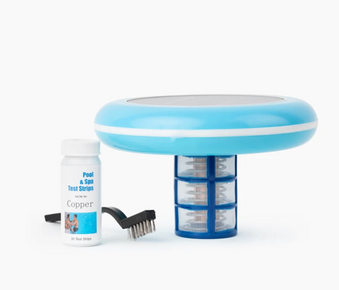
TL;DR: Professional pool technicians in 2026 rely on advanced solar ionizer techniques most owners never discover. This insider guide reveals the hybrid system configurations they use for perfect water balance, the precise solar panel placement strategies that maximize efficiency beyond simple "full sun," their predictive maintenance schedules that prevent problems before they start, and how they integrate smart technology to create a truly autonomous water care system. Mastering these pro secrets will transform your basic ionization into professional-grade, set-and-forget pool perfection.
SEO Summary: Uncover the 2026 solar pool ionizer secrets professionals use. Learn advanced hybrid systems, smart placement, predictive maintenance, automation integration, and expert water testing for perfect, chemical-minimal pool care.
Table of Contents
- The Hybrid Gold Standard: Ionizer + Micro-Oxidation
- Strategic Solar Placement: Beyond "Full Sun"
- Predictive vs. Reactive Maintenance
- Smart Ecosystem Integration for Autonomous Care
- The Pro Water Chemistry "Sweet Spot"
- Advanced Testing & Diagnostic Protocols
- Resilience & Contingency Planning
- Conclusion: From Owner to Expert
- Key Takeaways: The Pro Checklist
Secret #1: The Hybrid Gold Standard: Ionizer + Micro-Oxidation
If you ask any top-tier pool professional for the single most effective upgrade to a solar ionizer system, the answer is unanimous: integrate a secondary, low-output oxidizer. This is the cornerstone of pro-level water care in 2026. While solar pool ionizers are masters of sanitization creating an ionic field that annihilates algae and bacteria they are not designed to oxidize, or break down, non-living organic waste. This includes body oils, sweat, sunscreen, pollen, and other bather contaminants that cloud water and consume sanitizer.
Pros solve this by creating a two-pronged defense system. The solar ionizer serves as the primary, persistent sanitizer, maintaining a stable baseline of 0.3-0.4 ppm of copper ions. This handles the majority of the purification work. To tackle oxidation, they add a minimal dose of a secondary agent. The most common and effective pro setup pairs the ionizer with a salt chlorine generator (SCG) set to a "skeleton crew" output of 10-15%. This produces a barely-detectable 0.2-0.5 ppm of free chlorine just enough to efficiently oxidize waste without the chemical smell, feel, or irritation associated with traditional pools. The water retains its signature ionizer softness while achieving a level of sparkle and balance that is otherwise unattainable.
Pro Tip from Mark, Service Manager: "We install a small, dedicated SCG cell on the return line after the ionizer chamber. We set it so low that clients can't smell or feel chlorine, but our ORP meters tell us it's active. It's the difference between good water and perfect water. For chlorine-sensitive clients, we use an inline ozone generator instead; the principle is the same let the ions sanitize, let the ozone oxidize." For a technical deep-dive into component sizing and controller settings for hybrid systems, explore our guide: Engineering the Perfect Hybrid: Ionizer & SCG Synergy.
Secret #2: Strategic Solar Placement: Beyond "Full Sun"
Amateur installations follow a simple rule: "put the panel in the sun." Professional installations treat the solar panel as a critical power generator whose annual yield must be optimized, not just its peak summer output. This requires thinking about seasonal sun paths, thermal management, and local microclimates.
The Pro Placement Formula
- Angle for the Shoulder Seasons: Algae blooms are most likely in spring and fall when water temps are between 60-75°F but sunlight is weaker. Therefore, pros often angle panels 10-15 degrees steeper than their geographic latitude. This captures more of the lower-angle sun in spring/fall/early winter, ensuring robust ion production when it's needed most to prevent seasonal startups.
- Mitigate the "Heat Sink" Effect: Solar panel efficiency drops as temperature rises. Mounting a panel flat on a dark asphalt shingle roof can create a "heat sink," raising operational temperature by 30°F+ and reducing output by up to 15%. The pro solution is to use ventilated aluminum mounting rails that create a 3-4 inch air gap between the panel and roof surface, allowing for passive cooling and maximizing efficiency, especially in peak summer heat.
- Leverage Reflective Gains: Placing a panel to face a light-colored surface (a white painted wall, a concrete patio, or even light-colored gravel) can utilize the albedo effect, reflecting additional diffuse light onto the panel and boosting daily energy harvest by 5-8%.
Secret #3: Predictive vs. Reactive Maintenance
The professional mindset shifts from fixing problems to preventing them through data and scheduled intervention. They don't wait for cloudy pool water or algae spots; they operate on a schedule dictated by equipment analytics and environmental cues.
The Pro Maintenance Calendar
- Electrode Life Forecasting: Instead of vague timelines, pros monitor the ionizer's controller for cumulative amp-hour output. Knowing that a standard 1lb titanium electrode has a useful life of roughly 2,800-3,200 amp-hours, they can predict its end-of-life within a week. They schedule replacement proactively, avoiding any lapse in protection.
- The "Soft Start" Protocol: At pool opening in spring, pros never set a new or winterized ionizer to 100%. They initiate a 72-hour "soft start": balance water chemistry first, then set the ionizer to 50% output while the pump runs continuously. This allows the ionic field to establish gradually, chelating with any metals in the fill water without causing temporary cloudiness or over-saturation.
- Flow-Based Diagnostics: A sudden, unexplained drop in ion production (visible on smart controllers or indicated by a drop in water clarity) is almost never a panel failure. The first thing a pro checks is the filter pressure gauge and pump basket. Reduced flow across the electrodes drastically reduces ion release, making filter maintenance a critical part of ionizer performance.
Secret #4: Smart Ecosystem Integration for Autonomous Care
In 2026, a standalone device is a missed opportunity. Pros integrate the solar ionizer into a network of smart devices to create a self-regulating system.
Automation Hacks Used in the Field
- Weather-Responsive Programming: Using platforms like IFTTT or SmartThings, pros create automation rules: "If the local weather station reports more than 0.5 inches of rain, increase ionizer output by 25% for the next 36 hours." This automatically counters the influx of contaminants and acidic rainwater.
- Bather Load Compensation: For pools with predictable heavy use (e.g., every Saturday afternoon), pros program their smart timers to increase pump runtime and ionizer output for a 12-hour period following the event, ensuring rapid recovery.
- Cloudy Day Battery Backup: In regions prone to prolonged overcast weather, advanced installations include a small, maintenance-free sealed lead-acid battery (12V, 7-10Ah) with a trickle charger. This provides enough reserve power to maintain the control circuit and minimal ion production through 3-5 days of heavy clouds, preventing the ionic field from collapsing.
Secret #5: The Pro Water Chemistry "Sweet Spot"
Professional pool technicians don't follow generic water balance charts. They maintain a specific, tighter range of chemical parameters optimized explicitly for ionization technology. This "sweet spot" maximizes the effectiveness of copper and silver ions while preventing common issues like scaling and metal staining.
Precise Parameter Control
The key to pro-level results lies in these four adjustments:
1. pH: 7.2 - 7.4 (Tighter than the standard 7.2-7.8)
Copper ions are most effective and soluble in water that is slightly more acidic. Keeping pH at the lower end of the standard range ensures the ions remain active in the water, fighting contaminants instead of precipitating out as scale on your equipment or pool surfaces. Pros test and adjust pH 2-3 times per week, especially in new systems.
2. Total Alkalinity: 70 - 90 ppm (Lower than the standard 80-120 ppm)
Alkalinity acts as a pH buffer. The pro range is deliberately kept lower to prevent the pH from consistently drifting upward into the less effective 7.6-7.8 range. This lower alkalinity provides stability without creating a constant battle to lower pH, which would reduce ion efficacy.
3. Calcium Hardness: 200 - 250 ppm (The lower end of the standard 200-400 ppm)
While some calcium is necessary to protect plaster surfaces, higher levels directly increase the risk of calcium carbonate scale forming on the ionizer's electrodes and pool walls. By maintaining a moderate level, pros minimize this scaling potential, which can insulate electrodes and drastically reduce their output over time.
4. Cyanuric Acid (CYA): < 30 ppm for Hybrid Systems
This is a critical, often overlooked secret. In a hybrid system that uses a minimal amount of chlorine for oxidation, high stabilizer (CYA) levels will lock up that chlorine, rendering it useless. Keeping CYA very low ensures the tiny amount of chlorine produced remains "active" and able to perform its oxidation duty efficiently.
The Non-Negotiable: Phosphate Control
Critical Warning: Beyond the basic balance, pros are militant about phosphate control. Phosphates are a primary nutrient for algae. In a traditionally chlorinated pool, you overcome phosphates with more chlorine. In an ionized pool, high phosphate levels (>500 ppb) force the system to work exponentially harder, as the algae has an abundant food source. At every season opening and after heavy rains, pros test for phosphates. If levels are high, they use a non-metallic, lanthanum-based phosphate remover before any algae has a chance to bloom. This proactive step is a cornerstone of truly maintenance-free ionizer operation.
Secret #6: Advanced Testing & Diagnostic Protocols
Pros move beyond test strips. Their toolkits and methods provide precise, actionable data.
- Tool 1: Digital Ion-Selective Electrode (ISE) Meter: They invest in a professional-grade meter for copper and silver. This provides lab-accurate readings to 0.01 ppm, allowing them to fine-tune output dials with precision and confirm even dispersion throughout the pool.
- Tool 2: Permanent ORP/pH Controller: For hybrid systems, a wall-mounted ORP (Oxidation-Reduction Potential) controller is the ultimate dashboard. While copper ions don't directly affect ORP, the reading (aim for 650-750 mV) confirms the low-level oxidizer (chlorine or ozone) is active and effective. It's the pro's assurance the hybrid system is in equilibrium.
- The "Three-Point Test": When troubleshooting or tuning, pros sample water from three locations: 1) directly at a Return Jet Flow Light (For Above Ground & In Ground Pools, 3 Different Color Modes) highest concentration, 2) the middle of the pool, and 3) the far end opposite the returns (lowest concentration). Significant variance (>0.1 ppm copper) indicates a circulation problem that needs addressing a secret reason why some ionizers "don't seem to work" in certain pools.
Secret #7: Resilience & Contingency Planning
Professional-grade systems are built to handle failure gracefully and recover quickly.
- The Mandatory Bypass Loop: Every pro installation includes a simple ball-valve bypass loop plumbed around the ionizer chamber. If the chamber needs service or replacement, they can isolate it in seconds without shutting down the pool's filtration system for days.
- Emergency Algae Blitz Protocol: In the event of a severe, sudden bloom (e.g., after a power outage during a heatwave), pros follow a strict sequence: 1) Lower pH to 7.2, 2) Add a phosphate remover, 3) Clean the filter, 4) Set ionizer to 100% and run pump continuously, 5) Only after 24 hours do they add a non-chlorine shock (MPS). This method attacks the algae's lifecycle and food source, rather than just bleaching it white with a massive chlorine shock.
- Controller Memory Backup: A hidden 9V battery backup connected to the ionizer's control board preserves all custom settings through winter storage or power grid failures, ensuring the system doesn't revert to ineffective factory defaults.
Conclusion: From Owner to Expert
Adopting these professional secrets transforms your relationship with your pool. You move from being a consumer of chemicals and reactive fixes to being a manager of a sophisticated, sustainable water treatment system. The 2026 solar pool ionizer, when optimized with these strategies hybridization, strategic placement, predictive maintenance, smart integration, precise chemistry, advanced diagnostics, and built-in resilience ceases to be just another piece of equipment. It becomes the intelligent, autonomous heart of your pool's ecosystem, delivering a level of clarity, simplicity, and reliability that rivals any commercial-grade installation.
The gap between amateur and professional results isn't defined by budget, but by knowledge and methodology. By implementing these practices, you claim the expertise to maintain not just a pool, but a pristine, effortless aquatic environment.
Key Takeaways: The Pro Checklist
- Embrace the Hybrid Model: Pair your solar ionizer with a micro-dose oxidizer (low-output SCG or ozone) for complete sanitation and oxidation, achieving professional-grade water balance.
- Optimize Solar Harvest Year-Round: Angle panels for spring/fall efficiency, use ventilated mounts to prevent heat sink loss, and leverage reflective surfaces to boost energy yield.
- Maintain by Data, Not Guesswork: Track electrode amp-hours, initiate a "soft start" at spring opening, and use flow rate as a primary diagnostic tool.
- Integrate into a Smart Ecosystem: Use automation platforms to make your system weather-responsive and load-aware, and consider a minimal battery backup for cloudy resilience.
- Master the Water Chemistry "Sweet Spot": Maintain tighter control over pH (7.2-7.4), Alkalinity (70-90 ppm), and aggressively manage phosphates to create the ideal environment for ionization.
- Upgrade Your Testing Protocol: Use digital meters for precision and perform "three-point tests" to diagnose circulation issues. Consider an ORP monitor for hybrid system assurance.
- Build for Resilience: Install a service bypass loop, have a written emergency algae blitz protocol, and protect your controller's memory with a backup power source.
- Shift Your Mindset: Move from reactive problem-solving to predictive system management. Your goal is to prevent issues, not just solve them.
Implementing even a few of these professional strategies will lead to a noticeable improvement in your pool's water quality and a significant reduction in your maintenance workload. Start with the hybrid system or smarter solar placement, and gradually incorporate more advanced techniques. Your pool and your free time will thank you.