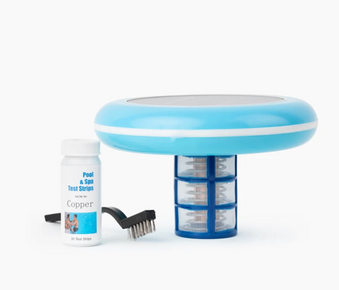
Pools in high sun climates face a special set of challenges that pool owners in cooler or cloudier regions rarely encounter. Strong sunlight and high temperatures create an ideal environment for algae blooms, rapid chlorine loss, mineral buildup, and unstable water chemistry. When sunlight is intense day after day, keeping water clear becomes more than a routine task. It becomes a precise and proactive science.
High sun exposure fundamentally alters the aquatic environment. It dramatically speeds up evaporation, raising water temperature and concentrating dissolved minerals. Ultraviolet (UV) radiation breaks down sanitizers with ruthless efficiency, while the resulting warmth acts as a greenhouse, accelerating the reproduction of algae and bacteria exponentially. Even a well-maintained pool can quickly turn cloudy or develop a green tint if its chemical and mechanical systems are not specifically calibrated to counteract these relentless, solar-driven forces.
This guide explores the unique demands of high sun climates, detailing the complex interactions between intense light, heat, and pool water chemistry. We will examine what happens to sanitizers under heavy UV bombardment, how heat destabilizes the entire chemical balance, and provide actionable strategies for maintaining crystalline water despite the constant assault of heat and light. Whether your pool basks in sunlight from dawn to dusk or you reside in a warm region with extended summers, this article provides the essential knowledge to keep your water sparkling through the most challenging season.
Table of Contents
- Why High Sun Climates Challenge Water Clarity
- The Effects of UV and Heat on Pool Chemistry
- Stabilizing Chlorine in Intense Sunlight
- Preventing Algae Growth in High Heat
- Managing Minerals and Hard Water in Sunny Regions
- The Role of Solar Ionizers in High Sun Environments
- Daily and Weekly Maintenance Routines for Hot Climates
1. Why High Sun Climates Create the Ultimate Test for Pool Maintenance
Pools situated in regions of intense, prolonged sunlight face what can only be described as a perpetual state of chemical and biological siege. Unlike their counterparts in temperate or shaded locales, these aquatic environments operate under a relentless, multi-vector assault that fundamentally destabilizes the delicate equilibrium required for clear, healthy water. The primary antagonist is not a single entity, but a synergistic duo: solar energy manifesting as both destructive ultraviolet photons and pervasive thermal energy. This dual attack transforms routine pool maintenance from a manageable chore into a demanding scientific discipline, where understanding the underlying physics and biochemistry is not optional, but essential for success.
The unshielded intensity of ultraviolet radiation, particularly in the UV-B spectrum (280-315 nm), possesses the specific quantum energy required to fracture the molecular bonds of key sanitizing agents. This process, known as photolysis, specifically targets free available chlorine (FAC), converting potent hypochlorous acid and hypochlorite ions into inert chloride ions at an alarming rate. In peak summer conditions in low-latitude or high-altitude regions, an unprotected pool can lose 90% or more of its FAC in a mere two to three hours of midday exposure. This creates a predictable and dangerous daily "sanitizer gap" a window of several hours where chlorine levels plunge below the minimum threshold required to inhibit pathogen replication and algal sporulation. It is during this vulnerable period that introduced contaminants, whether from swimmers, wildlife, or the atmosphere, find an opportunity to establish a foothold, initiating problems that manifest hours or days later.
Simultaneously, the thermal component of sunlight acts as a universal metabolic accelerator. Water temperature is the master regulator for all aquatic biological processes. The Q10 rule, a fundamental principle in biochemistry, dictates that metabolic rates approximately double for every 10°C (18°F) increase in temperature. In practice, this means a pool maintained at 90°F (32°C), common in desert climates, supports microbial and algal reproductive cycles that are four to eight times faster than in a pool at 70°F (21°C). This is not a linear increase but an exponential explosion. A single algae spore, which might take days to form a visible colony in cooler water, can achieve the same biomass in a matter of hours under the warm, nutrient-rich conditions of a sun-heated pool. The water doesn't just feel warm; it functions as a vast, optimized incubator, where every degree of temperature rise shortens the generation time of potential invaders and increases the enzymatic activity that drives their growth.
The Compounding Crisis of Physicochemical Acceleration
The challenges extend far beyond the biological realm into the domain of physical chemistry, where heat and evaporation trigger a cascade of concentrating and destabilizing effects. Evaporation rates in arid, sunny climates are not merely higher they are exponentially so, often reaching two to three times the rate observed in humid, temperate zones. This relentless loss of pure water vapor is a selective distillation process. As H₂O molecules escape into the dry air, every dissolved solid and chemical compound remains behind, trapped in a diminishing volume of water.
This leads to a relentless concentration creep of key parameters:
- Calcium Hardness (CH): Ions like calcium and magnesium, originally present at manageable levels, become super-saturated. This pushes the Langelier Saturation Index (LSI) a measure of water's tendency to form or dissolve scale firmly into positive territory. The result is the insidious deposition of calcium carbonate scale on heat exchanger coils, tile lines, and pool surfaces. This scale is not merely cosmetic; it acts as an insulating blanket on heaters, causing inefficiency and burnout, and provides a micro-rough surface ideal for biofilm attachment.
- Total Dissolved Solids (TDS): The cumulative concentration of all dissolved salts, including chlorides, sulfates, and bicarbonates, climbs steadily. Water with elevated TDS (above 2000 ppm) becomes "tired" or "locked." It loses its sparkle, feels sluggish, and, critically, reduces the oxidative potential of sanitizers. Chlorine molecules in high-TDS water must compete with a dense crowd of other ions, diminishing their effective activity.
- Metal Ion Concentration: Copper from ionizers or algaecides, and iron or manganese from fill water, concentrate alongside everything else. When these metals oxidize, they precipitate out, causing green pool water, brown, or black stains on plaster and vinyl surfaces, often in distinctive evaporation patterns along the waterline.
The Thermodynamic Betrayal: pH Drift and Sanitizer Inactivation
Perhaps the most insidious effect is the heat-driven destabilization of pH, which in turn sabotages the very sanitation system the pool owner is struggling to maintain. Pool water exists in a delicate equilibrium with atmospheric carbon dioxide (CO₂). Dissolved CO₂ forms carbonic acid, a weak acid that is the cornerstone of the water's buffering capacity. A fundamental law of physics Henry's Law states that the solubility of a gas decreases as temperature increases. As the pool heats up, it can no longer hold its dissolved CO₂, which effervesces out of solution.
The chemical consequences are precise and devastating: the loss of carbonic acid causes the carbonate buffer system to shift, consuming hydrogen ions (H⁺) from the water in an attempt to restore equilibrium. Since pH is defined as the negative logarithm of hydrogen ion concentration (-log[H⁺]), consuming H⁺ ions causes the pH to rise. A midday pH swing from 7.4 to 7.8 or even 8.0 is commonplace. This rise is catastrophic for chlorine efficacy. The active, killing form of chlorine (hypochlorous acid, HOCl) exists in a pH-dependent balance with its much weaker cousin, the hypochlorite ion (OCl⁻). At pH 7.8, the percentage of potent HOCl can be less than half of what it is at pH 7.4. Thus, even if a test strip shows an "adequate" chlorine level, its practical germicidal and algaecidal power has been chemically neutered by the high pH. The system enters a vicious cycle: heat raises pH, high pH cripples chlorine, weak chlorine allows growth, and combating that growth consumes more chemicals, further altering the water balance.
The External Onslaught: Atmospheric Deposition
Sunny climates, particularly arid and semi-arid ones, are frequently windy. This wind acts as a continuous supply vector for external contaminants. It carries fine, abrasive dust (silica and clay) that contributes to pool water cloudiness and provides nucleation sites for scale. It deposits pollen and organic plant matter, which are not just particulates but direct nutrient sources, loaded with phosphates and nitrates that feed algal blooms. In agricultural or landscaped areas, wind can also carry fertilizer residues, introducing concentrated nutrients directly into the water. This constant atmospheric deposition means the pool's filtration and chemical systems are perpetually processing an external contaminant load, on top of the normal bather load, pushing equipment and chemistry to their limits.
The Inescapable Conclusion: Proactivity or Failure
In essence, a pool in a high sun climate exists in a state of compounded stress. It is bombarded by UV photons that shatter its primary defense (chlorine), incubated by heat that accelerates its enemies (algae/bacteria), concentrated by evaporation that destabilizes its mineral balance, chemically betrayed by thermodynamic principles that disable its sanitizer, and continuously seeded with nutrients and particulates from the atmosphere. These forces do not operate in isolation; they synergize. High temperature makes UV degradation more efficient. Concentrated minerals provide more surfaces for scale and biofilm. Wind-borne nutrients find a warm, under-sanitized environment perfect for exploitation.
A reactive approach testing and adding chemicals only when water turns cloudy or green is mathematically destined to fail in this environment. By the time a problem is visible, the underlying conditions have been degrading for days or weeks, and recovery is a costly, intensive process of "shock and awe" chemistry. Success, therefore, is not found in stronger chemicals, but in a smarter strategy. It demands a proactive, systematic protocol that anticipates each vector of attack: employing UV stabilizers (cyanuric acid) as a sunscreen for chlorine, utilizing secondary, non-chlorine sanitizers like metal ions that are immune to photolysis, implementing aggressive pH and alkalinity management to counter thermodynamic drift, scheduling strategic water replacement to manage mineral concentration, and maintaining impeccable filtration and circulation to physically remove the constant influx of atmospheric debris. Only through such a comprehensive, anticipatory defense can a pool not just survive, but thrive, under the relentless glare of the high sun.

2. The Photochemical and Thermodynamic Warfare on Pool Chemistry: A Deep Dive into Molecular Combat
To master pool care in high-sun climates, one must first abandon the notion that sunlight and heat are passive environmental factors. They are, in fact, aggressive chemical reactants and physical forces that engage in a continuous, predictable assault on water chemistry at the molecular level. This assault is governed by immutable laws of photochemistry, thermodynamics, and biochemistry. Successfully defending a pool requires understanding these laws not as abstract concepts, but as the operational manuals of your adversaries. This section provides a granular examination of the four primary mechanisms through which solar energy dismantles pool stability.
1. UV Photodegradation: The Molecular Dismantling of Chlorine
Ultraviolet radiation, particularly in the UV-B (280-315 nm) and UV-A (315-400 nm) spectral bands, delivers photon energies precisely calibrated to break specific chemical bonds. Free chlorine in clear pool water exists in a pH-dependent equilibrium between hypochlorous acid (HOCl) and the hypochlorite ion (OCl⁻). Both are acutely photosensitive, but their degradation pathways differ slightly.
The Photolytic Reaction Pathways:
- For Hypochlorite Ion (OCl⁻): The primary reaction is direct photodissociation: OCl⁻ + hv → O•⁻ + Cl•. The UV photon provides the energy to cleave the oxygen-chlorine bond, producing a highly reactive oxygen radical anion and a chlorine radical. These radicals are transient but destructive, often reacting further to form chloride ions (Cl⁻) and oxygen gas, or oxidizing other pool constituents.
- For Hypochlorous Acid (HOCl): The pathway involves excitation followed by homolytic cleavage: HOCl + hv → HO• + Cl•. This yields a hydroxyl radical and a chlorine radical. The hydroxyl radical (HO•) is one of the most potent oxidizers known, but in a pool, it typically reacts indiscriminately and rapidly with organic matter or recombines, rather than contributing to sanitation.
Kinetics of Destruction: A Race Against Time
The rate of photolysis is not linear; it follows first-order kinetics relative to chlorine concentration and is directly proportional to UV irradiance. On a clear summer day with a UV Index of 10+ (common in the southern US, Mediterranean, and desert climates), the half-life of unstabilized chlorine in shallow water can be less than 30 minutes. This means:
- 10:00 AM: Chlorine is dosed to 3.0 ppm.
- 11:30 AM: Half is destroyed, leaving 1.5 ppm.
- 1:00 PM: Half of the remainder is destroyed, leaving 0.75 ppm below the minimum recommended level for most pools.
- 2:30 PM: Levels can plummet to 0.3-0.4 ppm, effectively zero for practical sanitation.
This degradation occurs regardless of contamination load. The chlorine is not being "used up" killing algae; it is being annihilated by sunlight before it can perform its function. This creates a predictable 4-6 hour "critical vulnerability window" each afternoon where the water is a sanitizer vacuum. Any contaminant introduced a swimmer, a leaf, bird droppings, windblown pollen encounters minimal resistance and can initiate a biofilm or begin replicating unimpeded.
The Role of Cyanuric Acid (Stabilizer): A Molecular Sunscreen
Cyanuric acid functions through a reversible binding equilibrium. It forms a weak complex with chlorine (isocyanurate), creating a molecule too large and with different bond energies that do not absorb the destructive UV-B photons as readily. The bond slowly breaks to release active chlorine as needed. However, this protection has limits. At very high concentrations (>100 ppm), the bond becomes too stable, significantly slowing chlorine release and causing "chlorine lock," where a high reading on a test strip belies very slow disinfection rates. In high-sun areas, maintaining CYA in the 50-80 ppm range is the delicate balance between protection and performance.
2. Thermal Acceleration: Transforming Water into a Bioreactor
Heat does not merely raise the temperature; it fundamentally re-orders the biological and chemical priorities of the aquatic environment. The effects are governed by the Arrhenius equation and Q10 temperature coefficient, which describe how reaction rates increase exponentially with temperature.
Exponential Biological Multiplication:
For microorganisms, the Q10≈2 rule is devastating. A pool at 95°F (35°C) versus one at 65°F (18°C) experiences microbial metabolic rates that are 2^((35-18)/10) ≈ 2^1.7 ≈ 3.2 times faster. In practice, for algae, this means:
- Cell Division Time: A green pool species that divides every 8 hours at 75°F may divide every 3-4 hours at 90°F.
- Bloom Potential: A single algal spore (1 unit) can become 16 units in 12 hours at 75°F. At 90°F, that same spore can become 256 units in the same time frame a 16-fold increase in potential biomass.
Nutrient Dynamics: Unlocking the Algal Pantry
Heat increases the solubility and dissociation constants of key algal nutrients. Phosphates (orthophosphates, PO₄³⁻), often the limiting nutrient for algae, become more soluble and bioavailable. The activation energy for enzymatic processes in algae that uptake these nutrients is also lowered, making consumption more efficient. Furthermore, warmer water increases the rate of decomposition of organic debris (leaves, insects), mineralizing them into nitrates and phosphates more quickly, effectively creating a self-replenishing nutrient cycle within the pool.
Biofilm Development:
Bacteria, the pioneers of biofilm, also thrive in warmth. Their production of extracellular polymeric substance (EPS) the slimy matrix of biofilm accelerates. A biofilm that might take weeks to establish in cool water can form in days under hot conditions. Once established, this biofilm is a sanctuaried city for microbes, protecting inhabitants from sanitizers and providing an ideal, nutrient-rich substrate for algal attachment and growth.
3. Thermodynamic pH Drift: The Stealth Neutralization of Sanitizers
This is arguably the most chemically elegant and damaging process. It involves a three-phase equilibrium between gaseous, aqueous, and ionic species.
The Complete CO₂-Carbonate System:
- Atmosphere-Water Interface: CO₂(g) ⇌ CO₂(aq) (Governed by Henry's Law: [CO₂(aq)] = k_H * P_CO₂). As temperature (T) increases, Henry's constant (k_H) decreases.
- Hydration: CO₂(aq) + H₂O ⇌ H₂CO₃ (Carbonic Acid). This is a slow step but is pH-dependent.
- First Dissociation: H₂CO₃ ⇌ H⁺ + HCO₃⁻ (Bicarbonate). This is rapid and establishes the primary buffering.
- Second Dissociation: HCO₃⁻ ⇌ H⁺ + CO₃²⁻ (Carbonate). Significant only at higher pH (>8.3).
When surface water heats, the immediate effect is a decrease in [CO₂(aq)] as gas exits to the atmosphere (Step 1 shifts left). This pulls on the entire chain. To re-establish dissolved CO₂, the system consumes H⁺ ions to drive the formation of H₂CO₃ (pulling Steps 3 and 2 leftward). The net result is a removal of H⁺ ions from the cloudy water. Since pH = -log₁₀[H⁺], a reduction in [H⁺] causes a direct increase in pH.
The Sanitizer Inactivation Calculus:
The dissociation of hypochlorous acid is: HOCl ⇌ H⁺ + OCl⁻, with a pKa of ~7.5. Using the Henderson-Hasselbalch equation: pH = pKa + log([OCl⁻]/[HOCl]).
- At pH 7.2: log([OCl⁻]/[HOCl]) = 7.2 - 7.5 = -0.3. Therefore, [OCl⁻]/[HOCl] = 10^(-0.3) ≈ 0.5. This means for every 1 part HOCl, there are 0.5 parts OCl⁻. HOCl constitutes 1/(1+0.5) = ~67% of FAC.
- At pH 7.8: log([OCl⁻]/[HOCl]) = 7.8 - 7.5 = +0.3. [OCl⁻]/[HOCl] = 10^(0.3) ≈ 2.0. For every 1 part HOCl, there are 2 parts OCl⁻. HOCl now constitutes just 1/(1+2) = ~33% of FAC.
Thus, a 0.6 unit pH rise easily achieved by afternoon heat cuts the concentration of the potent sanitizer (HOCl) in half, even if the total chlorine test result remains unchanged. This is not a gradual loss of power; it is a binary switch being flipped from "effective" to "marginally effective."
4. Evaporative Concentration: The Ratchet Effect on Water Chemistry
Evaporation is a unidirectional concentrating pump. In arid, sunny regions, annual evaporation can exceed 80 inches, meaning the pool could, in theory, lose its entire volume to evaporation over a season. The chemical consequences are profound and cumulative.
The Mathematics of Mineral Buildup:
Assume a 20,000-gallon pool with an initial Calcium Hardness of 250 ppm. This equates to 250 mg of calcium per liter, or about 4.75 kg (10.5 lbs) of calcium in the entire pool. If 25% of the pool's volume (5,000 gallons) evaporates over a month, that 4.75 kg of calcium remains dissolved in only 15,000 gallons of water. The new concentration becomes (4.75 kg / 15,000 gal) * (conversion factor) ≈ 333 ppm a 33% increase. Repeat this monthly, and CH can surpass 500 ppm the threshold for aggressive scaling by mid-summer.
Consequences of High TDS and CH:
- Scale Formation (LSI > +0.5): Calcium carbonate precipitates first on the hottest surfaces (heater coils), then on any nucleation site (rough plaster, tile grout, dust particles). Scale reduces heat transfer efficiency by up to 30%, increasing energy costs and risking heater failure.
- Reduced Sanitizer Activity: In high-ionic-strength water (high TDS), the activity coefficient of HOCl decreases. Its chemical "effective concentration" is lower than its measured concentration. It's akin to having a loud conversation in a noisy room; the signal (sanitizer) is drowned out by the background noise (other ions).
Osmotic Stress: Very high TDS creates an osmotic gradient that can draw moisture out of porous pool surfaces (plaster) or, conversely, force water into vinyl liners, causing bloating or delamination over time.
The Futility of the "Top-Off":
Adding fresh water to replace evaporation is dilution, not remediation. It temporarily lowers the concentration of all parameters proportionally. However, because evaporation is continuous, the concentration immediately begins climbing again from this new, slightly lower baseline. Each cycle of evaporation and refill adds the mineral content of the fill water to the existing accumulated load. Over years, this leads to a permanent, irreversible ratcheting up of the pool's mineral content, a process only reversible through deliberate, substantial dilution via draining.
In summary, sunlight and heat are not environmental nuisances; they are precise, calculable forces of chemical degradation and biological encouragement. They operate on schedules dictated by solar azimuth and irradiance, follow pathways described by quantum mechanics and physical chemistry, and produce effects that are measurable and predictable. The pool owner in a high-sun climate is not engaged in a casual hobby but in a daily campaign of chemical logistics and pre-emptive defense, where victory is defined not by a single clear test, but by the sustained, proactive management of these relentless natural processes.

3. Stabilizing Chlorine in Intense Sunlight: A Strategy of Shield, Schedule, and Flow
In the face of relentless ultraviolet bombardment, maintaining an effective chlorine level is not about adding more it's about adding smarter. A simplistic approach of dumping in extra chlorine is both wasteful and ultimately futile, as the sun will destroy it faster than it can work. Success requires a coordinated tactical plan that focuses on three pillars: physically protecting the chlorine molecules, timing their deployment to avoid enemy fire, and ensuring they are deployed effectively throughout the battlefield of your pool. This multi-layered defense transforms chlorine from a vulnerable, short-lived skirmisher into a sustained, effective garrison.
1. Deploy the Molecular Sunscreen: Mastering Cyanuric Acid (CYA)
Cyanuric acid, commonly called stabilizer or conditioner, is the cornerstone of chlorine defense in a sunny climate. Think of it not as a chemical, but as essential protective gear. Without it, chlorine is sent into a gunfight wearing nothing but a t-shirt. CYA molecules act like individual bodyguards for chlorine. They loosely bond with the chlorine, forming a temporary shield that absorbs the brunt of the damaging UV rays, dissipating the energy as harmless heat instead of letting it break the chlorine apart.
However, like any protective system, balance is everything. In the intense sun of southern states, desert regions, or high-altitude areas, the standard guideline of 30-50 ppm is often insufficient. The protective layer needs to be thicker. A range of 50 to 80 ppm is the recommended sweet spot for these high-UV environments. This higher concentration provides the enhanced shielding needed to slow chlorine loss from a catastrophic free-fall to a manageable, steady decline.
The critical danger lies in overprotection. Exceeding 100 ppm creates a condition often called "chlorine lock." In this state, the bond between CYA and chlorine becomes too strong and stable. While the chlorine is nearly invincible to UV, it is also rendered lazy and ineffective as a sanitizer. It releases too slowly to kill bacteria and algae at a meaningful rate. You can have a high chlorine reading on your pool test strip, but your pool can still turn green because the chlorine is essentially "asleep" in its protective shell. This makes monthly testing of CYA non-negotiable. Unlike chlorine, CYA does not evaporate or get used up; it persists in the water indefinitely, only leaving through splash-out or when you backwash the filter. To raise levels, use granular stabilizer dissolved in a sock hung in the skimmer basket, allowing it to enter the system gradually without clogging your filter.
2. Choose Your Ammunition Wisely: The Power of Slow-Release, Stabilized Chlorine
The form in which you add chlorine is a strategic decision. In a sunny climate, you want a consistent, trickle-fed supply of *protected* chlorine, not a large, vulnerable batch. This is where trichlor tablets (or sticks) become the weapon of choice.
Trichlor is a triple-threat formulation:
- It is about 90% pure chlorine.
- It contains its own built-in CYA (about 55% by weight).
- It dissolves slowly over 5-7 days.
This combination is perfect for the high-sun battlefield. As each tablet slowly erodes in a floating dispenser or automatic feeder, it releases a steady stream of chlorine that is *already* chemically bound to a fresh dose of CYA. It's like having a factory that produces both the soldier and his armor on-site, continuously. This provides a stable baseline of protection that automatically adjusts the CYA level upward over time (another reason to test it monthly).
Contrast this with liquid chlorine (sodium hypochlorite), which is pure, unstabilized chlorine. Adding a jug of liquid chlorine at 10 AM is akin to dropping a battalion of unprotected troops directly into the line of fire at noon they will be decimated by UV rays before accomplishing their mission. The most effective strategy is a hybrid one: use a trichlor feeder or floater to maintain that constant, armored baseline. Then, use liquid chlorine exclusively for evening "boost" doses or shock treatments, when the sun is down and it can work unimpeded.
3. Fight on Your Terms: The Rule of Evening Engagement
If sunlight is the enemy, then darkness is your ally. This leads to the single most important habit for pool owners in sunny regions: add chlorine after sunset. Make this an unbreakable rule. The logic is impeccable and the rewards are immediate.
Adding your primary chlorine dose in the evening grants it a full night of uninterrupted work typically 8 to 12 hours. During this time, with the pump running, it can circulate thoroughly, seek out and destroy bacteria and algae, oxidize organic contaminants like sweat and sunscreen, and establish a strong, widespread presence throughout the entire pool. By the time the sun rises the next morning, your pool water has been thoroughly sanitized and is fortified with a robust chlorine residual. This fortified army is then ready to stand its ground against the day's UV assault. It will degrade, yes, but it starts from a position of strength (e.g., 4-5 ppm) rather than weakness. Adding chlorine in the morning or, worse, midday, is pouring money and chemicals into a furnace. A significant percentage is vaporized by UV light within the first hour, doing little more than raising your TDS and wasting your effort.
4. Dominate the Terrain: The Critical Role of Circulation and Filtration
Protecting and timing your chlorine is pointless if it can't reach every corner of the pool. Stagnant water is a sanctuary for algae and bacteria, a "dead zone" where your sanitizer is absent and problems begin. In the high heat of sunny climates, where biological activity is accelerated, eliminating these dead zones is a top priority.
This demands a significant increase in pump and filter runtime. For a typical residential pool in a temperate climate, 6-8 hours of circulation might suffice. In Arizona, Texas, Florida, or Southern California, 8 to 12 hours daily is the minimum for clear water. The goal is to turn over the entire volume of pool water at least once, and preferably one and a half to two times, every 24 hours. This constant motion ensures that freshly chlorinated water is constantly being pushed into every niche behind ladders, in corners, and across the steps.
Proper hydraulic engineering is also key. Ensure your return jets (the ports that push water back into the pool) are angled to create a gentle, circular current that minimizes stagnant areas. The pool skimmer basket must be kept clean to maintain strong surface suction, as this is where most new contaminants dust, pollen, leaves first land. A clogged skimmer reduces flow, hurts circulation, and lets debris sink to become a nutrient source on the bottom. In essence, your circulation system is the logistics network for your chlorine army. A strong, well-maintained network allows for rapid deployment and total coverage. A weak one leaves entire provinces undefended, allowing the enemy (algae) to establish a beachhead that can be difficult and costly to dislodge.
By combining these four strategies optimal CYA shielding, the use of slow-release stabilized chlorine, disciplined evening dosing, and aggressive circulation you create a chlorine defense system that is resilient, efficient, and capable of maintaining clear pool water even under the most intense solar siege. It is a system that works with the environment, not against it, turning potential weaknesses into elements of a stronger, more sustainable maintenance routine.

4. Preventing Algae in High Heat: A Strategy of Layered Defenses
Maintaining an algae-free pool in a hot, sunny climate is less about winning a single battle and more about sustaining an impregnable, multi-layered defense. The warm, nutrient-rich, sunlit water is the ideal breeding ground for microscopic invaders. Once a visible bloom takes hold, the fight becomes expensive, labor-intensive, and often requires a nuclear approach with heavy chemicals that further destabilize your water. Therefore, the guiding principle must be absolute, continuous prevention. Your strategy cannot rely on a single line of defense, which will inevitably have a weak point. Instead, you must construct a series of overlapping barriers chemical, physical, oxidative, and mechanical that together create an environment where algae simply cannot gain a foothold.
Establish a UV-Proof Sanitizer Backup: The Copper Ion Barrier
Chlorine is your primary soldier, but in the high-sun battlefield, it goes MIA for several hours each afternoon. This creates a predictable vulnerability window. To cover this gap, you need a secondary, sun-proof algaestat that remains on duty 24/7. Copper ions are the perfect candidate for this role. Unlike chlorine, copper is not degraded by UV light. Its mode of action is different and devastating to algae: copper ions penetrate the algal cell and disrupt critical enzyme functions and photosynthetic pathways, effectively shutting down the organism's metabolism.
A solar pool ionizer is the ideal delivery system for this defense in a sunny climate. It operates on a beautiful symmetry: the stronger the sun and thus the greater the algae threat and the faster the chlorine loss the more electrical power the ionizer generates, and the more copper ions it releases. It automatically ramps up production during the crisis hours. Maintaining a consistent copper ion level between 0.2 and 0.4 parts per million (ppm) establishes a constant, invisible barrier. Even when chlorine dips, this copper "field" remains active, making the water chemically hostile to algal spores. It's not a replacement for chlorine but an indispensable insurance policy, a silent guardian that works tirelessly behind the scenes. For this system to be reliable, however, the ionizer's internal components the sacrificial anode that releases the copper must be kept in good condition through regular inspection and replacement, as its output declines as it wears down.
Execute Systematic Physical Assaults: The Non-Negotiable Practice of Brushing
Algae does not magically appear as a green cloud in the water. It begins its invasion as a microscopic biofilm a slimy, adhesive layer of cells that attaches to pool surfaces. In this attached state, it is partially shielded from waterborne sanitizers. If left undisturbed, this biofilm matures, thickens, and then releases daughter cells into the water column, resulting in a full-blown bloom.
This is why brushing is not a chore; it is a critical tactical maneuver. Brushing the pool walls, floor, steps, and corners at least twice a week during peak season performs several vital functions. First, it physically shears off the developing biofilm, exposing the tender algal cells directly to the sanitizers in the water. Second, it breaks up "channeling" on plaster surfaces, preventing algae from hiding in microscopic grooves. Third, it stirs up settled debris and dust that could act as nutrient packets. Pay hyper-attention to micro-climates within your pool: the shady side of a swim-out, the area behind the ladder, the track of an automatic cleaner, and the waterline tile. These are lower-circulation zones where sanitizer levels can be marginally lower, creating perfect footholds for algae. A thorough, aggressive brushing regimen leaves algae with no safe harbor from which to launch its attack.
Conduct Weekly Oxidative Campaigns: The Power of Proactive Shocking
In a hot, heavily used pool, organic contaminants accumulate at an astonishing rate. Every swimmer introduces grams of body oils, sweat, urine, cosmetics, and sunscreen. The air deposits pollen, dust, and insects. These organics do two things: they directly cloud the water, and they serve as a high-value food source for bacteria and algae. Chlorine works to "oxidize" or burn up these organics, but in doing so, it gets used up this is known as the chlorine's "oxidant demand."
If you only add enough chlorine to kill germs, you are constantly running a deficit on oxidation. The organics build up, making the water dull, creating chlorine demand, and feeding potential problems. A weekly shock treatment preferably with a non-chlorine shock (potassium peroxymonosulfate) is a scheduled, pre-emptive strike. Done in the evening, this powerful oxidant surges through the pool and incinerates the accumulated organic waste that regular chlorine hasn't had the capacity to handle. It "burns" the invisible load of oils and nitrogens, leaving the water chemically "clean" and hungry. This resets the oxidant demand to near zero, allowing your daily chlorine to focus on sanitation instead of clean-up duty. Think of it as taking out the trash every week before it starts to rot and attract pests. It is the single most effective practice for maintaining sparking, crisp water clarity and starving algae of its potential food supply.
Maintain Impeccable Mechanical Removal: The Final Polish of Filtration
All the chemistry in the world is for naught if your filter is not performing its job. The filter is your pool's kidney. It is responsible for physically removing the particulate matter that causes cloudiness: dead algae cells, dust, pollen, and the microscopic clumps formed when sanitizers and oxidizers bind with contaminants. In a high-sun environment, this load is constant and heavy.
A clogged or inefficient filter cannot capture these fine particles. They remain suspended, scattering light and giving the water a hazy, dull appearance. Furthermore, dead algal cells sitting in the filter can lyse (break open), releasing their stored phosphates back into the pool upon backwashing, literally recycling nutrients. Therefore, filter maintenance must be more aggressive. For cartridge filters, clean them monthly without fail, or whenever the pressure gauge indicates a 8-10 psi rise over the clean starting pressure. Soak them in a filter cleaner solution to dissolve oils and calcium scale that water alone won't remove. For Diatomaceous Earth (DE) filters, a complete breakdown, cleaning, and recharging at mid-season is essential to maintain their superior filtering ability. For sand filters, ensure they are backwashed thoroughly and consider using a filter cleaner annually to break down the invisible biofilm that coats the sand grains and reduces efficiency. A pristine filter doesn't just clean the water; it polishes it to a brilliant, reflective clarity, removing the very particles that could become the nucleus of the next problem.
Together, these four layers the constant, sun-proof copper barrier; the weekly physical disruption of brushing; the proactive oxidative reset of shocking; and the relentless mechanical removal of filtration form an integrated defense matrix. No single layer is 100% effective on its own, but together they close every possible avenue for algal growth. This systematic, preventative approach requires discipline but pays off in a pool that remains consistently, effortlessly clear through the most challenging heat waves and sun-drenched days, transforming algae prevention from a constant worry into a guaranteed outcome.

5. Managing Minerals and Hard Water in Sunny Regions: The Evaporation Crisis
High-sun climates present a cruel geographic irony: they are frequently paired with arid environments where the municipal or well water is already high in dissolved minerals like calcium and magnesium this is known as hard water. Under normal conditions, managing this hardness is a straightforward task. However, under the relentless sun, evaporation acts as a chemical concentrating pump, transforming a manageable mineral content into a severe and accelerating crisis. What begins as moderately hard fill water can, over a single season, become a super-saturated mineral soup that threatens every surface and component of your pool system. Successfully navigating this requires a three-part strategy of diligent monitoring, chemical intervention, and targeted physical maintenance.
Master the Numbers: Vigilant Calcium Hardness Management
Calcium Hardness (CH) is not a parameter you can afford to ignore or test once a year. In sunny, arid regions, it must be monitored with the regularity of a vital sign. The ideal range for CH is 200-400 parts per million (ppm). Below 200 ppm, water becomes “aggressive” and can leach calcium from plaster surfaces, causing etching and pitting. Above 400 ppm, the water is “scaling,” meaning it is actively looking to deposit its excess calcium as solid scale.
In high-evaporation areas, CH doesn't just creep up; it marches upward predictably. It is common for pools to see monthly increases of 50-100 ppm during peak summer simply due to water loss. This happens because when pure water evaporates, every ounce of dissolved calcium remains behind in a smaller volume of water, becoming more and more concentrated.
- The Scaling Threshold: The danger zone begins at 400 ppm. At this level, especially when combined with high pH, high temperature, or high Total Alkalinity, calcium carbonate (the white, crusty scale) will begin to precipitate out of solution. It doesn't form uniformly; it seeks out the hottest surfaces first. Your pool heater's internal heat exchanger is the primary target. A layer of scale coating those coils acts like a blanket, forcing the heater to work dramatically harder, overheat, and fail prematurely a repair that often costs more than the heater itself.
- The Cloudiness Factor: As calcium tries to come out of solution, it can form microscopic crystals suspended in the water. These tiny particles scatter light, causing a persistent, non-algae cloudiness that no amount of clarifier can permanently fix. The water looks hazy, dull, and never quite sparkles.
- The Correction Protocol: When your monthly test shows CH approaching 450-500 ppm, the only effective solution is dilution. This means partially draining the pool (one-quarter to one-third of its volume) and refilling with softer water, if available. While using a hose water softener for the refill is an option, the most practical step is to simply plan for this annual or bi-annual dilution as a non-negotiable part of your pool maintenance calendar in hard water regions.
Employ Chemical Bodyguards: Deploy Scale Inhibition Chemistry
While you manage the overall CH level, you need active defense against scale formation in the plumbing and on surfaces. This is where specialized scale and stain prevention chemicals, known as sequestrants and chelators, become invaluable. Think of these not as cleaners, but as microscopic bodyguards for mineral ions.
- How They Work: These liquid additives contain molecules that are magnetically attracted to calcium and metal ions (like iron and copper). They form a weak, soluble shell around each ion. This shell prevents the ions from bonding with each other and with carbonate to form solid, rock-hard scale. It also keeps metals in solution, preventing them from oxidizing and staining the pool surface.
- Application Strategy: In hard water, sunny areas, you cannot use these products reactively once scale is visible, it's too late. You must use them proactively. After initial treatment following label directions for your pool's volume, a monthly maintenance dose is essential. This routine addition replenishes the sequestrant molecules that are gradually used up or filtered out, ensuring continuous protection.
- Cost-Benefit Analysis: A bottle of quality sequestrant costs between $15 and $30 and can protect a pool for a month. Weigh this against the cost of acid-washing scale off your pool ($500-$1000), replacing a scaled heater core ($600+), or dealing with pervasive brown iron stains. The preventative chemistry is one of the most cost-effective investments you can make for pool longevity.
Win the Ground War: Focus Hygiene on Evaporation Zones
Scale and biofilm don't form evenly. They attack at the weakest points, and in a pool, these are the "high-evaporation zones." These are areas where water is constantly wicking away, leaving behind everything that was dissolved in it.
- Identifying the Zones: The most critical area is the tile line the ring around the pool at the water's edge. As water evaporates here, it leaves a concentrated film of calcium, magnesium, and organic compounds (body oils, sunscreen). This creates a plaster-like cement that bonds to the tile grout and tile surface itself. Pool steps, swim-outs, and the waterline in shallow ends are also prime targets for the same reason.
- The Consequence of Neglect: If this film is not regularly removed, it calcifies into a permanent, rough, white or gray crust. This scale is notoriously difficult to remove, often requiring specialized acidic cleaners, harsh scrubbing, and potentially damaging the tile or grout. Furthermore, this rough, textured surface becomes the perfect anchor point for algae biofilm, creating a green or black ring that is equally stubborn.
- The Preventative Ritual: This battle is won with simple, consistent physical effort. During your weekly brushing routine, dedicate extra time to the tile line and steps. Use a stiff-bristled tile brush (nylon for sensitive surfaces, stainless for tough scale) and scrub vigorously. For ongoing maintenance, a pumice stone or a specially designed tile eraser can be used on wet tiles to gently abrade fresh scale before it hardens. Incorporating this into your routine takes minutes but saves hours of brutal labor and expensive professional cleaning later.
In summary, managing minerals in a sunny, hard water region is a campaign fought on three fronts. You must monitor and control the overall concentration through testing and planned dilution. You must chemically defend your equipment and surfaces from precipitation using sequestrants. And you must physically dominate the problem areas through relentless cleaning of evaporation zones. Together, this triad of strategies prevents the beautiful, inviting oasis of your pool from slowly turning into a cloudy, scaled, and stained liability, preserving both its aesthetics and its mechanical integrity for the long term.

6. The Role of Solar Ionizers in High Sun Environments: Turning Adversity into Advantage
In the challenging ecosystem of a sun-drenched pool, most equipment and chemicals are engaged in a defensive, losing battle against the elements. Filters clog faster, chlorine vanishes, and pH runs wild. The solar pool ionizer, however, is a remarkable exception. It is one of the few pool technologies that doesn't merely withstand intense sunlight it actively harnesses it, converting the primary source of the problem into the very fuel for its solution. This creates a powerful, self-reinforcing system where performance scales perfectly with need, making it not just compatible with high-sun climates, but ideally engineered for them.
Harnessing the Enemy's Power: The Perfect Positive Feedback Loop
The core genius of a solar ionizer lies in its fundamental operating principle. It contains a photovoltaic (PV) cell, similar to a small solar panel. This cell's sole job is to convert photons from sunlight into a low-voltage direct electrical current. This current is then channeled through two submerged metal electrodes (the anode and cathode), initiating an electrochemical process called ionization.
- The Direct Correlation: The relationship is linear and unforgiving: more intense sunlight equals more electrical current. A bright, cloudless day in Phoenix or Miami generates significantly more milliamps of current than a partly cloudy day in Seattle. This current directly controls the rate at which metal ions (copper and sometimes silver) are released from the sacrificial anode into the water.
- Adaptive Output: This means the ionizer possesses a built-in, automatic intelligence. On a scorching, high-UV day when algae growth potential is at its peak and chlorine is being annihilated, the ionizer receives maximum power. It responds by releasing its highest dose of preventative ions precisely when they are needed most. Conversely, on a cloudy or rainy day, when solar threat and biological activity are lower, its output naturally dials back. It self-regulates in perfect harmony with environmental conditions.
- Eliminating External Power: Unlike chlorine feeders, salt cells, or pumps that draw from the grid, the solar ionizer operates entirely off-grid. This makes it immune to power outages and adds no operational cost to your electricity bill, a significant consideration in regions where pool pumps already run for extended, costly hours.
Creating the Unbreakable, UV-Resistant Barrier
The primary tactical advantage of a solar ionizer in a sunny climate is its ability to establish a sanitation barrier that is completely impervious to ultraviolet degradation. Chlorine and bromine are destroyed by UV photons. Copper and silver ions are not. They are stable elemental ions that remain in the water with their algaecidal and bactericidal properties intact, regardless of how bright the sun shines.
- Closing the Afternoon Gap: As detailed earlier, a pool's chlorine level typically crashes in the afternoon. This is the "critical vulnerability window." During these hours, the copper ions from a functioning solar ionizer stand guard. They continuously penetrate the cells of algae and bacteria, disrupting enzyme function and preventing energy production (photosynthesis in algae). Even if chlorine dips to 0.5 ppm, a maintained copper level of 0.3 ppm ensures the water remains actively hostile to microorganisms.
-
Reducing Chlorine Dependency & Stabilizing Chemistry: This allows for a fundamental shift in pool management. Instead of fighting to keep chlorine at a high 3-4 ppm to survive the day's UV assault, you can comfortably maintain a lower, safer residual of 1-2 ppm. This has cascading benefits:
- Lower Chemical Costs: You purchase and use significantly less chlorine.
- Enhanced Swimmer Comfort: Lower chlorine levels mean less red eyes, skin irritation, faded swimsuits, and that overpowering "chlorine smell" (which is actually caused by chloramines, compounds that form when chlorine binds with contaminants).
- Improved Chemical Stability: With less chlorine being added, there are fewer drastic pH swings from acidic trichlor tablets or basic liquid chlorine. Total Dissolved Solids (TDS) rise more slowly. The entire water balance becomes easier to manage and more predictable.
Secondary Benefits: Clarification and Scale Mitigation
Beyond core sanitation, a well-tuned solar ionizer provides two additional, valuable services that are particularly beneficial in sunny, hard-water areas.
- Natural Water Clarification (Flocculation): Copper ions carry a positive electrical charge. Many microscopic particles that cause cloudiness dead algae, dust, pollen, and other colloidal matter carry a negative charge. When these oppositely charged particles meet, they attract and bind together in a process called coagulation or flocculation. These newly formed clumps are too large to remain suspended and are either swept into the filter or settle to the bottom to be vacuumed out. This results in water with a noticeably brighter, more reflective sparkle, as fewer particles are present to scatter light.
- Scale Interference: In pool hard water, scale forms when calcium carbonate crystals nucleate and grow on surfaces. The introduction of copper ions into the water can interfere with this crystallization process. The ions can occupy sites on the growing crystal lattice, distorting its structure and making it harder for large, adherent scale formations to develop. While not a replacement for dedicated sequestrants in extremely hard water, it provides a helpful secondary line of defense against scale buildup on tiles and in plumbing.
The Critical Caveat: Performance Depends on Maintenance
All these remarkable benefits hinge on a single, non-negotiable condition: the ionizer must be operating at its designed capacity. A solar pool ionizer is not a magic black box; it is an electrochemical device with consumable parts.
- The Wear Components: The copper or copper-silver anode is designed to be sacrificed it shrinks as it releases ions and must be replaced once it has lost about half its mass. The cathode can become coated in insulating mineral scale, choking the electrical flow. The plastic protective basket can become brittle, cracked, or clogged, disrupting the essential water flow around the electrodes.
- The Consequence of Neglect: An ionizer with a spent anode, a scaled cathode, and a broken basket may still have its solar light glowing, giving the illusion of function. In reality, its ion output could be 10% or less of its original capacity. It becomes a placebo a device on the wall that does nothing while the pool owner wonders why algae is returning and chlorine use is climbing.
- The Maintenance Imperative: To harness the full power of this technology, you must treat it like the precision tool it is. This means:
- Inspecting the anode monthly and replacing it when visibly reduced.
- Cleaning or replacing the cathode when scale buildup is evident.
- Replacing the basket annually or at the first sign of damage.
- Installing a complete replacement kit for ionizer yearly as preventative maintenance.
In the high-sun climate, the choice is stark. A neglected solar ionizer is a wasted opportunity, a piece of dormant hardware that offers no return. But a meticulously maintained solar ionizer transforms from a simple device into the cornerstone of a resilient, low-chemical pool ecosystem. It reliably covers chlorine's weakest hours, reduces overall chemical burden, improves water feel and clarity, and does so by turning the pool's greatest adversary the blazing sun into its own source of power. It is the epitome of working smarter, not harder, to achieve a perfectly balanced, crystal-clear pool.

7. Daily and Weekly Maintenance Routines for Hot Climates
Consistency is the non-negotiable secret to success. The following routines are designed to intercept problems before they become visible.
Daily Checklist (5-10 minutes)
- Test & Adjust: Test free chlorine (FC) and pH every evening. Add chlorine (preferably liquid) to reach the high end of your target range (e.g., 3-4 ppm) so it can drift down during the next day.
- Skim & Surface Clean: Remove leaves, insects, and pollen from the skimmer basket and pool surface to prevent organic breakdown and nutrient loading.
- Verify Circulation: Ensure the pump is running on its extended schedule and that all returns are flowing strongly.
- Visual Inspection: Do a quick scan of the pool water's clarity and the pool floor for any early signs of silt or debris accumulation.
Weekly Checklist (30-45 minutes)
- Brush All Surfaces: Thoroughly brush walls, floor, steps, and behind ladders to dislodge biofilm.
- Oxidize (Shock): Perform a weekly non-chlorine shock treatment, preferably in the evening after brushing.
- Clean the Filter: Backwash a sand/DE filter or rinse a cartridge filter if pressure indicates it's needed.
- Vacuum: Manually or robotically vacuum the pool floor to remove sediment.
- Test Broader Chemistry: Check alkalinity (aim for 80-120 ppm to stabilize pH) and copper levels (if using an ionizer).
Monthly Checklist
- Test Stabilizer (CYA): Ensure levels are in the 50-80 ppm range for sun protection.
- Test Calcium Hardness (CH) & TDS: Monitor mineral buildup and plan for partial drain/refill if levels exceed recommendations.
- Inspect & Maintain Equipment: Check the solar pool ionizer components for wear. Clean the solar panel surface. Inspect pump seals and heater for early signs of scale.
- Deep Clean: Scrub the tile line and waterline to remove scale and oils.
Maintaining a pristine pool in a high sun climate is undoubtedly demanding, but it is far from impossible. It requires a paradigm shift from reactive correction to proactive management. The intense sunlight that poses the greatest challenge also illuminates the path forward: leveraging sun-proof systems like proper stabilization, secondary algaestats (especially solar ionizers), and relentless physical maintenance. By understanding that heat and UV are active chemical reactants, you can design a pool care regimen that anticipates their effects.
The reward for this diligence is profound. It is the confidence of looking out at a vast, sparkling blue oasis under a relentless sun, knowing its clarity is not fragile luck but the result of sound science and routine. It is the enjoyment of a pool that feels soft and inviting, not harsh with chemicals. With the strategies outlined here meticulous balancing, smart equipment use, and unwavering consistency your pool can remain a flawless center of leisure through every long, hot, radiant day of the season.