Yellow Out is a specialized chlorine shock treatment designed to eliminate mustard algae (yellow algae) from swimming pools. Use entire 2 lb bag per 15,000 gallons along with 2 to 3 lbs of calcium hypochlorite shock. Brush vigorously, run pump 24 hours, clean filter frequently, vacuum to waste. This guide covers complete application procedures, dosage, and best practices for eliminating stubborn mustard algae.
Table of Contents
What is Yellow Out Chlorine Shock?
Yellow Out is a specialized chlorine shock treatment formulated specifically to eliminate mustard algae (also called yellow algae) from swimming pools. This powerful formula combines oxidizing agents with algae-fighting compounds to penetrate and destroy the protective coating that makes mustard algae so resistant to regular chlorine treatments. Yellow Out is designed to be used in conjunction with calcium hypochlorite shock for maximum effectiveness against this stubborn algae strain.
Key Features of Yellow Out
- Mustard algae specialist: Specifically formulated for yellow algae elimination
- Powerful oxidation: Breaks through algae's protective coating
- Works with cal hypo shock: Used alongside calcium hypochlorite for best results
- Fast acting: Visible results within 24 to 48 hours
- Professional strength: Used by pool service professionals
- Safe for all surfaces: Compatible with vinyl, fiberglass, plaster, and tile
- Prevents recurrence: Helps prevent mustard algae from returning
- Complete treatment system: Includes detailed instructions for success
How Yellow Out Works
Yellow Out uses a specialized formula that penetrates the waxy, chlorine-resistant coating that protects mustard algae cells. When combined with high levels of calcium hypochlorite shock, Yellow Out breaks down this protective barrier, allowing the chlorine to kill the algae cells effectively. This two-pronged approach is essential because mustard algae is highly resistant to standard chlorine treatments alone.
Understanding Mustard Algae
What is Mustard Algae?
Mustard algae (Ochromonas) is a chlorine-resistant form of yellow or brown algae that appears as yellowish, brownish, or tan deposits on pool surfaces. Unlike green algae which floats in water, mustard algae clings to pool walls, floors, and shaded areas, often resembling dirt or sand. It's commonly found in warmer climates and can be extremely difficult to eliminate with standard pool treatments.
Characteristics of Mustard Algae
- Yellow, tan, or brownish color
- Clings to pool surfaces, especially shaded areas
- Brushes off easily but returns quickly
- Highly resistant to normal chlorine levels
- Often mistaken for dirt or pollen
- Prefers shaded areas of pool
- Can survive in pool equipment and accessories
- Returns quickly if not completely eliminated
Why Mustard Algae is Difficult to Treat
Mustard algae has a protective waxy coating that makes it highly resistant to chlorine. It can also form spores that survive in pool equipment, toys, floats, and even swimsuits, allowing it to quickly reinfest the pool after treatment. This is why Yellow Out requires a comprehensive treatment approach including shocking, brushing, cleaning all pool items, and maintaining elevated chlorine levels.
Learn more about whether solar pool ionizer is effective against mustard algae.
When to Use Yellow Out
Signs You Have Mustard Algae
- Yellow, tan, or brownish deposits on pool surfaces
- Deposits that brush off easily but return within days
- Algae concentrated in shaded areas of pool
- Deposits that look like dirt or sand
- Algae that persists despite normal chlorine levels
- Algae that returns quickly after brushing
- Cloudy water with yellowish tint
When to Apply Yellow Out Treatment
- Confirmed mustard algae infestation
- After failed attempts with regular shock
- When algae returns within days of treatment
- Preventively after treating neighboring pools with mustard algae
- At season opening if mustard algae was present last year
- When algae is resistant to normal chlorine levels
For general algae problems, see how to fix green pool quickly.
Step by Step Application Guide
Step 1: Prepare for Treatment
Before applying Yellow Out, prepare your pool and gather supplies:
- Yellow Out (1 bag per 15,000 gallons)
- Calcium hypochlorite shock (2 to 3 lbs per 10,000 gallons)
- Stainless steel pool brush (algae brush)
- Pool vacuum
- Filter cleaner
- Plastic bags for pool toys and accessories
- Chlorine solution for cleaning items
Use the best pool brushes for effective algae removal.
Step 2: Test and Balance Water Chemistry
Ensure proper water balance before treatment:
- pH: 7.2 to 7.6 (lower end is better for algae treatment)
- Total Alkalinity: 80 to 120 ppm
- Calcium Hardness: 200 to 400 ppm
- Free Chlorine: Note current level
Learn about how to maintain your pool's pH balance and how to manage pool water hardness.
Step 3: Remove and Clean All Pool Items
Mustard algae spores survive on pool accessories:
- Remove all toys, floats, rafts, and accessories from pool
- Remove pool cleaner and hoses
- Remove ladder and handrails if possible
- Soak all items in chlorine solution (1 cup bleach per 5 gallons water) for 24 hours
- Wash all swimsuits in hot water with detergent
- Clean pool cover if used
Step 4: Calculate and Apply Yellow Out
Yellow Out dosage guidelines:
Standard Treatment Dosage
Yellow Out: 1 bag (2 lbs) per 15,000 gallons
Cal Hypo Shock: 2 to 3 lbs per 10,000 gallons
Dosage Examples:
- 15,000 gallon pool: 1 bag Yellow Out + 3 to 4.5 lbs shock
- 20,000 gallon pool: 1.3 bags Yellow Out + 4 to 6 lbs shock
- 25,000 gallon pool: 1.7 bags Yellow Out + 5 to 7.5 lbs shock
- 30,000 gallon pool: 2 bags Yellow Out + 6 to 9 lbs shock
Step 5: Apply Treatment
Follow this specific application order:
- Turn on pool pump and ensure it's running
- Broadcast Yellow Out evenly across pool surface
- Immediately follow with calcium hypochlorite shock
- Dissolve shock in bucket first if using granular
- Pour around pool perimeter
- Do not pre-mix Yellow Out and shock together
Step 6: Brush Pool Vigorously
Brushing is critical for mustard algae treatment:
- Wait 10 to 15 minutes after adding chemicals
- Brush entire pool surface vigorously
- Pay special attention to shaded areas
- Brush walls from top to bottom
- Brush floor thoroughly
- Brush steps, corners, and crevices
- Brush behind ladders and fittings
- Repeat brushing every 12 hours for 48 hours
Step 7: Run Pump Continuously
Maintain circulation during treatment:
- Run pump 24 hours continuously for 48 to 72 hours
- Do not turn off pump during treatment
- Monitor filter pressure closely
- Clean or backwash filter when pressure rises 8 to 10 PSI
- May need to clean filter 3 to 5 times during treatment
Learn about how pool circulation supports proper maintenance.
Step 8: Vacuum Pool to Waste
Remove dead algae from pool:
- After 24 to 48 hours, vacuum pool thoroughly
- Vacuum to waste (bypass filter) if possible
- If vacuuming to filter, clean filter immediately after
- Remove all visible algae debris
- Refill pool to proper level if vacuumed to waste
Step 9: Clean Filter Thoroughly
Remove algae spores from filter:
- Backwash sand or DE filters thoroughly
- Clean cartridge filters with filter cleaner
- Soak cartridges in filter cleaner overnight if heavily contaminated
- Rinse thoroughly before reinstalling
- Consider replacing filter media if very old
Post Treatment Maintenance
Immediate Post Treatment (First Week)
Daily Tasks:
- Test chlorine levels (maintain 5 to 10 ppm for first week)
- Test pH and adjust to 7.2 to 7.6
- Brush pool surfaces daily
- Run pump 24 hours daily
- Monitor for algae return
- Clean filter as pressure rises
After 48 to 72 Hours:
- Vacuum pool again if needed
- Test all water chemistry parameters
- Add algaecide for additional protection
- Continue elevated chlorine levels (3 to 5 ppm)
Consider using No Mor Problems swimming pool algaecide or Pool RX algaecide for prevention.
Ongoing Prevention (Following Weeks)
Weekly Maintenance:
- Maintain chlorine at 2 to 3 ppm minimum
- Shock pool weekly
- Add algaecide weekly
- Brush pool surfaces weekly
- Clean filter monthly
- Test water chemistry 2 to 3 times per week
Follow a comprehensive pool cleaning checklist for beginners.
Long Term Prevention
- Maintain proper water balance at all times
- Keep chlorine levels consistent
- Brush pool regularly, especially shaded areas
- Clean pool accessories regularly
- Shock pool weekly during peak season
- Use quality algaecide preventively
- Consider solar pool ionizer for additional protection
Pro Tips for Maximum Effectiveness
Expert Tips from Pool Professionals
- Use full dosage: Don't skimp on Yellow Out or shock dosage
- Brush vigorously: Brushing is as important as chemicals
- Clean everything: Algae spores survive on all pool items
- Run pump continuously: 48 to 72 hours minimum
- Clean filter frequently: Expect to clean 3 to 5 times during treatment
- Vacuum to waste: Removes algae from pool completely
- Maintain high chlorine: Keep 5 to 10 ppm for first week
- Be patient: Complete treatment takes 3 to 5 days
- Prevent recurrence: Weekly maintenance is essential
- Practice eco-friendly methods: Learn eco-friendly pool cleaning practices
Avoid Common Treatment Mistakes
- Underdosing: Using insufficient Yellow Out or shock
- Not brushing enough: Brushing is critical for success
- Not cleaning accessories: Algae spores reinfest pool
- Turning off pump: Continuous circulation is essential
- Not cleaning filter: Clogged filter reduces effectiveness
- Swimming too soon: Wait until chlorine drops below 5 ppm
- Stopping treatment early: Complete full 48 to 72 hour treatment
- Not maintaining prevention: Algae returns without proper maintenance
Maximizing Treatment Success
Water Chemistry: Maintain pH at lower end (7.2 to 7.4) during treatment for maximum chlorine effectiveness.
Brushing: Brush pool surfaces every 12 hours during treatment to dislodge algae and expose it to chemicals.
Filtration: Run pump continuously and clean filter frequently to remove dead algae and prevent recirculation.
Prevention: Weekly shocking and algaecide use prevent mustard algae from returning.
Troubleshooting Common Issues
Problem: Mustard Algae Returns Within Days
Causes:
- Insufficient dosage of Yellow Out or shock
- Not cleaning pool accessories and equipment
- Not brushing thoroughly enough
- Algae spores survived in filter
- Chlorine levels dropped too quickly
Solutions:
- Repeat entire Yellow Out treatment
- Use higher dosage (1.5x recommended)
- Clean or replace filter media
- Soak all pool items in chlorine solution again
- Maintain elevated chlorine (5 to 10 ppm) for 2 weeks
- Brush daily for 2 weeks
Problem: Water Still Cloudy After Treatment
Solutions:
- Continue running pump 24 hours
- Clean filter thoroughly
- Add clarifier to help filter capture particles
- Vacuum pool again to remove debris
- Test and balance all water chemistry
- May take 3 to 5 days for complete clarity
See how to handle cloudy water in swimming pools and learn about how to use pool clarifiers.
Problem: Algae in Specific Areas Only
Solutions:
- Focus brushing on affected areas
- Apply extra shock directly to problem areas
- Check for dead spots in circulation
- Ensure return jets are positioned properly
- May need to manually circulate water in dead zones
Problem: Filter Clogs Repeatedly
Solutions:
- Clean filter more frequently (every 6 to 12 hours)
- Use filter cleaner for deep cleaning
- Consider replacing filter media if very old
- Vacuum to waste instead of through filter
- This is normal during heavy algae treatment
Frequently Asked Questions
How much Yellow Out do I need for my pool?
Use 1 bag (2 lbs) of Yellow Out per 15,000 gallons along with 2 to 3 lbs of calcium hypochlorite shock per 10,000 gallons. For a 20,000 gallon pool, use 1.3 bags Yellow Out and 4 to 6 lbs shock.
How long after using Yellow Out can I swim?
Wait until chlorine levels drop below 5 ppm before swimming, typically 24 to 48 hours after treatment. Test chlorine before swimming to ensure safe levels.
Can I use Yellow Out with regular chlorine shock?
Yellow Out works best with calcium hypochlorite (cal hypo) shock. While it may work with other shocks, cal hypo provides the highest chlorine levels needed for mustard algae elimination.
Why do I need to clean all my pool toys and accessories?
Mustard algae forms spores that survive on pool toys, floats, cleaning equipment, and even swimsuits. If these items aren't cleaned, they will reintroduce algae spores back into your pool after treatment.
How is mustard algae different from green algae?
Mustard algae is yellow or tan colored, clings to surfaces, is highly chlorine-resistant, and has a protective waxy coating. Green algae floats in water, turns water green, and is easier to treat with regular shock.
Will Yellow Out work on green algae?
Yellow Out is specifically formulated for mustard algae. For green algae, regular calcium hypochlorite shock is usually sufficient without Yellow Out.
How often should I brush during Yellow Out treatment?
Brush your entire pool every 12 hours during the 48 to 72 hour treatment period. Vigorous brushing is essential for breaking up algae colonies and exposing them to the chemicals.
Can I use Yellow Out as a preventive treatment?
Yellow Out is designed for active mustard algae treatment, not prevention. For prevention, maintain proper chlorine levels (2 to 3 ppm), shock weekly, use algaecide, and brush regularly.
Why does mustard algae keep coming back?
Mustard algae returns when: treatment was incomplete, pool items weren't cleaned, chlorine levels dropped too low, or algae spores survived in the filter. Complete treatment and consistent maintenance prevent recurrence.
Can I use a solar pool ionizer to prevent mustard algae?
Solar pool ionizers can help prevent mustard algae by releasing copper ions that inhibit algae growth. However, active mustard algae infestations require Yellow Out treatment first.
Learn about pool ionizer pros and cons and the advantages of solar pool ionizers for residential pools.
Do I need to drain my pool to get rid of mustard algae?
No. Yellow Out treatment eliminates mustard algae without draining. However, if algae returns repeatedly despite proper treatment, there may be an underlying issue requiring professional assessment.
Conclusion
Yellow Out Swimming Pool Chlorine Shock provides specialized treatment for eliminating stubborn mustard algae from swimming pools. By following proper dosing guidelines, brushing vigorously, cleaning all pool items, maintaining continuous circulation, and following through with preventive maintenance, you can successfully eliminate mustard algae and prevent its return.
Key Takeaways
- Use 1 bag Yellow Out per 15,000 gallons with 2 to 3 lbs shock per 10,000 gallons
- Clean all pool toys, accessories, and equipment in chlorine solution
- Brush pool vigorously every 12 hours during treatment
- Run pump continuously for 48 to 72 hours
- Clean filter 3 to 5 times during treatment
- Vacuum pool to waste after 24 to 48 hours
- Maintain elevated chlorine (5 to 10 ppm) for first week
- Continue weekly shocking and algaecide for prevention
- Complete treatment takes 3 to 5 days
- Consistent maintenance prevents mustard algae return
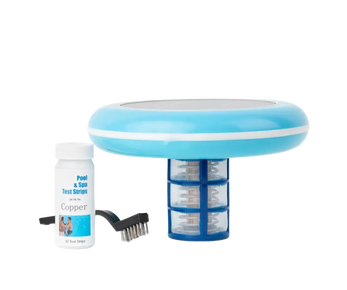
For long term algae prevention that works alongside proper pool maintenance and reduces the need for aggressive chemical treatments, consider adding a Solar Pool Ionizer which releases copper and silver ions to naturally prevent algae growth including mustard algae, while reducing chlorine needs by up to 85% for a healthier, more eco-friendly swimming experience with less chemical dependency.