Applied Biochemists Wintertrine is a specialized winterizing algaecide that prevents algae growth during pool closure. Add 1 quart per 15,000 gallons after balancing chemistry and before covering pool. Works all winter to keep pool algae free. This guide covers complete winterization procedures and best practices for successful pool closing.
Table of Contents
What is Applied Biochemists Wintertrine?
Applied Biochemists Wintertrine Algaecide Cleanser is a specialized winterizing formula designed specifically for pool closing. Unlike regular algaecides used during swimming season, Wintertrine provides long lasting protection throughout winter months when pools are covered and not in use. This concentrated formula prevents algae growth, reduces spring cleanup, and protects your pool investment during the off season.
Key Features of Wintertrine
- Winterizing formula: Designed specifically for pool closing
- Long lasting protection: Works throughout entire winter
- Prevents algae growth: Keeps pool algae free during closure
- Reduces spring cleanup: Makes opening easier
- Concentrated formula: Effective at lower dosages
- Works with all pool types: Compatible with vinyl, fiberglass, plaster, and tile
- Safe for winter covers: Won't damage pool covers
- Professional strength: Used by pool service professionals
How Wintertrine Differs from Regular Algaecides
Regular maintenance algaecides are designed for weekly use during swimming season, while Wintertrine is formulated to provide continuous protection for months without reapplication. Its specialized formula remains effective in cold water temperatures and works under pool covers where algae can still grow in dormant pools.
Why Use Wintertrine for Pool Closing?
Benefits of Winter Algae Prevention
- Prevents algae growth during winter months
- Reduces spring opening workload significantly
- Protects pool surfaces from algae staining
- Maintains clearer water under cover
- Saves time and money on spring cleanup
- Prevents stubborn algae from establishing
- Works continuously without maintenance
- Essential for successful pool winterization
What Happens Without Winter Algaecide
Pools closed without proper algaecide treatment often develop algae growth during winter, even under covers. This leads to green, cloudy water at spring opening, requiring extensive shocking, brushing, and chemical treatment. Wintertrine prevents these problems by stopping algae before it starts.
When to Apply Wintertrine
Optimal Timing for Pool Closing
Temperature Guidelines:
- Close pool when temperatures consistently drop below 65°F
- Don't close too early (algae grows in warm water)
- Don't close too late (risk of freeze damage)
- Apply Wintertrine as final chemical treatment
- Add after balancing chemistry but before covering
Regional Considerations:
- Northern climates: Typically late September to October
- Moderate climates: Late October to November
- Southern climates: November to December
- Check local weather patterns for best timing
Step by Step Application Guide
Step 1: Clean Pool Thoroughly
Before adding Wintertrine, clean pool completely:
- Skim surface to remove all floating debris
- Brush entire pool surface thoroughly
- Vacuum pool bottom completely
- Empty and clean skimmer baskets
- Clean tiles and waterline
- Backwash or clean filter
- Remove as much debris as possible
For effective debris removal, see dealing with leaves and debris in your pool and how to clean pool tiles effectively.
Step 2: Test and Balance Water Chemistry
Proper chemistry is essential before winterizing:
- pH: 7.2 to 7.6 (7.4 to 7.6 ideal for closing)
- Total Alkalinity: 80 to 120 ppm
- Calcium Hardness: 200 to 400 ppm
- Free Chlorine: 1 to 3 ppm
- Balance chemistry before adding Wintertrine
Learn about how to maintain your pool's pH balance and how to manage pool water hardness.
Step 3: Calculate Pool Volume
Accurate dosage depends on knowing your pool's water volume:
Rectangular Pools:
Length (ft) × Width (ft) × Average Depth (ft) × 7.5 = Gallons
Round Pools:
Diameter (ft) × Diameter (ft) × Average Depth (ft) × 5.9 = Gallons
Oval Pools:
Length (ft) × Width (ft) × Average Depth (ft) × 6.7 = Gallons
Step 4: Determine Wintertrine Dosage
Applied Biochemists Wintertrine dosage guidelines:
Standard Winterizing Dosage
1 quart per 15,000 gallons
Dosage Examples:
- 10,000 gallon pool: 21 oz (0.66 quart)
- 15,000 gallon pool: 1 quart (32 oz)
- 20,000 gallon pool: 1.33 quarts (43 oz)
- 25,000 gallon pool: 1.66 quarts (53 oz)
- 30,000 gallon pool: 2 quarts (64 oz)
Step 5: Add Wintertrine to Pool
Apply winterizing algaecide properly:
- Shake Wintertrine bottle well before using
- Measure correct amount based on pool size
- Pour Wintertrine slowly around pool perimeter
- Walk around entire pool while pouring
- Distribute evenly for best results
- Pour near return jets for better mixing
- Do not add directly to skimmer
Step 6: Circulate Wintertrine
Allow proper distribution before closing:
- Run pump for 2 to 4 hours after adding Wintertrine
- Ensure good circulation throughout pool
- Allows algaecide to distribute evenly
- Provides complete pool coverage
- Essential for winter protection
Learn about how pool circulation supports proper maintenance.
Complete Pool Winterization Process
After Adding Wintertrine
Lower Water Level:
- Lower water 4 to 6 inches below skimmer
- Use submersible pump or backwash to waste
- Don't drain pool completely
- Water level protects pool structure
Winterize Equipment:
- Turn off pump at breaker
- Remove drain plugs from pump and filter
- Store drain plugs in pump basket
- Blow out plumbing lines with air compressor
- Install winterizing plugs in all lines
- Add pool antifreeze to lines if needed
Install Winter Cover:
- Position cover evenly over pool
- Secure with water bags or cover clips
- Fill water bags 3/4 full
- Ensure cover is tight and secure
- Check that cover won't sag into pool
Final Winterization Checklist
- Pool cleaned thoroughly
- Chemistry balanced
- Wintertrine added and circulated
- Water level lowered properly
- Equipment drained and winterized
- Plumbing lines blown out
- Winterizing plugs installed
- Pool cover secured
- All accessories removed and stored
Follow a comprehensive pool maintenance checklist for complete winterization.
Pro Tips for Successful Pool Winterization
Expert Winterization Tips
- Don't skip Wintertrine: Essential for algae free winter
- Balance chemistry first: Proper pH ensures Wintertrine effectiveness
- Clean thoroughly: Remove all debris before closing
- Circulate adequately: Run pump 2 to 4 hours after adding
- Time closing correctly: Wait for consistent temperatures below 65°F
- Use proper dosage: Follow guidelines for pool size
- Secure cover properly: Prevents debris and maintains treatment
- Document closing chemistry: Record for reference next year
- Remove solar ionizer: Store indoors for winter
- Practice eco-friendly methods: Learn eco-friendly pool practices
Avoid Common Winterization Mistakes
- Closing too early: Warm water allows algae growth
- Skipping Wintertrine: Leads to green pool in spring
- Not balancing chemistry: Reduces algaecide effectiveness
- Insufficient circulation: Wintertrine not distributed evenly
- Closing dirty pool: Organic matter feeds algae
- Not draining equipment: Water freezes and cracks equipment
- Draining pool too low: Can damage pool structure
- Not securing cover: Wind damage and debris entry
Winter Pool Maintenance
Monthly Winter Checks:
- Inspect pool cover for damage or sagging
- Remove excess water from solid covers
- Remove debris from cover surface
- Check water bags for leaks
- Verify winterizing plugs are in place
- Look for signs of freeze damage
After Heavy Snow or Ice:
- Remove heavy snow from cover if safe
- Don't use sharp tools that could damage cover
- Allow ice to melt naturally
- Check cover supports after melting
Troubleshooting Common Winter Pool Issues
Problem: Green Water When Opening Pool
Prevention:
- Ensure proper Wintertrine dosage at closing
- Balance pH before adding Wintertrine
- Clean pool thoroughly before closing
- Don't close pool too early
- Secure cover to prevent debris entry
If this occurs, see how to fix green pool quickly.
Problem: Algae Under Cover
Causes and Solutions:
- Insufficient Wintertrine dosage: Use correct amount for pool size
- Poor chemistry at closing: Balance pH before winterizing
- Closed too early: Wait for temperatures below 65°F
- Dirty pool at closing: Clean thoroughly first
- Cover allows sunlight: Use opaque winter cover
Problem: Cloudy Water at Opening
Solutions:
- This is normal after winter
- Test and balance chemistry
- Shock pool at opening
- Run pump continuously for 24 hours
- Clean filter thoroughly
- Add clarifier if needed
See how to handle cloudy water and learn about how to use pool clarifiers.
Problem: Equipment Damage from Freezing
Prevention:
- Remove all drain plugs from equipment
- Blow out plumbing lines completely
- Add antifreeze to lines in cold climates
- Store removable equipment indoors
- Cover equipment that remains outside
Frequently Asked Questions
How much Wintertrine should I use?
Use 1 quart per 15,000 gallons for standard winterization. For a 30,000 gallon pool, use 2 quarts. Always measure your pool volume accurately for proper dosing.
When should I add Wintertrine?
Add Wintertrine as the final chemical treatment before covering your pool. Apply after balancing chemistry and cleaning pool, but before lowering water level and installing cover.
Can I use regular algaecide instead of Wintertrine?
No. Regular algaecides are designed for weekly use during swimming season and won't provide adequate winter protection. Wintertrine is specifically formulated for long term winter coverage.
Do I need to add chlorine with Wintertrine?
Maintain normal chlorine levels (1 to 3 ppm) when closing. Wintertrine works alongside chlorine for complete winter protection. Don't over-chlorinate at closing.
How long does Wintertrine last?
Wintertrine provides protection throughout the entire winter season, typically 4 to 6 months. One application at closing is sufficient for the entire off season.
Can I swim after adding Wintertrine?
Wintertrine is added at pool closing when you're done swimming for the season. You won't be swimming after application since the pool will be covered for winter.
Will Wintertrine damage my pool cover?
No. Wintertrine is safe for all pool covers when used as directed. It won't cause damage, discoloration, or deterioration of cover materials.
What if I forget to add Wintertrine?
If you've already closed your pool without Wintertrine, you'll likely face algae problems at spring opening. You can't add it after closing. Plan to shock and treat algae when opening pool.
Can I use Wintertrine in a saltwater pool?
Yes! Wintertrine is compatible with all pool types including saltwater, chlorine, bromine, and mineral systems.
Learn about cleaning and maintaining saltwater pools.
Should I remove my solar pool ionizer before winter?
Yes. Remove solar pool ionizers before closing and store indoors. Reinstall in spring after opening pool. Winter conditions can damage ionizers left in pool.
Learn about solar pool ionizer maintenance and keeping your ionizer running efficiently.
Can I use Wintertrine with other winterizing chemicals?
Yes. Wintertrine works alongside other winterizing chemicals. Add it after balancing chemistry and before covering pool as part of complete winterization process.
Conclusion
Applied Biochemists Wintertrine Algaecide Cleanser provides essential winter protection for closed pools. By following proper application procedures (1 quart per 15,000 gallons after balancing chemistry), thoroughly cleaning your pool, properly winterizing equipment, and securing your cover, you can prevent algae growth during winter months and ensure an easier spring opening. Wintertrine is a critical component of successful pool winterization that protects your investment and reduces spring cleanup workload.
Key Takeaways
- Dosage: 1 quart per 15,000 gallons
- Apply as final chemical treatment before covering
- Balance chemistry before adding Wintertrine
- Clean pool thoroughly before winterizing
- Circulate 2 to 4 hours after adding
- Close when temperatures consistently below 65°F
- Provides protection for entire winter season
- Essential for preventing spring algae problems
- Works with all pool types and sanitizers
- Remove solar ionizer and store indoors for winter
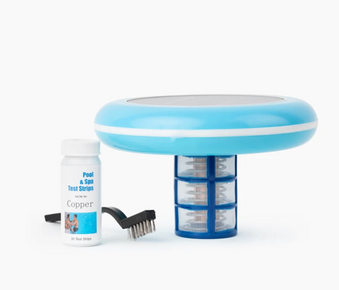
For season long algae prevention during swimming months that reduces chemical usage and complements your winterization routine, consider a solar pool ionizer which uses solar power to release copper and silver ions continuously, reducing chlorine needs by up to 85% while providing natural algae and bacteria prevention throughout the swimming season.