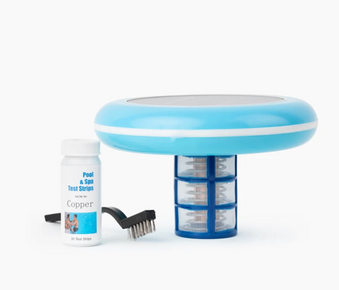
SaltScapes Algae Remover is a specialized algae treatment designed for saltwater pools. Add 1 quart per 10,000 gallons for treatment, brush pool vigorously, run pump 24 hours, clean filter. Works quickly to eliminate algae in saltwater systems. This guide covers complete application procedures and best practices for saltwater pool algae treatment.
Table of Contents
What is SaltScapes Saltwater Pool Care Algae Remover?
SaltScapes Algae Remover is a specialized algae treatment formulated specifically for saltwater pool systems. This powerful formula works quickly to eliminate existing algae while being compatible with salt chlorine generators and saltwater pool chemistry. SaltScapes is designed to address the unique challenges of algae control in saltwater pools, providing effective treatment without interfering with salt cell operation or water balance.
Key Features of SaltScapes Algae Remover
- Saltwater pool specific: Designed for salt chlorine generator systems
- Fast acting: Eliminates algae quickly
- Broad spectrum: Works against all algae types
- Powerful treatment: Handles stubborn algae problems
- Salt cell safe: Won't interfere with chlorine generator operation
- Easy to use: Simple application process
- Works with shock: Use alongside pool shock for best results
- Safe for all surfaces: Compatible with vinyl, fiberglass, plaster, and tile
How SaltScapes Differs from Standard Algaecides
Unlike general purpose algaecides, SaltScapes is specifically formulated for saltwater pools. It works effectively with the unique chemistry of salt chlorine generator systems without causing foam, interfering with salt cell operation, or creating compatibility issues. This makes it the ideal choice for saltwater pool owners dealing with algae problems.
Why Use SaltScapes for Saltwater Pools?
Benefits for Saltwater Pool Systems
- Eliminates existing algae quickly
- Compatible with salt chlorine generators
- Won't damage salt cells
- Works with saltwater chemistry
- Treats all types of algae
- Maintains water clarity
- Easy to apply
- Professional strength formula
Saltwater Pool Algae Challenges
Saltwater pools can experience algae growth just like traditional chlorine pools, especially during periods of high use, warm weather, or when salt cell output is insufficient. SaltScapes provides targeted algae treatment that works within the saltwater system to eliminate algae without disrupting the delicate balance of salt pool chemistry.
When to Use SaltScapes Algae Remover
Ideal Situations for SaltScapes
Algae Treatment:
- Green tint to water
- Algae spots on surfaces
- Visible algae growth
- Cloudy water with algae present
For severe algae, see how to fix green pool quickly.
After Heavy Use:
- Following pool parties
- After periods of high bather load
- When algae appears despite proper salt cell operation
Seasonal Issues:
- Spring pool opening with algae present
- Summer algae blooms
- After heavy rain or storms
Salt Cell Maintenance Periods:
- When salt cell is being cleaned or serviced
- During periods of reduced chlorine output
- When algae appears due to insufficient sanitizer
Step by Step Application Guide
Step 1: Test and Balance Water Chemistry
Before treating algae, test and adjust water:
- pH: 7.2 to 7.6
- Total Alkalinity: 80 to 120 ppm
- Free Chlorine: Note current level (likely low with algae present)
- Salt Level: 2700 to 3400 ppm (check manufacturer specs)
- Calcium Hardness: 200 to 400 ppm
Learn about how to maintain your pool's pH balance.
Step 2: Calculate Pool Volume
Accurate dosage depends on knowing your pool's water volume:
Rectangular Pools:
Length (ft) × Width (ft) × Average Depth (ft) × 7.5 = Gallons
Round Pools:
Diameter (ft) × Diameter (ft) × Average Depth (ft) × 5.9 = Gallons
Oval Pools:
Length (ft) × Width (ft) × Average Depth (ft) × 6.7 = Gallons
Step 3: Determine SaltScapes Dosage
SaltScapes Algae Remover dosage guidelines:
Standard Treatment Dosage
1 quart per 10,000 gallons
Dosage Examples:
- 10,000 gallon pool: 1 quart (32 oz)
- 15,000 gallon pool: 1.5 quarts (48 oz)
- 20,000 gallon pool: 2 quarts (64 oz)
- 25,000 gallon pool: 2.5 quarts (80 oz)
- 30,000 gallon pool: 3 quarts (96 oz)
Severe Algae
For very heavy algae, may need to repeat treatment after 24 hours if algae remains.
Step 4: Shock Pool First
Critical step for algae treatment:
- Shock pool with calcium hypochlorite or liquid chlorine
- Use 2 to 3 lbs shock per 10,000 gallons
- For heavy algae, use triple shock dose
- Add shock in evening for best results
- Allow shock to circulate for 1 to 2 hours
- Turn salt cell to off or low during shocking
Step 5: Add SaltScapes to Pool
Apply algae remover after shocking:
- Shake SaltScapes bottle well before using
- Measure correct amount based on pool size
- Pour SaltScapes slowly around pool perimeter
- Walk around entire pool while pouring
- Distribute evenly for best results
- Pour near return jets for better mixing
- Do not add directly to skimmer
Step 6: Brush Pool Vigorously
Essential step for algae removal:
- Brush entire pool surface thoroughly
- Brush walls from top to bottom
- Brush floor in overlapping strokes
- Brush steps, corners, and crevices
- Focus on areas with visible algae
- Continue brushing for 15 to 20 minutes
- Repeat brushing every 12 hours during treatment
Step 7: Run Pump Continuously
Ensure proper circulation during treatment:
- Run pump continuously for 24 to 48 hours
- Do not turn off pump during treatment
- Allows chemicals to circulate throughout pool
- Filters out dead algae
- Monitor filter pressure closely
- Keep salt cell off or on low setting during treatment
Learn about how pool circulation supports proper maintenance.
Step 8: Clean Filter Frequently
Critical for removing dead algae:
- Clean or backwash filter when pressure rises 8 to 10 PSI
- May need to clean filter 3 to 5 times during treatment
- Backwash sand or DE filters thoroughly
- Clean cartridge filters with hose
- Continue until water runs clear
Step 9: Vacuum Pool
Remove dead algae from pool:
- After 24 to 48 hours, vacuum pool thoroughly
- Vacuum to waste if possible
- If vacuuming to filter, clean filter immediately after
- Remove all visible algae debris
- Refill pool to proper level if vacuumed to waste
Step 10: Resume Normal Salt Cell Operation
Return to normal saltwater pool operation:
- Once algae is cleared, resume normal salt cell settings
- Test and adjust salt level if needed
- Clean salt cell if due for maintenance
- Monitor chlorine output
- Return to normal maintenance routine
Post Treatment Maintenance
Immediate Follow Up (First Week)
Daily Tasks:
- Test chlorine levels (maintain 1 to 3 ppm)
- Test pH and adjust to 7.2 to 7.6
- Test salt level and adjust if needed
- Brush pool surfaces daily
- Run pump 8 to 12 hours daily
- Monitor water clarity
- Clean filter as needed
After Treatment:
- Vacuum pool again if needed
- Test all water chemistry parameters
- Resume normal salt cell operation
- Add preventative algaecide if desired
Follow a comprehensive pool cleaning checklist for beginners and weekly pool cleaning routines.
Ongoing Prevention
Weekly Maintenance:
- Test water chemistry 2 to 3 times per week
- Maintain proper salt cell output
- Keep chlorine at 1 to 3 ppm
- Brush pool surfaces weekly
- Vacuum pool weekly
- Clean filter monthly
- Clean salt cell as recommended by manufacturer
Pro Tips for Maximum Effectiveness
Expert Tips for Saltwater Pool Owners
- Shock first: Always shock pool before adding SaltScapes
- Brush vigorously: Brushing is critical for algae removal
- Run pump continuously: 24 to 48 hours minimum
- Clean filter frequently: Expect to clean 3 to 5 times
- Vacuum to waste: Removes algae from pool completely
- Turn off salt cell: During shocking and initial treatment
- Maintain salt level: Proper salt ensures adequate chlorine production
- Clean salt cell regularly: Prevents algae from low chlorine output
- Be patient: Complete treatment takes 2 to 5 days
Avoid Common Mistakes
- Not shocking first: SaltScapes works best with shock
- Insufficient brushing: Must brush vigorously and frequently
- Turning off pump: Needs continuous circulation
- Not cleaning filter: Clogged filter reduces effectiveness
- Swimming too soon: Wait until chlorine drops below 5 ppm
- Leaving salt cell on high: Turn off or reduce during treatment
- Stopping treatment early: Complete full treatment process
- Not maintaining prevention: Algae returns without proper maintenance
Maximizing SaltScapes Effectiveness
Water Chemistry: Maintain pH at lower end (7.2 to 7.4) during treatment for maximum chlorine effectiveness.
Salt Cell Operation: Turn off or reduce salt cell output during shocking and initial treatment, then resume normal operation once algae is cleared.
Brushing: Brush pool surfaces every 12 hours during treatment to dislodge algae and expose it to chemicals.
Filtration: Run pump continuously and clean filter frequently to remove dead algae.
Frequently Asked Questions
How much SaltScapes should I use?
Use 1 quart per 10,000 gallons for standard treatment. For a 20,000 gallon pool, use 2 quarts. For severe algae, you may need to repeat treatment after 24 hours.
How long does it take SaltScapes to work?
SaltScapes typically shows improvement within 24 hours when used with shock and proper brushing. Complete clearing may take 2 to 5 days depending on algae severity.
Do I need to shock my saltwater pool when using SaltScapes?
Yes! Shocking is essential for SaltScapes to work effectively. Shock pool first, then add SaltScapes. The combination kills algae much faster than either product alone.
Can I swim after adding SaltScapes?
Wait until chlorine levels drop below 5 ppm before swimming, typically 24 to 48 hours after shocking and treating. Test chlorine before swimming.
Will SaltScapes damage my salt cell?
No. SaltScapes is specifically formulated to be safe for salt chlorine generators and won't damage your salt cell when used as directed.
Should I turn off my salt cell during treatment?
Yes. Turn off or reduce salt cell output during shocking and initial treatment. Resume normal operation once algae is cleared and chlorine levels return to normal.
Can I use SaltScapes in a regular chlorine pool?
While SaltScapes is designed for saltwater pools, it can be used in traditional chlorine pools. However, there are other algaecides specifically formulated for chlorine pools that may be more cost effective.
Learn about cleaning and maintaining saltwater pools.
How often should I brush during treatment?
Brush your pool at least twice daily (every 12 hours) during treatment. Vigorous brushing is essential for breaking up algae and allowing chemicals to work.
Why is my filter pressure so high during treatment?
High filter pressure is normal during algae treatment as the filter captures dead algae. Clean or backwash your filter when pressure rises 8 to 10 PSI above normal.
Can I use SaltScapes with a solar pool ionizer?
Yes! SaltScapes treats existing algae while solar pool ionizers prevent future algae growth. Use SaltScapes for treatment, then a solar ionizer provides ongoing prevention with reduced chemical usage.
Explore what does a pool ionizer do and pool ionizer pros and cons.
Conclusion
SaltScapes Saltwater Pool Care Algae Remover provides specialized, effective algae treatment for saltwater pool systems. By following proper application procedures (shock first, add SaltScapes, brush vigorously, run pump continuously, clean filter frequently, turn off salt cell during treatment), you can eliminate algae in your saltwater pool within 24 to 48 hours. Complete the full treatment process and maintain proper salt cell operation to prevent algae from returning.
For long term algae prevention in saltwater pools that reduces the need for chemical treatments like SaltScapes, consider adding a solar pool ionizer which uses solar power to release copper and silver ions continuously, working alongside your salt system to reduce chlorine needs by up to 85% while providing season long algae and bacteria prevention that helps keep your saltwater pool clear and reduces the need for algae treatments.