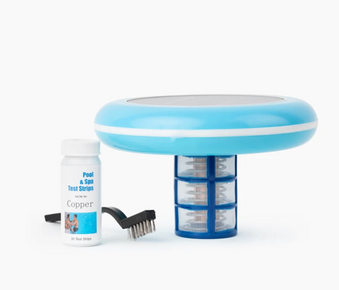
In The Swim Black Pool Algaecide is a specialized treatment for black algae in swimming pools. Add 1 quart per 10,000 gallons, brush vigorously with stainless steel brush, run pump 24 hours, clean filter frequently. Designed specifically for stubborn black algae that resists standard treatments. This guide covers complete application procedures and best practices for black algae elimination.
Table of Contents
What is In The Swim Black Pool Algaecide?
In The Swim Black Pool Algaecide is a specialized treatment formulated specifically to eliminate black algae from swimming pools. Unlike regular algaecides designed for green or mustard algae, this powerful formula penetrates the protective layers that make black algae so resistant to standard pool treatments. Black algae forms deep roots in pool surfaces and creates a protective coating that shields it from chlorine and regular algaecides, requiring this specialized approach.
Key Features of Black Pool Algaecide
- Specialized formula: Designed specifically for black algae
- Penetrating action: Breaks through protective algae layers
- Powerful treatment: Kills algae at the root
- Works with shock: Use alongside pool shock for best results
- Safe for all surfaces: Compatible with vinyl, fiberglass, plaster, and tile
- Professional strength: Used by pool service professionals
- Prevents recurrence: Helps stop black algae from returning
- Easy to use: Simple application process
How Black Algaecide Differs from Regular Algaecides
Regular algaecides work on the surface of algae cells, which is effective for green and mustard algae. Black algae, however, has a waxy protective coating and roots that embed into pool surfaces. In The Swim Black Pool Algaecide is formulated to penetrate these defenses and kill black algae at its source, making it far more effective than standard algaecides for this stubborn problem.
Understanding Black Algae
What Makes Black Algae Different
Black algae is one of the most difficult pool problems to treat because of its unique characteristics. It forms colonies with protective outer layers and develops root-like structures that penetrate pool surfaces, particularly porous materials like plaster. These roots anchor the algae firmly, making it nearly impossible to brush off and highly resistant to chlorine.
Identifying Black Algae
- Dark black or blue-green spots on pool surfaces
- Spots that don't brush off easily
- Rough texture when touched
- Usually appears in shaded areas first
- Often found in corners, steps, or behind ladders
- Persists despite proper chlorine levels
- Returns quickly after standard treatment
Why Standard Treatments Fail
Black algae's protective coating prevents chlorine and regular algaecides from reaching the algae cells. The deep roots allow it to survive even when surface algae is killed. This is why black algae requires specialized treatment with products like In The Swim Black Pool Algaecide combined with aggressive brushing and proper shock treatment.
Learn about whether solar pool ionizer is effective against mustard algae and other algae types.
When to Use Black Pool Algaecide
Ideal Situations for Black Algaecide
Active Black Algae Infestation:
- Dark spots visible on pool surfaces
- Algae that won't brush off
- Spots that persist after shocking
- Black algae in multiple locations
After Initial Black Algae Treatment:
- Following aggressive brushing and shocking
- To prevent algae recurrence
- When spots begin to lighten but remain
- As part of comprehensive treatment plan
Preventative Treatment:
- After successfully eliminating black algae
- In pools with history of black algae
- During pool opening if black algae was present last season
- In shaded pools prone to black algae
For general algae problems, see how to fix green pool quickly.
Step by Step Application Guide
Step 1: Test and Balance Water Chemistry
Before treating black algae, test and adjust water:
- pH: 7.2 to 7.4 (lower end is better for treatment)
- Total Alkalinity: 80 to 120 ppm
- Free Chlorine: Note current level
- Calcium Hardness: 200 to 400 ppm
Learn about how to maintain your pool's pH balance and how to manage pool water hardness.
Step 2: Calculate Pool Volume
Accurate dosage depends on knowing your pool's water volume:
Rectangular Pools:
Length (ft) × Width (ft) × Average Depth (ft) × 7.5 = Gallons
Round Pools:
Diameter (ft) × Diameter (ft) × Average Depth (ft) × 5.9 = Gallons
Oval Pools:
Length (ft) × Width (ft) × Average Depth (ft) × 6.7 = Gallons
Step 3: Determine Black Algaecide Dosage
In The Swim Black Pool Algaecide dosage guidelines:
Standard Treatment Dosage
1 quart per 10,000 gallons
Dosage Examples:
- 10,000 gallon pool: 1 quart (32 oz)
- 15,000 gallon pool: 1.5 quarts (48 oz)
- 20,000 gallon pool: 2 quarts (64 oz)
- 25,000 gallon pool: 2.5 quarts (80 oz)
- 30,000 gallon pool: 3 quarts (96 oz)
Severe Black Algae
For heavy infestations, may need to repeat treatment after 5 to 7 days if black algae persists.
Step 4: Brush Black Algae Spots Aggressively
Critical first step before treatment:
- Use stainless steel pool brush (essential for black algae)
- Brush each black algae spot vigorously for 1 to 2 minutes
- Scrub in circular motion to break protective coating
- Brush hard enough to expose lighter colored plaster underneath
- Focus on breaking up algae roots
- Brush all visible black algae spots
- This step is critical for treatment success
Use the best pool brushes for effective algae removal.
Step 5: Shock Pool
Essential step for black algae treatment:
- Shock pool with calcium hypochlorite or liquid chlorine
- Use triple shock dose (3 lbs per 10,000 gallons)
- Add shock in evening for best results
- Allow shock to circulate for 1 to 2 hours
- Brush black algae spots again after shocking
Step 6: Add Black Pool Algaecide
Apply specialized algaecide after shocking:
- Shake bottle well before using
- Measure correct amount based on pool size
- Pour Black Algaecide directly onto black algae spots
- Pour remaining amount around pool perimeter
- Concentrate application near affected areas
- Do not dilute before applying
- Allow to work for 15 minutes before brushing again
Step 7: Brush Again
Second brushing after algaecide application:
- Wait 15 minutes after adding Black Algaecide
- Brush all black algae spots again vigorously
- Use stainless steel brush
- Brush for 1 to 2 minutes per spot
- This helps algaecide penetrate deeper
Step 8: Run Pump Continuously
Ensure proper circulation during treatment:
- Run pump continuously for 24 to 48 hours
- Do not turn off pump during treatment
- Allows chemicals to work throughout pool
- Filters out dead algae
- Monitor filter pressure closely
Learn about how pool circulation supports proper maintenance.
Step 9: Clean Filter Frequently
Critical for removing dead algae:
- Clean or backwash filter when pressure rises 8 to 10 PSI
- May need to clean filter 3 to 5 times during treatment
- Backwash sand or DE filters thoroughly
- Clean cartridge filters with hose
- Continue until water runs clear
Step 10: Vacuum Pool
Remove dead algae from pool:
- After 24 to 48 hours, vacuum pool thoroughly
- Vacuum to waste if possible
- Pay special attention to areas where black algae was present
- Remove all visible debris
- Refill pool to proper level if vacuumed to waste
Post Treatment Maintenance
Daily Tasks (First Week)
Every Day:
- Brush black algae spots daily with stainless steel brush
- Test chlorine levels (maintain 3 to 5 ppm)
- Test pH and adjust to 7.2 to 7.4
- Run pump 24 hours daily
- Monitor spots for any regrowth
- Clean filter as pressure rises
After One Week:
- Inspect all previously affected areas
- If black spots remain, repeat treatment
- Continue daily brushing of affected areas
- Maintain elevated chlorine (3 to 5 ppm)
Follow a comprehensive pool cleaning checklist and weekly pool cleaning routines for clear water.
Ongoing Prevention
Weekly Maintenance:
- Brush entire pool weekly, especially previous black algae areas
- Maintain proper chlorine levels (1 to 3 ppm)
- Add weekly preventative algaecide
- Test water chemistry 2 to 3 times per week
- Clean filter monthly
- Remove debris promptly
For ongoing algae prevention, see how to use preventative algaecides.
Pro Tips for Maximum Effectiveness
Expert Tips from Pool Professionals
- Use stainless steel brush: Essential for breaking through black algae coating
- Brush aggressively: Don't be gentle, you need to break up the algae
- Shock heavily: Triple shock dose is necessary for black algae
- Apply directly to spots: Pour algaecide onto black algae areas
- Brush multiple times: Before and after algaecide application
- Run pump continuously: 24 to 48 hours minimum
- Clean filter frequently: Expect to clean 3 to 5 times
- Be patient: Black algae treatment takes time and persistence
- Prevent recurrence: Continue brushing affected areas weekly
- Consider solar ionizer: Learn what a pool ionizer does for prevention
Avoid Common Mistakes
- Using nylon brush: Won't penetrate black algae coating
- Not brushing enough: Brushing is critical for success
- Insufficient shock: Black algae requires triple shock dose
- Not applying directly to spots: Algaecide needs contact with algae
- Turning off pump: Needs continuous circulation
- Not cleaning filter: Clogged filter reduces effectiveness
- Giving up too soon: May require multiple treatments
- Not maintaining prevention: Black algae returns without proper care
Preventing Black Algae Return
Maintain Proper Chemistry: Keep pH between 7.2 and 7.6 and chlorine at 1 to 3 ppm consistently.
Brush Regularly: Weekly brushing prevents algae from establishing, especially in previous problem areas.
Improve Circulation: Ensure good water flow to all areas of pool, especially shaded spots.
Use Preventative Algaecide: Weekly algaecide application helps prevent black algae return.
Consider Alternative Solutions: Explore how solar ionizers clear pools without harsh chemicals and how solar ionizers support balanced pool water.
Troubleshooting Common Issues
Problem: Black Algae Persists After Treatment
Solutions:
- Repeat entire treatment process
- Brush more aggressively with stainless steel brush
- Increase shock dosage to quadruple dose
- Apply Black Algaecide directly to each spot
- Consider acid washing for severe cases in plaster pools
- Brush affected areas daily for two weeks
- Maintain chlorine at 5 to 10 ppm during retreatment
Problem: Black Algae Returns After Successful Treatment
Solutions:
- Brush previously affected areas weekly
- Maintain consistent chlorine levels (1 to 3 ppm)
- Add weekly preventative algaecide
- Improve circulation in shaded areas
- Test and balance pH regularly
- Clean filter monthly
- Consider installing solar ionizer for ongoing prevention
Problem: Spots Lighten But Don't Disappear
Solutions:
- Continue daily brushing of spots
- Maintain elevated chlorine (3 to 5 ppm)
- Apply second treatment of Black Algaecide
- Brush spots twice daily
- Be patient, complete elimination can take 2 to 3 weeks
- Lightening spots indicate treatment is working
Problem: Water Cloudy After Treatment
Solutions:
- Continue running pump 24 hours
- Clean filter multiple times
- Add clarifier to help filter capture particles
- Vacuum pool to remove debris
- Test and balance all water chemistry
- Cloudiness should clear within 3 to 5 days
See how to handle cloudy water in swimming pools and learn about how to use pool clarifiers.
Frequently Asked Questions
How much Black Pool Algaecide should I use?
Use 1 quart per 10,000 gallons for standard treatment. For a 20,000 gallon pool, use 2 quarts. Apply directly to black algae spots for best results.
How long does it take to eliminate black algae?
Black algae treatment typically takes 1 to 3 weeks depending on severity. You should see spots lightening within 3 to 5 days, but complete elimination requires patience and persistence.
Do I need a stainless steel brush?
Yes! A stainless steel brush is essential for black algae treatment. Nylon brushes won't penetrate the protective coating. Don't use stainless steel on vinyl liners.
Can I swim after adding Black Algaecide?
Wait until chlorine levels drop below 5 ppm before swimming, typically 24 to 48 hours after shocking and treating. Test chlorine before swimming.
Why does black algae keep coming back?
Black algae returns when roots aren't completely killed or when prevention isn't maintained. Brush affected areas weekly, maintain proper chlorine, and use preventative algaecide to prevent recurrence.
How often should I brush during treatment?
Brush black algae spots at least twice daily during active treatment. Continue daily brushing for one week after spots disappear, then weekly for prevention.
Can I use Black Algaecide in a saltwater pool?
Yes! In The Swim Black Pool Algaecide is compatible with all pool types including saltwater, chlorine, bromine, and mineral systems.
Learn about cleaning and maintaining saltwater pools.
Will Black Algaecide work on green or mustard algae?
While Black Algaecide can work on other algae types, it's specifically formulated for black algae. For green or mustard algae, standard algaecides are more cost effective.
Do I need to drain my pool to eliminate black algae?
No. With proper treatment using Black Algaecide, aggressive brushing, and shocking, you can eliminate black algae without draining. Draining is only necessary in extreme cases.
Can a solar pool ionizer prevent black algae?
Solar pool ionizers can help prevent black algae by maintaining consistent mineral levels that inhibit algae growth. Learn about what a solar pool ionizer is and how to choose a solar pool ionizer.
How can I prevent black algae from returning?
Maintain proper water chemistry, brush weekly (especially previous problem areas), use preventative algaecide, ensure good circulation, and consider adding a solar ionizer for continuous mineral sanitization.
Explore pool ionizer pros and cons and the advantages of solar pool ionizers for residential pools.
Conclusion
In The Swim Black Pool Algaecide provides specialized treatment for stubborn black algae in swimming pools. By following proper application procedures including aggressive brushing with a stainless steel brush, triple shock dosing, direct application to affected spots, continuous pump operation, and frequent filter cleaning, you can successfully eliminate black algae within 1 to 3 weeks. The key to success is persistence, proper technique, and ongoing prevention through regular brushing and water chemistry maintenance.
For long term algae prevention that reduces the need for aggressive treatments and helps prevent black algae from establishing in the first place, consider adding a solar pool ionizer which uses solar power to release copper and silver ions continuously, reducing chlorine needs by up to 85% while providing season long algae and bacteria prevention that creates an environment where black algae struggles to survive.