BioGuard Spot Kill is a concentrated granular treatment for localized algae spots in swimming pools. Apply directly to algae spots using a cup or sock method, brush after 30 seconds, run pump 24 hours. Use for black algae, mustard algae, and stubborn green algae spots. This guide covers complete application procedures and best practices for spot algae treatment.
Table of Contents
What is BioGuard Spot Kill?
BioGuard Spot Kill is a specialized concentrated granular treatment designed to eliminate localized algae spots in swimming pools. This powerful formula targets stubborn algae that clings to pool surfaces, including black algae, mustard algae, and persistent green algae spots. Spot Kill provides a direct, concentrated treatment that kills algae at the source without requiring full pool shocking.
Key Features of BioGuard Spot Kill
- Concentrated formula: Powerful spot treatment for stubborn algae
- Granular application: Apply directly to algae spots
- Fast acting: Works quickly on contact with algae
- Targets black algae: Effective against chlorine-resistant black algae
- Works on mustard algae: Eliminates stubborn yellow algae
- Treats green algae spots: Kills localized green algae patches
- Easy to use: Simple application methods
- Professional strength: Used by pool service professionals
What Makes Spot Kill Different
Unlike regular pool shock or algaecides that treat the entire pool, Spot Kill provides concentrated treatment directly to algae spots. This targeted approach is more effective for stubborn algae that has attached to pool surfaces, particularly black algae which has protective layers that resist normal chlorine treatments.
How Does Spot Kill Work?
The Spot Treatment Process
BioGuard Spot Kill uses a concentrated oxidizing formula that delivers a powerful dose of sanitizer directly to algae spots. When applied to algae, the granules dissolve and penetrate the algae's protective layers, killing it at the root. This direct contact method is much more effective than treating the entire pool for localized algae problems.
Benefits of Spot Kill
- Kills stubborn algae spots quickly
- More effective than whole pool shocking for localized algae
- Penetrates black algae protective layers
- Eliminates mustard algae spots
- Treats problem areas without treating entire pool
- Works on all pool surfaces
- Prevents algae from spreading
- Cost effective for spot treatments
When to Use Spot Kill
Ideal Situations for BioGuard Spot Kill
Black Algae:
- Dark spots on pool surfaces
- Algae that won't brush off easily
- Algae with roots embedded in plaster
- Chlorine-resistant algae spots
Mustard Algae:
- Yellow or tan colored spots
- Algae that brushes off but returns
- Spots in shaded areas of pool
- Algae that looks like dirt or sand
Learn about whether solar pool ionizer is effective against mustard algae.
Stubborn Green Algae Spots:
- Localized green algae patches
- Algae in corners or steps
- Spots that persist after shocking
- Algae on pool walls or floor
For widespread algae, see how to fix green pool quickly.
Step by Step Application Guide
Step 1: Test and Balance Water Chemistry
Before treating algae spots, ensure proper water balance:
- pH: 7.2 to 7.6
- Total Alkalinity: 80 to 120 ppm
- Free Chlorine: 1 to 3 ppm
- Calcium Hardness: 200 to 400 ppm
Learn about how to maintain your pool's pH balance and how to manage pool water hardness.
Step 2: Identify Algae Spots
Locate all algae spots that need treatment:
- Inspect entire pool surface carefully
- Look in corners, steps, and shaded areas
- Check behind ladders and fittings
- Note location and size of each spot
- Identify algae type (black, mustard, or green)
Step 3: Prepare Pool and Equipment
Get ready for spot treatment:
- Turn on pool pump
- Gather supplies (Spot Kill, cup or sock, brush)
- Have pool brush ready for immediate use
- Wear safety goggles and gloves
- Work in well-ventilated area
Step 4: Apply Spot Kill Using Preferred Method
Method 1: Cup Method (Most Common)
- Fill plastic cup with Spot Kill granules
- Hold cup directly over algae spot
- Invert cup underwater onto algae spot
- Allow granules to settle on algae for 30 seconds
- Remove cup carefully
- Immediately brush spot vigorously
- Repeat for each algae spot
Method 2: Sock Method (For Vertical Surfaces)
- Fill old sock or nylon stocking with Spot Kill
- Tie sock closed
- Hold sock directly against algae spot
- Press sock onto spot for 30 seconds
- Remove sock
- Immediately brush spot vigorously
- Repeat for each algae spot
Method 3: Direct Application (For Accessible Spots)
- Lower water level if needed to expose spot
- Sprinkle Spot Kill granules directly on algae
- Let sit for 30 seconds
- Brush vigorously
- Refill pool to normal level
Use the best pool brushes for effective algae removal.
Step 5: Brush Treated Areas
Critical step for algae removal:
- Brush each treated spot immediately after 30 seconds
- Brush vigorously to break up algae
- Use stainless steel brush for black algae
- Brush in circular motion
- Continue brushing for 1 to 2 minutes per spot
- Dislodge as much algae as possible
Step 6: Run Pump Continuously
Ensure proper circulation after treatment:
- Run pump continuously for 24 hours
- Do not turn off pump during this period
- Allows treated algae to be filtered out
- Circulates sanitizer throughout pool
- Monitor filter pressure
Learn about how pool circulation supports proper maintenance.
Step 7: Vacuum and Clean Filter
Remove dead algae from pool:
- After 24 hours, vacuum pool thoroughly
- Vacuum to waste if possible
- Pay special attention to treated areas
- Clean or backwash filter
- May need to clean filter multiple times
Post Treatment Maintenance
Immediate Follow Up (First 48 Hours)
Daily Tasks:
- Brush treated spots daily
- Run pump 24 hours continuously
- Test chlorine levels (maintain 3 to 5 ppm)
- Monitor treated areas for algae return
- Clean filter as pressure rises
First Week After Treatment
Every 2 to 3 Days:
- Brush entire pool, especially treated areas
- Test water chemistry
- Maintain elevated chlorine (3 to 5 ppm)
- Vacuum pool if needed
- Inspect for algae recurrence
Follow a comprehensive pool cleaning checklist for beginners.
Ongoing Prevention
Weekly Maintenance:
- Brush pool surfaces weekly
- Maintain proper chlorine levels (1 to 3 ppm)
- Test water chemistry 2 to 3 times per week
- Add algaecide weekly for prevention
- Clean filter monthly
For ongoing algae prevention, see how to use preventative algaecides.
Pro Tips for Maximum Effectiveness
Expert Tips from Pool Professionals
- Brush immediately: Don't wait more than 30 seconds after applying
- Use stainless steel brush: Essential for black algae treatment
- Treat all spots: Don't miss any algae spots
- Run pump 24 hours: Continuous circulation is critical
- Maintain high chlorine: Keep 3 to 5 ppm for first week
- Brush daily: Daily brushing prevents algae return
- Clean filter frequently: May need multiple cleanings
- Retreat if needed: Some algae may require second treatment
- Prevent recurrence: Use weekly algaecide after treatment
- Practice eco-friendly methods: Learn eco-friendly pool cleaning practices
Avoid Common Mistakes
- Not brushing immediately: Reduces effectiveness significantly
- Insufficient brushing: Must brush vigorously
- Turning off pump: Needs continuous circulation
- Missing spots: Untreated algae will spread
- Not maintaining chlorine: Low chlorine allows algae return
- Using wrong brush: Nylon brush ineffective on black algae
- Not cleaning filter: Dead algae clogs filter
- Swimming too soon: Wait until chlorine drops below 5 ppm
Maximizing Spot Kill Effectiveness
Proper Application: Apply granules directly to algae spots and brush immediately after 30 seconds.
Vigorous Brushing: Brush treated spots vigorously to break up algae and allow Spot Kill to penetrate.
Continuous Circulation: Run pump 24 hours to filter out dead algae and distribute sanitizer.
Prevention: Use weekly algaecide and maintain proper chlorine to prevent algae return.
Troubleshooting Common Issues
Problem: Algae Returns After Treatment
Solutions:
- Retreat spots with Spot Kill
- Brush more vigorously and frequently
- Maintain higher chlorine levels (3 to 5 ppm)
- For black algae, may need acid washing
- Add weekly algaecide for prevention
- Test and balance water chemistry
- Clean filter thoroughly
Problem: Bleached Spots on Pool Surface
Cause: Granules left on surface too long
Prevention:
- Brush immediately after 30 seconds
- Don't leave granules on surface
- Keep granules moving during application
- Use cup or sock method for better control
Problem: Cloudy Water After Treatment
Solutions:
- Continue running pump 24 hours
- Clean or backwash filter
- Add clarifier if needed
- Vacuum pool to remove dead algae
- Test and balance water chemistry
See how to handle cloudy water in swimming pools and learn about how to use pool clarifiers.
Problem: Filter Clogs Repeatedly
Solutions:
- Clean filter more frequently
- Backwash thoroughly if sand or DE filter
- Chemically clean cartridge filters
- Vacuum to waste instead of through filter
- This is normal during heavy algae treatment
Frequently Asked Questions
How do I apply BioGuard Spot Kill?
Use the cup method: fill a plastic cup with Spot Kill, invert it underwater onto the algae spot, wait 30 seconds, remove cup, and immediately brush the spot vigorously. Repeat for each algae spot.
How long should I wait before brushing?
Wait exactly 30 seconds after applying Spot Kill before brushing. This allows the granules to work on the algae. Don't wait longer than 30 seconds to avoid surface bleaching.
Can I swim after using Spot Kill?
Wait until chlorine levels drop below 5 ppm before swimming, typically 8 to 24 hours after treatment. Test chlorine before swimming to ensure safe levels.
Will Spot Kill work on black algae?
Yes! Spot Kill is specifically designed to treat black algae. Use a stainless steel brush and brush vigorously. Black algae may require multiple treatments.
How much Spot Kill should I use per spot?
Use enough granules to cover the algae spot completely, typically 1 to 2 tablespoons per spot depending on size. Apply directly to each spot.
Can I use Spot Kill on all pool surfaces?
Yes, Spot Kill is safe for vinyl, fiberglass, plaster, and tile when used as directed. Brush immediately after 30 seconds to prevent surface bleaching.
Do I need to shock my pool after using Spot Kill?
Spot Kill provides concentrated treatment to algae spots. You may want to shock the entire pool if algae is widespread, but it's not required for localized spot treatment.
How often can I use Spot Kill?
Use Spot Kill as needed when algae spots appear. You can retreat spots after 24 hours if algae persists. For prevention, use weekly algaecide instead.
Can I use Spot Kill with a saltwater pool?
Yes! Spot Kill is compatible with all pool types including saltwater, chlorine, bromine, and mineral systems.
Learn about cleaning and maintaining saltwater pools.
What's the difference between Spot Kill and regular shock?
Spot Kill provides concentrated treatment directly to algae spots, while shock treats the entire pool. Spot Kill is more effective for stubborn localized algae like black algae.
Can I use Spot Kill with a solar pool ionizer?
Yes! Spot Kill treats existing algae spots while solar pool ionizers prevent future algae growth. They work well together for comprehensive algae management.
Explore pool ionizer pros and cons and the advantages of solar pool ionizers for residential pools.
Conclusion
BioGuard Spot Kill provides powerful, targeted treatment for stubborn algae spots in swimming pools. By following proper application procedures (cup or sock method, 30 second contact time, immediate vigorous brushing), running your pump continuously for 24 hours, and maintaining elevated chlorine levels, you can effectively eliminate black algae, mustard algae, and persistent green algae spots without treating your entire pool.
Key Takeaways
- Apply directly to algae spots using cup or sock method
- Wait exactly 30 seconds before brushing
- Brush immediately and vigorously after 30 seconds
- Use stainless steel brush for black algae
- Run pump continuously for 24 hours after treatment
- Maintain chlorine at 3 to 5 ppm for first week
- Brush treated spots daily for several days
- Clean filter frequently during treatment
- Vacuum pool after 24 hours to remove dead algae
- Use weekly algaecide to prevent algae return
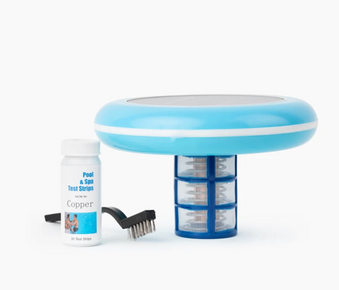
For long term algae prevention that reduces the need for spot treatments and chemical usage, consider adding a Solar Pool Ionizer which uses solar power to release copper and silver ions continuously, reducing chlorine needs by up to 85% while providing season long algae and bacteria prevention that helps prevent the stubborn algae spots that require Spot Kill treatment.