
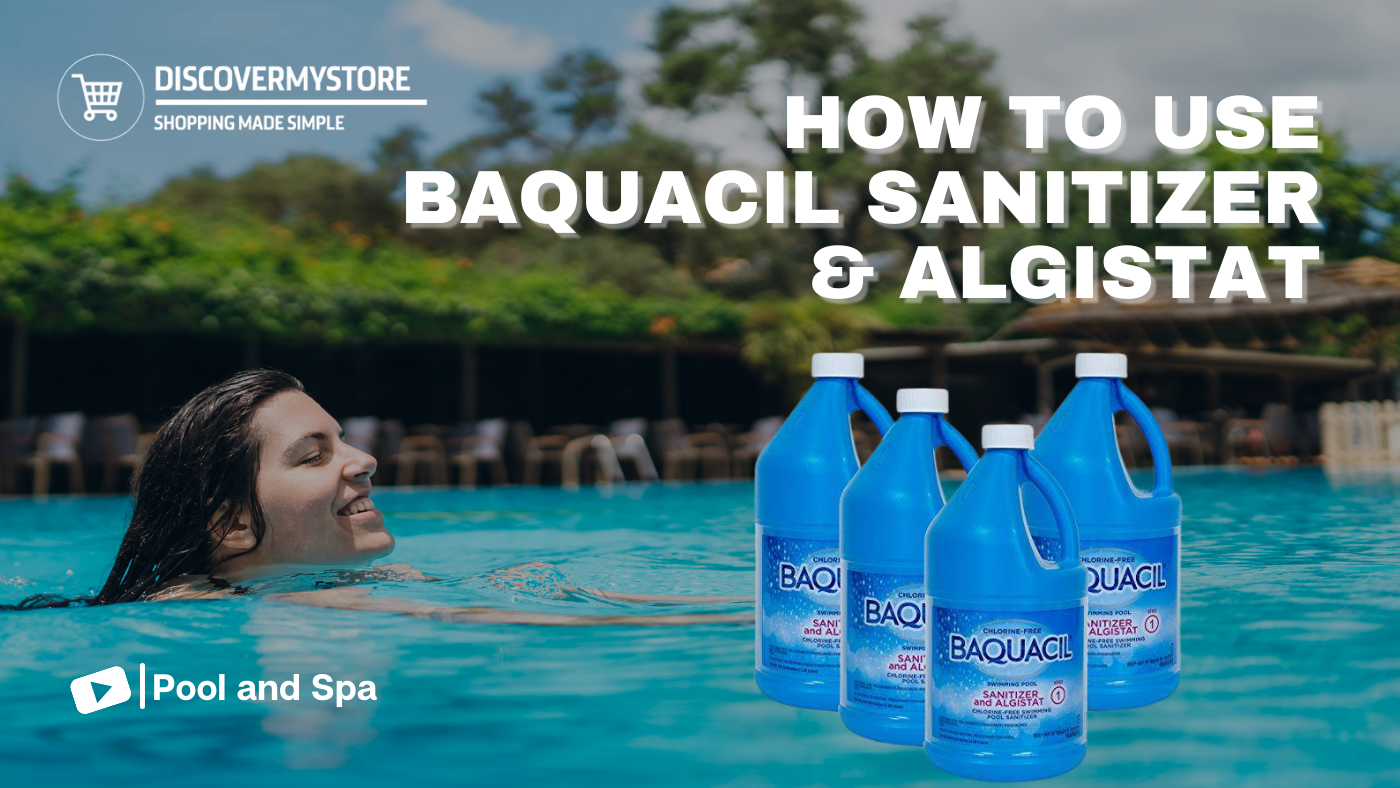
Baquacil Sanitizer & Algistat is a chlorine-free pool sanitizer using PHMB for gentle, effective water treatment. Add 48 to 96 oz per 10,000 gallons initially, then 16 to 24 oz weekly. Pour around pool perimeter, run pump 24 hours, add Baquacil Oxidizer separately. Maintain 30 to 50 ppm Baquacil, pH 7.2 to 7.8. This guide covers complete application, dosage, and maintenance for chlorine-free pools.
Table of Contents
- What is Baquacil Sanitizer & Algistat?
- How Does Baquacil Work?
- Baquacil vs Chlorine: Key Differences
- Step by Step Application Guide
- Proper Dosage and Calculations
- Ongoing Maintenance Schedule
- Testing and Water Balance
- Pro Tips for Maximum Effectiveness
- Troubleshooting Common Issues
- Frequently Asked Questions
What is Baquacil Sanitizer & Algistat?
Baquacil Sanitizer & Algistat is a chlorine-free pool sanitizer that uses polyhexamethylene biguanide (PHMB) as its active ingredient. This biguanide-based system provides effective sanitization and algae prevention without the harsh effects, strong odor, or skin irritation associated with traditional chlorine treatments. Baquacil offers a gentler swimming experience while maintaining crystal-clear, safe pool water.
Key Features of Baquacil System
- Chlorine-free formula: No chlorine smell or irritation
- Gentle on skin and eyes: Ideal for sensitive swimmers
- Long lasting sanitization: Remains active longer than chlorine
- Stable in sunlight: Doesn't degrade from UV exposure like chlorine
- Works in wide pH range: Effective from pH 7.0 to 7.8
- Algae prevention built in: Dual action sanitizer and algaestat
- Compatible with all pool types: Safe for vinyl, fiberglass, and plaster
- Soft water feel: Creates silky, comfortable swimming experience
How Baquacil Differs from Chlorine
Unlike chlorine that oxidizes contaminants, Baquacil uses PHMB to disrupt bacteria and algae cell membranes, causing them to die. This different mechanism provides effective sanitization without the harsh chemical smell, skin irritation, or eye burning associated with chlorine pools.
How Does Baquacil Work?
The Baquacil Sanitization Process
Baquacil Sanitizer & Algistat uses polyhexamethylene biguanide (PHMB), a polymer-based sanitizer that works differently from chlorine. PHMB molecules disperse throughout pool water, attach to bacteria and algae cell walls, disrupt cell membranes, and cause microorganisms to die. Dead organisms are then filtered out of the water while PHMB remains active for continued protection.
Benefits of Biguanide Sanitization
- No chlorine odor: Eliminates harsh chemical smell
- Longer residual: Stays active in water longer than chlorine
- UV stable: Doesn't break down in sunlight
- Less pH sensitive: Works effectively across wider pH range
- Gentler on equipment: Less corrosive than chlorine
- Softer water feel: Creates more comfortable swimming experience
- No chloramines: Eliminates red eyes and skin irritation
- Reduced chemical usage: Fewer adjustments needed
Learn about eco-friendly pool cleaning practices for sustainable pool care.
Baquacil vs Chlorine: Key Differences
Advantages of Baquacil
- No chlorine smell or irritation
- Gentler on skin, eyes, hair, and swimwear
- More stable in sunlight and heat
- Longer lasting sanitization
- Works in wider pH range
- Softer, silkier water feel
- Less frequent chemical additions
- No chloramine formation
Advantages of Chlorine
- Less expensive: Lower chemical costs
- Faster oxidation: Breaks down contaminants more quickly
- Easier to test: Standard test strips widely available
- More product options: Many compatible chemicals available
- Can shock pool: Provides oxidation when needed
- Easier to switch systems: Can convert to other sanitizers
Important Considerations
Baquacil is NOT compatible with chlorine or bromine. You cannot mix these systems. Converting from chlorine to Baquacil (or vice versa) requires draining and refilling your pool. Once you choose Baquacil, you must use only Baquacil-compatible products.
Step by Step Application Guide
Step 1: Determine if Baquacil is Right for Your Pool
Before starting with Baquacil, ensure:
- Your pool is currently chlorine-free (or you're willing to drain and refill)
- You're committed to using only Baquacil-compatible products
- You understand the higher chemical costs compared to chlorine
- Your pool equipment is compatible (most standard equipment works fine)
- You have access to Baquacil products and test strips
Step 2: Calculate Your Pool Volume
Accurate dosage depends on knowing your pool's water volume:
Rectangular Pools:
Length (ft) × Width (ft) × Average Depth (ft) × 7.5 = Gallons
Round Pools:
Diameter (ft) × Diameter (ft) × Average Depth (ft) × 5.9 = Gallons
Oval Pools:
Length (ft) × Width (ft) × Average Depth (ft) × 6.7 = Gallons
Example: A 20ft × 40ft pool with 5ft depth = 20 × 40 × 5 × 7.5 = 30,000 gallons
Step 3: Test and Balance Water Chemistry
Before adding Baquacil, test and adjust water chemistry:
- pH: 7.2 to 7.8 (7.4 to 7.6 ideal)
- Total Alkalinity: 80 to 150 ppm (higher than chlorine pools)
- Calcium Hardness: 200 to 400 ppm
- Ensure pool is free of chlorine (must be 0 ppm)
Use Baquacil-specific test strips or a test kit designed for biguanide systems. Regular chlorine test strips won't work for Baquacil.
Learn about how to maintain your pool's pH balance and how to manage pool water hardness.
Step 4: Add Initial Baquacil Dose
Baquacil Sanitizer & Algistat dosage guidelines:
Initial Treatment (New Pool or Conversion)
Standard Dose: 48 to 96 oz per 10,000 gallons
Dosage Examples:
- 10,000 gallon pool: 48 to 96 oz (3 to 6 pints)
- 15,000 gallon pool: 72 to 144 oz (4.5 to 9 pints)
- 20,000 gallon pool: 96 to 192 oz (6 to 12 pints)
- 25,000 gallon pool: 120 to 240 oz (7.5 to 15 pints)
- 30,000 gallon pool: 144 to 288 oz (9 to 18 pints)
Note: Use higher end of range for pools with algae history or heavy use
Weekly Maintenance Dose
Standard Dose: 16 to 24 oz per 10,000 gallons per week
Dosage Examples:
- 10,000 gallon pool: 16 to 24 oz weekly
- 15,000 gallon pool: 24 to 36 oz weekly
- 20,000 gallon pool: 32 to 48 oz weekly
- 25,000 gallon pool: 40 to 60 oz weekly
- 30,000 gallon pool: 48 to 72 oz weekly
Step 5: Add Baquacil to Pool
Proper application ensures even distribution:
- Start pool pump: Ensure pump is running before adding
- Measure carefully: Use measuring cup for accurate dosing
- Pour around perimeter: Walk around pool, pouring Baquacil evenly around edges
- Avoid dumping in one spot: Even distribution prevents localized concentration
- Brush pool surfaces: Brush walls and floor after adding
- Run pump continuously: Circulate for 24 hours after initial dose
Learn about how pool circulation supports proper maintenance.
Step 6: Add Baquacil Oxidizer
Baquacil requires a separate oxidizer (Baquacil Oxidizer) to break down organic contaminants:
- Add oxidizer 24 hours after adding sanitizer
- Follow oxidizer product instructions for dosage
- Typically 1 to 2 pints per 10,000 gallons weekly
- Never add sanitizer and oxidizer at the same time
Step 7: Test and Adjust
After 48 hours:
- Test Baquacil level (target 30 to 50 ppm)
- Test pH (target 7.2 to 7.8)
- Test alkalinity (target 80 to 150 ppm)
- Adjust as needed based on test results
- Pool is ready for swimming once levels are in range
Ongoing Maintenance Schedule
Weekly Maintenance Routine
Every Week:
- Test Baquacil level, pH, and alkalinity
- Add weekly maintenance dose of Baquacil Sanitizer (16 to 24 oz per 10,000 gallons)
- Add Baquacil Oxidizer (follow product instructions)
- Skim surface and empty skimmer baskets
- Brush pool walls and floor
- Vacuum pool if needed
- Check filter pressure and clean if needed
Follow a comprehensive pool cleaning checklist for beginners.
Monthly Maintenance Tasks
- Deep clean or backwash filter
- Test calcium hardness
- Add Baquacil CDX (algae control) if needed
- Inspect pool equipment
- Clean pool tiles and waterline
- Check chemical inventory and restock
Learn how to clean pool tiles effectively.
Seasonal Considerations
Summer (High Use):
- Test Baquacil levels 2 to 3 times per week
- May need to increase weekly dosage by 25 to 50%
- Clean filter more frequently (every 2 weeks)
- Add oxidizer more frequently if water appears dull
See tips for cleaning your pool after a party.
Spring Opening:
- Test all water parameters
- Add initial dose if Baquacil level is low
- May need Baquacil CDX for algae prevention
- Clean filter thoroughly before starting season
Fall/Winter:
- Continue weekly treatments if pool remains open
- Reduce dosage by 25 to 50% if usage is minimal
- Maintain proper water balance
- For winterization, follow Baquacil winter closing procedures
Testing and Water Balance
Testing Baquacil Levels
Use Baquacil-specific test strips or a biguanide test kit:
- Test weekly minimum (2 to 3 times weekly in summer)
- Target range: 30 to 50 ppm Baquacil
- Below 30 ppm: Add more sanitizer
- Above 50 ppm: Reduce weekly dosage
- Regular chlorine test strips will NOT work for Baquacil
pH and Alkalinity Management
Baquacil works in a wider pH range than chlorine:
- pH range: 7.2 to 7.8 (7.4 to 7.6 ideal)
- Total Alkalinity: 80 to 150 ppm (higher than chlorine pools)
- Use pH increaser or decreaser as needed
- Use alkalinity increaser if alkalinity is low
- Test and adjust pH weekly
Calcium Hardness
- Target range: 200 to 400 ppm
- Test monthly
- Add calcium increaser if below 200 ppm
- Partially drain and refill if above 400 ppm
Pro Tips for Maximum Effectiveness
Expert Tips from Pool Professionals
- Use only Baquacil-compatible products: Never mix with chlorine or bromine products
- Test regularly: Weekly testing minimum, more often in summer
- Balance pH first: Proper pH ensures optimal Baquacil effectiveness
- Don't skip oxidizer: Baquacil Oxidizer is essential for breaking down contaminants
- Clean filter regularly: Baquacil can cause filter buildup, clean monthly
- Brush weekly: Regular brushing prevents algae and distributes chemicals
- Keep detailed records: Track Baquacil levels and dosages to establish patterns
- Stock up on products: Baquacil products may not be available everywhere
- Use quality tools: Employ the best pool brushes
- Consider automation: Use automatic pool cleaners
Avoid Common Mistakes
- Mixing with chlorine: Never add chlorine to a Baquacil pool
- Using wrong test strips: Must use Baquacil-specific test strips
- Skipping oxidizer: Oxidizer is required, not optional
- Not cleaning filter enough: Baquacil requires more frequent filter cleaning
- Inconsistent dosing: Weekly dosing is essential for maintaining levels
- Using incompatible algaecides: Only use Baquacil CDX for algae
- Expecting instant results: Baquacil works more slowly than chlorine shock
- Not brushing regularly: Brushing is critical for Baquacil pools
Maximizing Baquacil Performance
Water Chemistry: Maintain proper balance for optimal Baquacil performance. pH between 7.2 and 7.8 is critical.
Filtration: Run pump 8 to 12 hours daily and clean filter monthly for maximum effectiveness.
Debris Removal: Regular skimming, brushing, and vacuuming prevent organic buildup that consumes sanitizer.
Remove leaves and debris regularly for best results.
Troubleshooting Common Issues
Problem: Cloudy or Hazy Water
Solutions:
- Test and raise Baquacil level to 30 to 50 ppm
- Add Baquacil Oxidizer per product instructions
- Clean or backwash filter thoroughly
- Balance pH and alkalinity
- Run pump continuously for 24 to 48 hours
- May need Baquacil Flocculant for severe cloudiness
See how to handle cloudy water in swimming pools and learn about how to use pool clarifiers.
Problem: Algae Growth
Solutions:
- Raise Baquacil level to 50 ppm
- Add double dose of Baquacil Oxidizer
- Add Baquacil CDX (algae control product)
- Brush pool surfaces vigorously daily
- Run pump 24 hours continuously
- Clean filter frequently during treatment
- Vacuum pool to remove dead algae
For severe algae, see how to fix green pool quickly.
For mustard algae, learn about treating resistant algae types.
Problem: Foaming Water
Solutions:
- Reduce Baquacil dosage if level is above 50 ppm
- Add Baquacil Anti-Foam product
- Ensure you're not overdosing sanitizer
- Check that you're using only Baquacil-compatible products
- Run pump with cover off to allow foam to dissipate
Problem: Filter Clogs Frequently
Solutions:
- Clean filter more frequently (every 2 to 4 weeks)
- Use Baquacil Filter Cleaner for deep cleaning
- Consider upgrading to larger filter if problem persists
- Ensure proper water balance to minimize buildup
- May need to replace filter media more frequently
Frequently Asked Questions
Can I switch from chlorine to Baquacil?
Yes, but you must drain and refill your pool first. Chlorine and Baquacil are NOT compatible and cannot be mixed. After refilling with fresh water, balance chemistry and add initial Baquacil dose.
How often do I need to add Baquacil?
Add Baquacil Sanitizer weekly (16 to 24 oz per 10,000 gallons). Also add Baquacil Oxidizer weekly. Test levels weekly and adjust dosage as needed based on results.
Can I use regular pool chemicals with Baquacil?
No. You must use only Baquacil-compatible products. Regular chlorine shock, algaecides, and clarifiers are NOT compatible with Baquacil and will cause problems.
Why is my Baquacil pool cloudy?
Common causes include low Baquacil level, need for oxidizer, dirty filter, or poor water balance. Test Baquacil level, add oxidizer, clean filter, and balance pH/alkalinity.
Is Baquacil more expensive than chlorine?
Yes. Baquacil products cost 2 to 3 times more than chlorine. However, many pool owners find the benefits (no chlorine smell, gentler on skin, softer water) worth the extra cost.
Can I shock a Baquacil pool?
Not with chlorine shock. Use Baquacil Oxidizer for oxidation. For severe problems, use a double or triple dose of Baquacil Oxidizer, not chlorine shock.
How do I test Baquacil levels?
Use Baquacil-specific test strips or a biguanide test kit. Regular chlorine test strips will NOT work. Test weekly and maintain 30 to 50 ppm Baquacil.
Can I use Baquacil with a saltwater system?
No. Saltwater systems generate chlorine, which is incompatible with Baquacil. You must choose either Baquacil or a saltwater system, not both.
Learn about cleaning and maintaining saltwater pools.
Why does my filter clog more with Baquacil?
Baquacil can cause filter media to clump or clog more than chlorine. Clean your filter every 2 to 4 weeks and use Baquacil Filter Cleaner for deep cleaning.
What if I accidentally add chlorine to my Baquacil pool?
This is a serious problem. Chlorine and Baquacil react and can cause cloudy water, foaming, and loss of sanitization. You may need to drain and refill the pool. Contact a pool professional immediately.
Can I use Baquacil with a solar pool ionizer?
Baquacil pools use a different sanitization system than chlorine or ionizer pools. Consult with both product manufacturers before combining systems, as compatibility may vary.
Explore pool ionizer pros and cons and the advantages of solar pool ionizers for residential pools.
Conclusion
Baquacil Sanitizer & Algistat provides an effective chlorine-free alternative for pool sanitization, offering gentler water, no chlorine smell, and a more comfortable swimming experience. While more expensive than chlorine and requiring specific compatible products, many pool owners find the benefits well worth the investment for a superior swimming experience.
Key Takeaways
- Initial dose: 48 to 96 oz per 10,000 gallons
- Weekly maintenance: 16 to 24 oz per 10,000 gallons
- Must use Baquacil Oxidizer weekly (separate from sanitizer)
- Test weekly and maintain 30 to 50 ppm Baquacil
- pH range: 7.2 to 7.8 (more forgiving than chlorine)
- Use only Baquacil-compatible products
- Cannot mix with chlorine or bromine
- Requires more frequent filter cleaning
- More expensive but gentler and odor-free
- Conversion from chlorine requires drain and refill
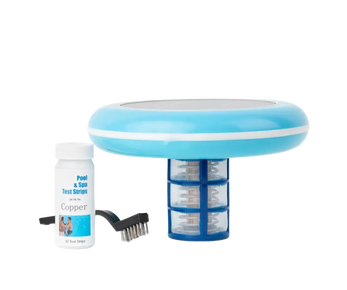
For pool owners seeking alternative sanitization methods that reduce chemical usage while providing effective water treatment, consider exploring a Solar Pool Ionizer which uses copper and silver ions to naturally prevent algae and bacteria growth while reducing chlorine needs by up to 85%, though note that solar ionizers are designed for chlorine-based pools and compatibility with Baquacil chlorine-free systems should be verified with manufacturers before use.
1 comment
I thought Bach was still was a chlorine-free product