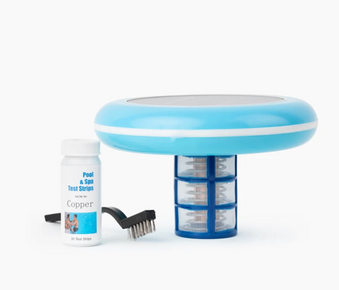
EN BREF : La technologie des ioniseurs solaires de piscine est devenue le principal moteur de l'innovation dans la conception et le fonctionnement des piscines modernes. Ce qui a commencé comme une simple alternative au chlore a évolué en une plateforme technologique sophistiquée englobant l'intelligence artificielle, l'analyse prédictive, les électrodes autonettoyantes, le contrôle de la chimie en boucle fermée et l'intégration transparente avec la maison intelligente. En 2026, ces avancées transforment les piscines, passant de bassins chimiques gérés manuellement à des environnements aquatiques intelligents et autonomes. Ce guide explore les technologies de pointe qui définissent les ioniseurs solaires modernes et la manière dont ils font progresser l'ensemble de l'industrie de la piscine.
Résumé SEO : Guide 2026 sur la technologie des ioniseurs solaires de piscine faisant progresser les piscines modernes : contrôle par IA, analyse prédictive, électrodes autonettoyantes, chimie en boucle fermée et intégration à la maison intelligente.
Table des matières
- L'accélération de la technologie des piscines
- Contrôle alimenté par l'IA et analyse prédictive
- Technologie d'électrodes autonettoyantes
- Gestion de la chimie en boucle fermée
- Intégration transparente à la maison intelligente
- Maintenance prédictive et autodiagnostic
- Technologie avancée des capteurs
- Optimisation énergétique intelligente
- Gestion à distance et analyse de données
- Conclusion et points clés à retenir
L'accélération de la technologie des piscines
La technologie des piscines a historiquement évolué à un rythme très lent. Les éléments de base de la circulation et de l'assainissement des piscines sont restés largement inchangés pendant des décennies. Les pompes sont devenues légèrement plus efficaces. Les filtres se sont améliorés progressivement. La distribution de chlore est devenue plus pratique avec les générateurs de sel. Mais le paradigme fondamental de la piscine en tant que système géré manuellement et dépendant des produits chimiques a persisté.
L'année 2026 marque une rupture décisive avec cette évolution graduelle. Le rythme d'avancée technologique dans l'industrie de la piscine s'est considérablement accéléré, grâce à trois forces convergentes.
- Les attentes des consommateurs ont fondamentalement changé. Les propriétaires de piscines d'aujourd'hui attendent le même niveau d'automatisation et d'intelligence de leurs piscines que celui qu'ils apprécient dans tous les autres aspects de leur maison. Ils veulent un contrôle vocal, une surveillance à distance, un fonctionnement prédictif et une intégration transparente avec leurs écosystèmes de maison intelligente. L'industrie de la piscine répond à ces attentes par une innovation sans précédent.
- Les avancées des capteurs et des contrôleurs ont rendu l'automatisation sophistiquée accessible. Les mêmes technologies qui ont permis la révolution de la maison intelligente capteurs peu coûteux, microcontrôleurs puissants, connectivité omniprésente sont devenues disponibles pour les applications de piscine. La surveillance continue, le contrôle en temps réel et l'analyse des données qui étaient d'un coût prohibitif il y a dix ans sont désormais des fonctionnalités standard.
- L'ionisation solaire fournit la base chimique stable sur laquelle un contrôle avancé peut être construit. La chimie volatile et imprévisible du chlore rend une automatisation sophistiquée difficile. La chimie stable et prévisible de l'eau ionisée la rend possible. Sans cette base, bon nombre des avancées décrites dans ce guide resteraient impraticables.
Les ioniseurs solaires de piscine ne sont pas simplement un autre composant de cet écosystème technologique, ils sont la technologie habilitante qui rend possibles bon nombre de ces avancées. La transformation des piscines de jardin en sanctuaires intelligents et autorégulés est explorée dans notre article sur la réinvention des piscines de jardin, qui documente comment ces avancées technologiques changent l'expérience de la propriété.
Contrôle alimenté par l'IA et analyse prédictive
L'intelligence artificielle a fait son entrée dans les locaux techniques des piscines, transformant les contrôleurs de simples programmateurs en systèmes d'apprentissage qui améliorent continuellement leur compréhension de votre piscine spécifique et de ses modèles de comportement.
- Les capacités de reconnaissance de motifs permettent aux contrôleurs alimentés par l'IA d'analyser les données historiques et d'identifier les motifs dans le comportement de votre piscine. Ils apprennent à quelle vitesse le cuivre est consommé à différentes températures de l'eau. Ils comprennent comment votre piscine réagit à la charge des baigneurs, aux événements pluvieux et aux changements saisonniers. Ils reconnaissent les premiers indicateurs de problèmes en développement avant que ces problèmes ne deviennent visibles pour les observateurs humains.
- La logique d'assainissement prédictive permet aux systèmes d'anticiper la demande future plutôt que de simplement réagir aux conditions actuelles. Si une vague de chaleur est prévue, le système augmente la production de manière préventive. Si de fortes pluies sont annoncées, il renforce le champ ionique avant l'arrivée des contaminants. Cette capacité prédictive maintient la qualité de l'eau face à des événements que les systèmes réactifs n'aborderaient qu'après coup.
- Les algorithmes d'apprentissage continu s'améliorent avec le temps. Après un an de fonctionnement, le système connaît votre piscine bien mieux que n'importe quel humain. Il a appris le niveau de cuivre optimal pour la chimie de votre eau spécifique, le programme de pompe le plus efficace pour votre système de circulation et la réponse idéale à vos habitudes d'utilisation. Cette capacité d'apprentissage s'accumule, les performances du système s'améliorant tout au long de sa durée de vie.
- Les capacités d'apprentissage collectif permettent aux systèmes avancés d'agréger des données anonymisées de milliers de piscines pour améliorer les performances de toutes les installations. Lorsque le système apprend quelque chose d'une piscine, comme une réponse optimale à un modèle météorologique spécifique, cette connaissance peut être appliquée à d'autres piscines présentant des caractéristiques similaires. Cette intelligence collective accélère l'apprentissage pour chaque système connecté.
- Les résultats pratiques pour les propriétaires de piscines incluent une eau toujours parfaite avec une intervention minimale. Fini les proliférations d'algues inattendues, les ajouts de produits chimiques d'urgence, les incertitudes sur le moment d'ajuster le débit. Le système gère tout simplement, apprenant et s'améliorant au fur et à mesure.
Le contrôle par IA représente une avancée fondamentale par rapport aux méthodes d'assainissement traditionnelles. Le contexte plus large de l'évolution de la technologie des piscines est abordé dans notre aperçu des percées technologiques des piscines, qui explore les innovations qui font avancer l'industrie.
Technologie d'électrodes autonettoyantes
L'une des avancées matérielles les plus importantes dans les ioniseurs solaires de piscine est la technologie d'électrodes autonettoyantes. Les électrodes traditionnelles nécessitent un nettoyage manuel périodique pour éliminer les dépôts de calcaire qui s'accumulent sur leurs surfaces, les isolant et réduisant la production d'ions. Les électrodes autonettoyantes éliminent complètement cette tâche de maintenance.
- L'inversion de polarité est la technologie autonettoyante la plus courante. Le contrôleur inverse périodiquement le courant électrique traversant les électrodes, ce qui entraîne le changement de polarité de chaque électrode. Cette inversion crée une force répulsive qui fait se détacher les dépôts de calcaire des surfaces des électrodes. Le calcaire détaché est ensuite emporté par l'eau circulante et capturé par le filtre.
- Le fonctionnement pulsé améliore les conceptions à courant continu. Certains systèmes utilisent un courant continu pulsé plutôt qu'un courant continu. L'action pulsée crée des vibrations microscopiques qui inhibent la formation de tartre et aident à éliminer tout tartre qui commence à se former. Le fonctionnement pulsé améliore également l'efficacité de la libération d'ions, prolongeant la durée de vie des électrodes au-delà de ce que la seule inversion de polarité permet.
- La fréquence de nettoyage adaptative assure une performance optimale. Les contrôleurs modernes déterminent automatiquement la fréquence de nettoyage optimale en fonction de la chimie de l'eau et des conditions de fonctionnement. Les piscines avec une eau plus dure peuvent nécessiter des cycles de nettoyage plus fréquents. Le contrôleur s'adapte, appliquant des cycles de nettoyage uniquement lorsque cela est nécessaire plutôt que selon un calendrier fixe.
- La prolongation de la durée de vie des électrodes grâce à la technologie autonettoyante est spectaculaire. Les électrodes traditionnelles dans les zones d'eau dure pourraient nécessiter un remplacement tous les 1 à 2 ans. Les électrodes autonettoyantes dans les mêmes conditions peuvent durer de 4 à 6 ans ou plus. Cela représente une amélioration de 200 à 300 % de la longévité des électrodes.
- L'élimination de l'entretien est peut-être l'avantage le plus apprécié des propriétaires de piscines. Les électrodes autonettoyantes éliminent une tâche d'entretien salissante et chronophage. Plus besoin de retirer les électrodes, de mélanger des solutions acides, de frotter le tartre et de remonter. Le système gère tout simplement automatiquement, maintenant des performances optimales sans intervention du propriétaire.
La technologie autonettoyante est particulièrement précieuse dans les zones où l'eau est dure, où la formation de tartre nécessiterait autrement une intervention manuelle fréquente. Le mouvement vers des piscines à faible teneur en produits chimiques, qui inclut des exigences de maintenance réduites, est exploré dans notre analyse des tendances des piscines à faible teneur en produits chimiques, démontrant comment ces avancées s'alignent sur les changements plus larges de l'industrie.
Gestion de la chimie en boucle fermée
La gestion de la chimie en boucle fermée représente l'expression ultime du contrôle de l'eau de piscine. Ces systèmes surveillent en permanence la chimie de l'eau et ajustent automatiquement le traitement pour maintenir des paramètres optimaux sans intervention humaine.
- La surveillance continue est le fondement du contrôle en boucle fermée. Ces systèmes emploient un ensemble de capteurs qui surveillent la chimie de l'eau en temps réel. Des capteurs de pH, des capteurs ORP, des électrodes sélectives d'ions cuivre et des capteurs de conductivité fournissent des flux de données constants qui alimentent les contrôleurs centraux. Contrairement aux tests manuels, qui fournissent des instantanés à des moments spécifiques, la surveillance continue révèle les tendances, les motifs et les problèmes en développement avant qu'ils ne deviennent visibles.
- L'ajustement automatique se produit lorsque les capteurs détectent des déviations par rapport aux plages cibles. Les systèmes en boucle fermée activent automatiquement des mesures correctives. Si le cuivre tombe en dessous de 0,2 ppm, le système augmente la production d'ioniseur. Si le pH dépasse 7,8, il injecte de l'acide. Si l'alcalinité sort de sa plage, il active les distributeurs de produits chimiques. Ces ajustements se produisent en continu, maintenant la qualité de l'eau dans des bandes étroites que les méthodes manuelles ne peuvent pas atteindre.
- Les capacités de dosage prédictif vont au-delà de la simple réponse. Les systèmes avancés en boucle fermée ne se contentent pas de réagir aux conditions actuelles, ils prédisent les besoins futurs en se basant sur l'analyse des tendances. Si le système détecte que la consommation de cuivre augmente depuis trois jours consécutifs, il peut augmenter la production de manière préventive plutôt que d'attendre que les niveaux tombent en dessous de la cible. S'il observe que le pH augmente constamment pendant les heures de baignade de l'après-midi, il peut programmer l'ajout d'acide avant ces heures plutôt qu'après.
- L'intégration avec le contrôle de l'ioniseur est transparente. Le contrôleur d'ioniseur reçoit en continu les données de concentration de cuivre des capteurs et ajuste la sortie dynamiquement pour maintenir des niveaux optimaux. Cela élimine le besoin de tests et d'ajustements manuels du cuivre, transformant l'ioniseur d'un appareil nécessitant une attention périodique en un système véritablement autonome.
- Les avantages du contrôle en boucle fermée sont considérables. La qualité de l'eau devient plus constante, avec des paramètres chimiques maintenus dans des plages plus étroites. La consommation de produits chimiques diminue car les ajustements sont précis plutôt qu'approximatifs. La durée de vie des équipements s'allonge car la chimie de l'eau reste constamment équilibrée plutôt que de fluctuer entre les extrêmes. L'implication du propriétaire se réduit, passant de tests hebdomadaires à une vérification occasionnelle du système.
Les systèmes en boucle fermée représentent la pointe de l'automatisation des piscines. L'évolution de la technologie de contrôle de l'eau, des tests manuels à la gestion autonome, est documentée dans notre guide sur l'évolution du contrôle de l'eau de piscine, qui retrace le développement de ces capacités sophistiquées.
Intégration transparente à la maison intelligente
En 2026, les piscines ne sont plus des systèmes isolés, elles sont des membres entièrement intégrés de l'écosystème de la maison intelligente. Les ioniseurs solaires de piscine sont conçus dès le départ pour communiquer avec l'ensemble de la maison connectée.
- Les capacités de contrôle vocal sont désormais standard sur les contrôleurs modernes. L'intégration avec Amazon Alexa, Google Assistant et Apple HomeKit permet aux propriétaires de vérifier l'état du système, d'ajuster les réglages ou de vérifier la qualité de l'eau par de simples commandes vocales. "Hey Google, demande à ma piscine quel est le niveau de cuivre" renvoie une réponse immédiate. Cette intégration vocale rend la gestion de la piscine accessible à tous les membres du foyer, et pas seulement à l'opérateur désigné.
- L'automatisation par géorepérage utilise les données de localisation du smartphone pour déclencher des réponses automatisées lorsque les propriétaires quittent ou approchent la maison. Lorsque le système détecte que tous les résidents sont partis, il peut réduire le fonctionnement de la pompe au minimum tout en maintenant un assainissement de base. Lorsqu'il détecte que quelqu'un revient, il peut augmenter la production pour assurer une qualité d'eau parfaite à l'arrivée. Certains systèmes se coordonnent avec les calendriers, préparant la piscine pour des événements ou des fêtes programmés.
- La coordination de la gestion énergétique permet aux systèmes de piscine de fonctionner avec les plateformes énergétiques domestiques. À mesure que les maisons intègrent des panneaux solaires, du stockage sur batterie et des compteurs intelligents, les piscines peuvent automatiquement décaler leur fonctionnement vers les périodes de production solaire maximale, stocker l'énergie thermique dans l'eau pour une utilisation ultérieure, ou réduire la consommation pendant les périodes de pointe du réseau. Cette intégration transforme la piscine d'une charge énergétique fixe en une ressource flexible qui contribue à l'efficacité globale de la maison.
- L'intégration de la plateforme de maintenance se connecte à des services qui suivent les calendriers d'entretien des équipements, commandent automatiquement des pièces de rechange et planifient un service professionnel si nécessaire. Si le système prévoit le remplacement d'électrodes dans 30 jours, il peut ajouter des cartouches de remplacement à votre liste de courses ou planifier un rendez-vous de service via des plateformes connectées.
- La gestion multi-propriétés via des plateformes basées sur le cloud permet un contrôle centralisé de plusieurs systèmes de piscine à partir d'une seule interface. Qu'il s'agisse de surveiller une résidence principale, une maison de vacances ou une propriété locative, les propriétaires peuvent vérifier l'état, ajuster les paramètres et recevoir des alertes pour toutes les propriétés via une seule application.
L'intégration à la maison intelligente transforme la piscine d'un système isolé en un composant connecté de la maison. Les principes de l'entretien de piscine à énergie solaire, y compris la façon dont ces systèmes interagissent avec les réseaux énergétiques domestiques, sont explorés dans notre guide sur le fonctionnement à énergie solaire, qui fournit des informations complètes sur l'optimisation énergétique.
Maintenance prédictive et auto-diagnostic
Les ioniseurs solaires modernes ne se contentent pas de surveiller la chimie de l'eau, ils surveillent leur propre santé et prédisent quand une maintenance sera nécessaire. Cette capacité de maintenance prédictive transforme l'entretien des équipements d'une estimation réactive en une certitude programmée.
- La prédiction de la durée de vie des électrodes est obtenue grâce au suivi continu des ampères-heures cumulés et de la résistance des électrodes. En analysant ces données par rapport aux schémas de défaillance connus, le contrôleur peut prédire avec une précision remarquable le moment où les électrodes devront être remplacées. Des mois avant que le remplacement ne soit nécessaire, le système alerte le propriétaire, laissant le temps de commander les pièces et de planifier le remplacement à un moment opportun.
- La surveillance des panneaux solaires suit la production et la compare à la production attendue en fonction de la date, de l'heure et des conditions météorologiques. Si la production tombe en dessous des niveaux attendus, le contrôleur alerte le propriétaire des problèmes potentiels tels que l'encrassement des panneaux, l'ombrage ou la dégradation. Cet avertissement précoce prévient les manques d'assainissement inattendus et maintient des performances optimales.
- La détection du débit et de la pression assure une surveillance continue du système de circulation. Des capteurs de débit et de pression intégrés suivent les performances du système. Si le débit tombe en dessous des niveaux requis, le système alerte le propriétaire des problèmes potentiels de pompe, de charge du filtre ou de désalignement des vannes. Le taux d'augmentation de la pression prédit quand le nettoyage du filtre sera nécessaire, permettant une planification plutôt qu'une réponse réactive.
- L'auto-diagnostic du contrôleur vérifie en permanence le fonctionnement interne. Le contrôleur vérifie la fonction des capteurs, les liaisons de communication et l'électronique interne. Si un composant commence à tomber en panne, le système alerte le propriétaire avec des informations de diagnostic spécifiques, permettant des réparations ciblées plutôt que des suppositions.
- L'automatisation de la planification de la maintenance basée sur les données prédictives génère un calendrier de maintenance. Le système peut planifier le remplacement des électrodes, le nettoyage des filtres et d'autres tâches à des intervalles optimaux. Certains systèmes s'intègrent aux plateformes de maison intelligente pour commander automatiquement les pièces de rechange et planifier les rendez-vous de service.
La maintenance prédictive est rendue possible par l'environnement riche en données des systèmes d'eau intelligents. Les principes de la maintenance prévisible, qui s'appuient sur ces capacités de diagnostic, sont détaillés dans notre guide sur l'entretien prévisible des piscines, offrant des stratégies pratiques pour tirer parti de ces fonctionnalités.
Technologie de capteurs avancée
Les avancées en matière de systèmes d'eau plus intelligents décrites ci-dessus seraient impossibles sans des avancées parallèles dans la technologie des capteurs. Les capteurs modernes sont plus précis, plus fiables et plus abordables que jamais.
- Les électrodes sélectives d'ions pour le cuivre ont constitué une percée pour l'automatisation des ioniseurs. Ces capteurs peuvent mesurer des concentrations de cuivre aussi faibles que 0,1 ppm avec une précision proche des instruments de laboratoire. Lorsqu'elles sont intégrées aux contrôleurs d'ioniseurs, elles permettent un contrôle en boucle fermée, ajustant automatiquement la production pour maintenir les niveaux de cuivre cibles sans tests manuels.
- Les sondes multiparamètres mesurent plusieurs paramètres simultanément. Une seule sonde peut mesurer le pH, l'ORP, la concentration en cuivre, la température et la conductivité. Cette capacité multiparamètre réduit la complexité d'installation et fournit une image plus complète de la chimie de l'eau. Certains capteurs avancés utilisent des réseaux optiques ou électrochimiques qui peuvent détecter des contaminants spécifiques ou prédire des problèmes en développement.
- Les capteurs sans fil et autonettoyants représentent les dernières avancées. Les capteurs sans fil peuvent être placés à plusieurs points du système de circulation, fournissant des données sur la distribution chimique dans toute la piscine. Les capteurs autonettoyants utilisent des vibrations ultrasoniques ou des essuie-glaces mécaniques pour empêcher l'accumulation de biofilm qui dégraderait autrement la précision. Ces caractéristiques réduisent les exigences de maintenance et améliorent la fiabilité à long terme.
- L'étalonnage automatique et la gestion de la dérive abordent les défis inévitables du fonctionnement des capteurs. Malgré les avancées, les capteurs nécessitent toujours un étalonnage périodique et sont sujets à la dérive au fil du temps. Les systèmes de contrôle modernes y remédient par des routines d'étalonnage automatique et des algorithmes de compensation de la dérive. Certains systèmes peuvent détecter quand un capteur dérive hors des spécifications et alerter le propriétaire avant que la précision ne se dégrade de manière significative.
- Les technologies de capteurs prédictifs émergentes peuvent détecter les problèmes en développement avant qu'ils n'affectent la qualité de l'eau. Les capteurs optiques peuvent détecter la croissance précoce des algues en mesurant la fluorescence de la chlorophylle. Les capteurs électrochimiques peuvent détecter les charges de contaminants organiques avant qu'elles ne créent des pics de demande. Ces capacités prédictives permettront une gestion de l'eau encore plus proactive à l'avenir.
Les technologies de capteurs qui permettent des systèmes d'eau plus intelligents évoluent rapidement. La quête d'une clarté d'eau exceptionnelle, qui dépend fortement d'une détection précise, est explorée dans notre ressource sur l'amélioration de la clarté de l'eau, démontrant comment la détection avancée contribue à une eau cristalline.
Optimisation énergétique intelligente
L'efficacité énergétique a toujours été un avantage de l'ionisation solaire, mais les systèmes d'eau plus intelligents portent l'optimisation énergétique à de nouveaux niveaux grâce à un contrôle intelligent et adaptatif.
- Le fonctionnement synchronisé avec l'énergie solaire planifie automatiquement le fonctionnement de la pompe pendant les heures de pointe solaire, maximisant l'utilisation de l'énergie renouvelable. En été, cela peut signifier un fonctionnement prolongé à basse vitesse pendant les heures de clarté. Au printemps et à l'automne, le système comprime le fonctionnement dans une fenêtre solaire plus étroite. Le programme s'adapte automatiquement aux changements saisonniers sans programmation par le propriétaire.
- La logique de réponse au nuage ajuste intelligemment la vitesse de la pompe lorsque la couverture nuageuse réduit la production solaire. Plutôt que de passer à l'alimentation du réseau, le système réduit la vitesse, maintenant la circulation tout en évitant la consommation du réseau. Lorsque les nuages passent, la vitesse augmente à nouveau automatiquement, assurant un fonctionnement continu sans tirages inutiles sur le réseau.
- L'optimisation des heures d'utilisation apprend votre structure tarifaire de l'électricité et déplace les opérations non essentielles vers les périodes creuses. La charge de la batterie, la filtration prolongée et d'autres charges discrétionnaires sont programmées lorsque l'électricité est la moins chère, maximisant les économies sans compromettre la qualité de l'eau.
- La coordination de la batterie optimise la charge et la décharge en fonction de la disponibilité solaire, des tarifs d'électricité et de la demande anticipée. Les batteries sont chargées pendant les heures de pointe solaire et déchargées pendant le fonctionnement en soirée, permettant une circulation solaire de 24 heures. Cela transforme la piscine en une commodité véritablement alimentée par les énergies renouvelables.
- Le rapport et l'analyse énergétiques offrent une visibilité détaillée des modèles de consommation. Les contrôleurs modernes offrent des rapports énergétiques complets, montrant la consommation par composant, la production solaire, les achats sur le réseau et l'impact carbone. Ces données permettent aux propriétaires de comprendre le profil énergétique de leur piscine et d'identifier d'autres opportunités d'optimisation.
Les capacités d'optimisation énergétique des systèmes d'eau intelligents génèrent des économies substantielles. Le contexte plus large de la façon dont les ioniseurs de piscine solaires réduisent les coûts énergétiques est abordé dans notre ressource sur l'amélioration des performances, qui quantifie les réductions réalisables de la consommation d'énergie.
Gestion à distance et analyse des données
La capacité de surveiller et de gérer les systèmes de piscine à distance a transformé la propriété des piscines, en particulier pour les résidences secondaires, les propriétés locatives et les propriétaires qui voyagent fréquemment.
- Les applications pour smartphone offrent une visibilité complète du fonctionnement de la piscine. Des applications dédiées permettent aux propriétaires de visualiser les niveaux de cuivre en temps réel, les lectures de pH, la température de l'eau et l'état du système depuis n'importe où. Les graphiques montrent les tendances au fil du temps, révélant les schémas en développement avant qu'ils ne deviennent des problèmes. Les notifications push alertent les propriétaires des événements importants, des besoins de maintenance ou des anomalies du système.
- Les tableaux de bord web offrent une visualisation et un contrôle complets des données pour un accès via ordinateur de bureau. Les propriétaires peuvent consulter les données historiques, comparer les performances au fil des saisons et générer des rapports sur la consommation d'énergie, les économies de produits chimiques et le fonctionnement du système. Ces outils transforment les données brutes en informations exploitables.
- Les capacités de réglage à distance permettent aux propriétaires d'effectuer des modifications depuis n'importe où. Augmenter la production de l'ioniseur, modifier les horaires de la pompe ou changer les paramètres cibles, le tout depuis un smartphone. Cette capacité est inestimable pour réagir aux événements inattendus en déplacement, garantissant que la qualité de l'eau reste optimale quelle que soit la localisation.
- L'accès multi-utilisateur prend en charge plusieurs comptes avec des autorisations personnalisables. Les gestionnaires immobiliers peuvent avoir un contrôle total tandis que les propriétaires ont un accès en lecture seule. Les prestataires de services peuvent se voir accorder un accès temporaire pour la maintenance. Les membres de la famille peuvent vérifier l'état sans accéder aux paramètres critiques. Cette flexibilité s'adapte à divers scénarios de propriété et de gestion.
- La télémétrie et l'enregistrement des données fournissent un enregistrement complet du fonctionnement de la piscine. La télémétrie continue crée une ressource inestimable pour le dépannage, l'optimisation des performances et la documentation de la qualité de l'eau à des fins commerciales ou réglementaires. Certains systèmes offrent un stockage cloud illimité avec des capacités d'analyse et de reporting avancées.
Les capacités de gestion à distance sont particulièrement précieuses pour ceux qui ne peuvent pas être physiquement présents pour surveiller leur piscine. L'essor des ioniseurs de piscine solaires dans les piscines modernes, en partie grâce à ces fonctionnalités de connectivité, est documenté dans notre analyse des tendances du marché, qui discute de la façon dont ces capacités favorisent l'adoption par les propriétaires de piscines modernes.
Conclusion et points clés à retenir
La technologie des ioniseurs de piscine solaires fait progresser les piscines modernes à un rythme sans précédent. Du contrôle alimenté par l'IA aux électrodes autonettoyantes, de la chimie en boucle fermée à l'intégration transparente à la maison intelligente, les capacités disponibles pour les propriétaires de piscines aujourd'hui auraient semblé de la science-fiction il y a seulement dix ans.
Ces avancées ne sont pas des améliorations incrémentales, ce sont des réimaginations fondamentales de ce que peut être la propriété d'une piscine. La piscine de 2026 n'est pas un appareil qui nécessite une attention constante et une gestion chimique. C'est un système intelligent et autonome qui s'entretient, optimise son propre fonctionnement et ne communique avec ses propriétaires que lorsque cela est nécessaire.
La technologie qui permet ces avancées est mature et fiable. Les algorithmes d'IA ont été affinés grâce à des millions d'heures de fonctionnement. Les capteurs ont été testés dans des milliers d'installations. Les contrôleurs ont été prouvés dans divers climats et conditions. Les composants existent et fonctionnent ensemble de manière transparente.
Pour les propriétaires de piscines, ces avancées se traduisent directement par des avantages tangibles. Moins de temps à gérer les produits chimiques. Des coûts d'exploitation réduits. Moins de réparations imprévues. Une eau toujours parfaite plutôt que parfois problématique. La liberté de voyager sans se soucier de l'état de la piscine. La satisfaction de faire fonctionner un système véritablement intelligent.
L'avenir de la technologie des piscines est prometteur, et les ioniseurs de piscine solaires ouvrent la voie.
Points clés à retenir
- Les ioniseurs de piscine solaires fournissent la base chimique stable qui permet une automatisation avancée. La chimie volatile et imprévisible du chlore rend le contrôle sophistiqué difficile ; la chimie stable et prévisible de l'eau ionisée le rend possible. Notre ressource sur la stabilité de l'eau des piscines explique pourquoi cette base est essentielle.
- Le contrôle alimenté par l'IA avec analyse prédictive transforme la gestion de la piscine de réactive à proactive. Les systèmes apprennent le comportement unique de votre piscine, anticipent les problèmes et maintiennent une qualité d'eau parfaite avec une intervention minimale.
- La technologie des électrodes autonettoyantes élimine la maintenance manuelle et prolonge la durée de vie des électrodes de 200 à 300 pour cent. L'inversion automatique de polarité et le fonctionnement pulsé empêchent l'accumulation de calcaire et garantissent des performances constantes.
- La gestion chimique en boucle fermée atteint une véritable autonomie. La surveillance continue avec un ajustement automatique maintient des paramètres optimaux sans intervention humaine, représentant l'expression ultime de l'automatisation de la piscine.
- L'intégration de la maison intelligente connecte les piscines à des écosystèmes plus larges. Le contrôle vocal, le géorepérage, la coordination de la gestion de l'énergie et l'automatisation de la maintenance font des piscines des membres entièrement intégrés de la maison connectée.
- La maintenance prédictive évite les surprises. L'auto-diagnostic continu et la surveillance des composants prédisent les défaillances des semaines ou des mois à l'avance, permettant une maintenance planifiée plutôt qu'une urgence. Notre guide pour une chimie plus simple fournit un contexte sur la façon dont la complexité réduite améliore ces capacités.
- Les capteurs avancés permettent une visibilité sans précédent. Les électrodes ionosélectives, les sondes multiparamètres et la technologie sans fil fournissent des données continues et précises sur la chimie de l'eau qui n'étaient auparavant pas disponibles.
- L'optimisation énergétique intelligente minimise les coûts. Le fonctionnement synchronisé avec l'énergie solaire, la réponse aux nuages, l'optimisation des heures d'utilisation et la coordination des batteries réduisent la consommation d'énergie de 60 à 75 pour cent.
- La gestion à distance transforme la propriété. Les applications pour smartphone, les tableaux de bord web et la télémétrie permettent une visibilité et un contrôle complets depuis n'importe où, rendant la propriété d'une piscine réalisable pour les résidences secondaires et les voyageurs fréquents.
- La technologie est éprouvée et accessible. Des milliers d'installations dans toutes les zones climatiques démontrent que ces avancées produisent des résultats documentés et reproductibles. Pour ceux qui sont prêts à profiter de ces avantages, notre ressource sur l'alimentation de nouvelle génération des piscines fournit des conseils sur la sélection et la mise en œuvre de ces systèmes avancés.
La technologie des piscines est entrée dans une nouvelle ère, et les ioniseurs solaires de piscine alimentent cette transformation. Les piscines de demain sont construites aujourd'hui, et elles sont plus intelligentes, plus efficaces et plus agréables que tout ce qui les a précédées.