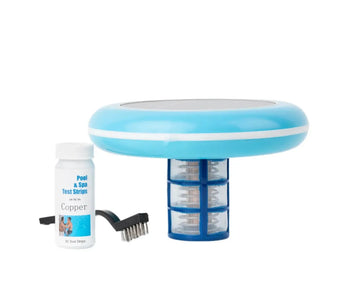
TL;DR: Changing weather patterns present significant challenges for pool owners, from sudden temperature swings to heavy rain events, prolonged cloud cover, and seasonal transitions. Solar pool ionizers are uniquely suited to handle these variations through stable chemistry that resists weather-related fluctuations, predictive capabilities that anticipate conditions, and autonomous operation that adapts without owner intervention. This guide explores how solar ionization helps pools weather the storms literally and figuratively, maintaining water quality through every weather event.
SEO Summary: 2026 guide to solar pool ionizer for pools with changing weather: handling rain, temperature swings, cloud cover, seasonal transitions, and weather-responsive operation.
Table of Contents
- The Weather Challenge for Pools
- Heavy Rain Response and Recovery
- Managing Temperature Swings
- Extended Cloud Cover and Solar Production
- Heat Waves and Increased Demand
- Freeze Protection and Cold Weather
- Smooth Seasonal Transitions
- Weather Anticipation and Predictive Operation
- Post-Storm Recovery Protocols
- Conclusion & Key Takeaways
The Weather Challenge for Pools
Weather is one of the most significant variables affecting pool water quality, and changing climate patterns have made this challenge more pronounced than ever. Understanding how weather affects pools helps explain why solar ionizers are particularly well-suited to handle these variations.
- Heavy rain events introduce multiple challenges simultaneously. Rainwater is acidic, typically with pH around 5.6, which can lower pool pH significantly. It dilutes chemical concentrations, potentially reducing sanitizer effectiveness. It brings airborne contaminants including dust, pollen, and pollutants. And it can overwhelm drainage systems, causing overflow and dilution.
- Temperature swings affect biological activity dramatically. Algae and bacteria multiply faster in warm water, with growth rates doubling for every 10 degree increase. Cold water slows biological activity but can also affect equipment operation and swimmer comfort.
- Cloud cover impacts solar ionizer operation directly. While ionizers are designed to handle variable sun, extended cloudy periods can reduce ion production. Understanding this relationship helps owners manage expectations and system performance.
- Heat waves create ideal conditions for algae blooms. Warm water combined with increased swimmer load from pool parties creates perfect storm conditions for water quality problems. Sanitation demand spikes exactly when pools are used most.
- Freeze conditions threaten equipment and require protective measures. Pumps, plumbing, and ionizer chambers can be damaged by freezing water. Proper winterization and freeze protection protocols are essential.
- Seasonal transitions from spring to summer to fall require different management approaches. What works in cool spring water may be inadequate in summer heat, and vice versa. Pools that don't adapt to seasons struggle with water quality.
Solar pool ionizers address these weather challenges through fundamentally stable chemistry that resists fluctuations and intelligent operation that adapts to changing conditions. The article on how weather affects solar ionizer performance provides detailed information on these relationships.
Heavy Rain Response and Recovery
Heavy rain events are among the most common weather challenges for pool owners. Solar ionizers help pools weather these storms through stable chemistry and systematic recovery protocols.
- pH drop from rain is predictable and manageable. Rainwater is acidic, and a heavy downpour can lower pool pH by 0.2 to 0.4 units or more depending on rainfall amount. In chlorinated pools, this pH drop can cause chlorine to become more active temporarily, but in ionized pools, the primary concern is maintaining copper effectiveness.
- Dilution of copper levels occurs as rain adds water to the pool. The extent of dilution depends on rainfall amount and pool size. A one-inch rain on a 20,000-gallon pool adds approximately 1,250 gallons, diluting copper by about 6 percent. This is rarely enough to drop copper below effective levels, but it's worth checking.
- Contaminant load from rain includes airborne dust, pollen, and pollutants that wash into the pool. These organic materials can create temporary cloudiness and increase oxidation demand. Ionic flocculation helps clump these particles for filtration, speeding recovery.
- Post-rain testing protocol should include pH and copper. Test within 24 hours of heavy rain. If pH has dropped below 7.4, adjust with soda ash. If copper has dropped below 0.2 ppm, temporarily increase ionizer output.
- Extended filtration after rain accelerates recovery. Running the pump continuously for 24 to 48 hours after heavy rain helps filter out introduced contaminants and restore clarity. The ionic flocculation process works continuously during this period.
- Non-chlorine shock may be beneficial after very heavy rain or if the water appears cloudy. A single application of MPS oxidizes organic contaminants without affecting copper levels, speeding recovery.
Rain response is systematic and effective with solar ionizers. The operational guidelines for solar pool ionizer in 2026 provide detailed protocols for post-rain recovery.
Managing Temperature Swings
Temperature swings affect biological activity, chemical reaction rates, and equipment operation. Solar ionizers handle these variations through temperature compensation and stable chemistry.
- Biological activity increases with temperature. Algae and bacteria multiply faster in warm water, creating higher sanitation demand. For every 10 degree increase in water temperature, biological growth rates approximately double. A pool at 85 degrees has roughly four times the biological activity of a pool at 65 degrees.
- Temperature compensation in modern ionizer controllers automatically adjusts output based on water temperature. When water warms, output increases to meet higher demand. When it cools, output decreases, preserving electrode life. This automatic adjustment ensures sanitation always matches biological need without owner intervention.
- Copper effectiveness remains stable across temperature ranges. Unlike chlorine, which becomes more aggressive at higher temperatures and dissipates faster, copper ions maintain their sanitizing properties consistently. The only adjustment needed is in the quantity of ions produced, which temperature compensation handles.
- Sudden cold snaps can catch pool owners off guard. In ionized pools, the stable chemistry means no immediate action is needed. The system will naturally reduce output as water cools. However, if freezing temperatures are expected, freeze protection measures become necessary.
- Rapid warming events like early heat waves increase demand quickly. Temperature-compensated controllers respond by increasing output, but owners should verify copper levels during the transition and make minor adjustments if needed.
- Recording temperature alongside copper levels creates a valuable dataset. After a season of tracking, you will know exactly how your pool's copper consumption relates to temperature, allowing you to anticipate needs based on forecasts.
Temperature compensation is one of the most valuable features of modern ionizers. The discussion of transforming water stability through a solar pool ionizer in 2026 explains how stable chemistry supports this automatic adjustment.
Extended Cloud Cover and Solar Production
Solar pool ionizers depend on sunlight for power, making extended cloud cover a legitimate concern for owners. Understanding how systems handle cloudy periods and what to expect helps manage expectations.
- Ion production during clouds is reduced but not eliminated. Solar panels continue producing power even under overcast conditions, typically at 10 to 30 percent of full-sun output. This reduced production means lower ion output, but the ionic field that is already established continues providing sanitation.
- The ionic field persists for days without active production. Copper ions remain in the water indefinitely, continuing to sanitize even when no new ions are being generated. This reservoir effect means that several cloudy days will not cause immediate water quality problems.
- Copper levels decline slowly during extended cloud cover. Without active ion production, the only copper loss comes from filtration and precipitation. This typically amounts to 0.02 to 0.05 ppm per day. A pool starting at 0.3 ppm copper could go 5 to 10 days before dropping below 0.2 ppm.
- Recovery after clouds is rapid. Once sun returns, the ionizer resumes production and quickly restores copper to target levels. Within a few sunny days, levels return to normal.
- Battery backup options are available for those concerned about extended cloudy periods. Small battery systems can store enough energy to maintain ion production through several cloudy days, ensuring continuous operation regardless of weather.
- Oversizing the solar panel provides additional margin. If you live in an area with frequent cloud cover, choosing a system with a larger panel ensures adequate production even on overcast days.
Extended cloud cover is manageable with proper system design and understanding. The resource on solar-powered pool care solar pool ionizer 2026 provides detailed guidance on panel sizing and battery options for cloudy climates.
Heat Waves and Increased Demand
Heat waves create ideal conditions for algae blooms and increased biological activity. Solar ionizers respond through temperature compensation, but owners should understand what to expect during extreme heat.
- Biological demand spikes during heat waves. With water temperatures potentially exceeding 90 degrees, algae and bacteria multiply at their maximum rates. This increased biological activity creates higher demand for sanitizer.
- Temperature-compensated controllers automatically increase output as water warms. In extreme heat, this means the ionizer will be producing at or near maximum capacity, matching output to demand.
- Copper consumption increases during heat waves. More biological activity means more copper is bound to microorganisms and removed by filtration. Owners should expect to see copper levels decline more rapidly and may need to make minor output adjustments.
- Testing frequency should increase during heat waves. Weekly testing remains adequate for most pools, but if you are concerned, testing every 3 to 4 days during extreme heat provides extra reassurance.
- Phosphates become more critical during heat waves. With ideal temperatures for algae growth, any available phosphates will fuel blooms. Testing and treating phosphates before a heat wave is excellent preventive medicine.
- Pump runtime may need adjustment. While the ionizer handles sanitation, adequate filtration remains essential. Consider increasing pump runtime during heat waves to ensure thorough circulation and particle removal.
Heat waves are manageable with proper attention to copper levels and phosphate control. The information on solar pool ionizer systems supporting cleaner water in 2026 provides guidance on maintaining water quality during challenging conditions.
Freeze Protection and Cold Weather
Freezing temperatures pose risks to all pool equipment, including solar ionizers. Proper freeze protection ensures your system survives winter intact and starts up smoothly in spring.
- Freeze damage risks include cracked chambers, damaged electrodes, and broken plumbing. Water expands as it freezes, and any component containing water can be destroyed. The ionizer chamber, like all plumbing, is vulnerable.
- Winterization for freezing climates requires draining the ionizer chamber. Most systems have drain plugs or can be easily removed. Electrodes should be removed and stored indoors to prevent damage and extend their life.
- Solar panel storage is also important. While panels themselves are weather-resistant, ice and snow accumulation can damage mounts and wiring. Panels can be removed and stored, or simply covered and left in place if properly angled for snow shedding.
- Controller protection from moisture and freezing is essential. If the controller remains outdoors, ensure it is sealed against moisture. Some owners prefer to bring controllers indoors during winter.
- Non-freezing climates allow year-round operation with minimal adjustment. In areas where water does not freeze, the ionizer can continue operating through winter. Output will automatically reduce as water cools, matching reduced biological demand.
- Spring start-up in freezing climates involves reinstalling electrodes, refilling the chamber, and restarting the system. The controller retains its settings, so no reprogramming is needed. Allow time for the ionic field to re-establish before heavy swimming begins.
Freeze protection is straightforward with proper planning. The seasonal maintenance schedules using solar pool ionizers 2026 provides detailed winterization protocols for all climate zones.
Smooth Seasonal Transitions
Seasonal transitions from spring to summer to fall are periods of significant change for pools. Solar ionizers handle these transitions automatically, smoothing the curve and maintaining water quality throughout.
- Spring warm-up is when biological activity awakens. As water warms from 50 degrees to 70 degrees, algae and bacteria become increasingly active. Temperature-compensated controllers gradually increase output, matching rising demand. Owners should test copper weekly during this period to verify levels.
- Summer peak is when demand is highest. With water temperatures above 80 degrees, the ionizer operates at its maximum output, maintaining copper in the 0.3 to 0.4 ppm range. Weekly testing confirms levels, and minor adjustments may be needed.
- Fall transition sees decreasing demand as water cools. The system automatically reduces output, preserving electrode life. Copper levels can be allowed to drift down to 0.15 to 0.25 ppm as biological activity slows.
- Winter operation in non-freezing climates continues at reduced levels. The system maintains minimum copper of 0.1 to 0.15 ppm, enough to prevent algae growth in cool water while preserving electrodes.
- Seasonal adjustments to pump schedules may also be beneficial. As daylight hours change, adjusting pump runtime to align with solar availability maximizes energy efficiency. Smart controllers can automate this adjustment.
- Phosphate testing at seasonal transitions catches problems before they develop. Testing and treating phosphates in spring before water warms prevents summer algae issues. A fall test ensures no nutrient buildup over winter.
Smooth seasonal transitions are one of the most appreciated benefits of solar ionization. The article on automated seasonal adjustments enabled by solar pool ionizers 2026 explains how modern systems handle these transitions without owner intervention.
Weather Anticipation and Predictive Operation
Advanced solar ionizer systems can now anticipate weather events and adjust operation proactively. This predictive capability represents the cutting edge of pool automation.
- Weather forecast integration allows the system to access local forecasts and prepare for conditions before they arrive. If heavy rain is predicted, the system can increase ion output preemptively, strengthening the ionic field before contaminants arrive.
- Pre-storm sanitation boosts ensure the pool is ready for incoming challenges. By raising copper levels slightly before a storm, the system provides extra capacity to handle the contaminant load. After the storm, levels return to normal.
- Heat wave preparation through preemptive output increases matches the coming demand. If a week of 95 degree weather is forecast, the system can begin increasing output days in advance, ensuring copper levels are robust when biological activity peaks.
- Cloud cover compensation can be anticipatory. If extended cloud cover is forecast, some systems with battery backup can ensure batteries are fully charged before the clouds arrive, maintaining production through the cloudy period.
- Freeze anticipation allows preparation for cold weather. Systems can alert owners when freezing temperatures are forecast, providing time to winterize. Some systems can even activate freeze protection measures automatically.
- Learning from past weather improves future predictions. After a year of operation, the system knows how your pool responds to various weather events and can refine its responses accordingly.
Weather anticipation transforms pool management from reactive to proactive. The overview of solar pool ionizer technology advancing modern pools in 2026 explores these predictive capabilities in depth.
Post-Storm Recovery Protocols
Even with the best preparation, severe weather events may temporarily affect water quality. Having a systematic recovery protocol ensures quick return to normal.
- Assessment after severe weather should include copper test, pH test, and visual clarity check. Test within 24 hours of the event to understand what adjustments are needed.
- pH adjustment is often the first priority. If heavy rain has lowered pH significantly, bring it back to 7.4 to 7.6 with soda ash. Proper pH ensures copper remains effective.
- Copper verification confirms levels are adequate. If dilution from rain has lowered copper below 0.2 ppm, temporarily increase ionizer output to restore levels. Monitor for 48 hours and adjust as needed.
- Extended filtration helps remove contaminants introduced by the storm. Run the pump continuously for 24 to 48 hours after severe weather to filter out debris and restore clarity.
- Phosphate test after the storm is wise. Runoff can introduce phosphates, fueling future algae growth. If phosphates exceed 500 ppb, treat with phosphate remover.
- Non-chlorine shock can accelerate recovery if water appears cloudy. A single MPS treatment oxidizes organic contaminants without affecting copper levels, speeding clarity restoration.
- Filter cleaning after the event ensures captured debris is removed. Check pressure 24 to 48 hours after the storm and clean or backwash if elevated.
Post-storm recovery is systematic and effective with solar ionizers. The resource on bringing predictable pool maintenance with a solar pool ionizer provides comprehensive protocols for maintaining water quality through all conditions.
Conclusion & Key Takeaways
Changing weather patterns present significant challenges for pool owners, but solar pool ionizers are uniquely suited to handle these variations. Stable chemistry resists weather-related fluctuations. Temperature compensation automatically adjusts output to match biological demand. Predictive capabilities anticipate conditions and prepare proactively. Systematic recovery protocols restore water quality quickly when needed.
Heavy rain events are managed through pH adjustment, copper verification, and extended filtration. Temperature swings are handled automatically by temperature-compensated controllers. Extended cloud cover is manageable thanks to the persistent ionic field and the option of battery backup. Heat waves trigger increased output to match demand. Freeze protection requires proper winterization but is straightforward with planning. Seasonal transitions occur smoothly without owner intervention.
For pool owners in areas with variable weather, solar ionization provides peace of mind that water quality will remain stable regardless of what the weather brings.
Key Takeaways
- Weather significantly affects pool water quality through rain, temperature swings, cloud cover, and seasonal changes. Understanding these effects is essential for effective management.
- Heavy rain requires pH adjustment, copper verification, extended filtration, and possibly phosphate treatment. Systematic recovery protocols restore water quality quickly.
- Temperature swings are handled automatically by temperature-compensated controllers that adjust output to match biological demand.
- Extended cloud cover is manageable because the ionic field persists for days without active production. Battery backup options provide additional security for cloudy climates.
- Heat waves increase biological demand, triggering higher output from temperature-compensated systems. Increased testing frequency during extreme heat provides reassurance.
- Freeze protection requires proper winterization in freezing climates. Draining the chamber, removing electrodes, and protecting the controller ensure equipment survival.
- Seasonal transitions occur smoothly with automatic output adjustment. Spring warm-up, summer peak, fall transition, and winter operation happen without owner intervention. The seasonal maintenance schedules using solar pool ionizers 2026 provides detailed guidance.
- Weather anticipation through forecast integration allows proactive preparation for storms, heat waves, and cloud cover. This predictive capability is available in advanced systems.
- Post-storm recovery protocols ensure quick return to normal after severe weather. Assessment, pH adjustment, copper verification, extended filtration, and phosphate testing restore water quality.
- Solar pool ionizers provide peace of mind in changing weather. Stable chemistry, automatic adjustment, and predictive capabilities keep water quality consistent regardless of conditions. The analysis of how solar pool ionizer aligns with efficiency goals in 2026 demonstrates how this reliability contributes to overall pool performance.
Every pool owner deserves water that remains crystal clear regardless of what the weather brings. Solar pool ionizers make this achievable through technology that adapts to changing conditions, maintaining water quality through rain, heat, cold, and cloud cover alike.