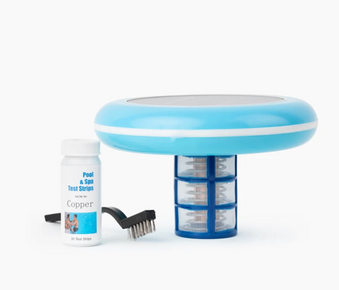
TL;DR: Trübes Wasser ist eines der häufigsten und frustrierendsten Probleme für Poolbesitzer, das oft zu endlosen Zyklen des Testens, Hinzufügens von Chemikalien und Wartens auf Ergebnisse führt. Solare Pool-Ionisatoren beheben trübes Wasser an seiner Quelle durch mehrere Mechanismen: ionische Flockung, die mikroskopische Partikel zur einfachen Filterung verklumpt, stabile Chemie, die die Ausfällung verhindert, die Trübheit verursacht, und kontinuierliche Algenprävention, die eine der Hauptursachen für Wasserverfärbungen eliminiert. Dieser Leitfaden untersucht, wie solare Ionisierung Bedenken hinsichtlich trüben Wassers beseitigt und Poolbesitzern hilft, das kristallklare Wasser zu erhalten, das sie verdienen.
SEO-Zusammenfassung: Leitfaden 2026 zur Verwendung von solarem Pool-Ionisator bei trübem Wasser: ionische Flockung, Partikelentfernung, Algenprävention, stabile Chemie und Erreichen von kristallklarem Wasser.
Inhaltsverzeichnis
- Verstehen, was trübes Wasser verursacht
- Ionische Flockung: Der primäre Mechanismus
- Die Algenverbindung
- Chemische Ausfällung und Trübheit
- Filtrationssynergie und Partikelentfernung
- Die Rolle von Phosphaten
- Metallbedingte Trübheit
- Was zu erwarten ist: Zeitplan für die Klarheit
- Behebung anhaltender Trübheit
- Fazit & Wichtigste Erkenntnisse
Verstehen, was trübes Wasser verursacht
Trübes Wasser ist kein einzelnes Problem, sondern ein Symptom verschiedener zugrunde liegender Probleme. Zu verstehen, was Trübheit verursacht, ist der erste Schritt, um sie mit solarer Poolionisierung effektiv zu beheben.
- Mikroskopisch schwebende Partikel sind die häufigste Ursache für Trübheit. Staub, Pollen, abgestorbene Hautzellen, Sonnenschutzmittelreste und andere Ablagerungen, die zu klein sind, um von Filtern erfasst zu werden, erzeugen einen Dunst, der Licht streut. Diese Partikel liegen typischerweise im Bereich von 1 bis 10 Mikrometern und sind klein genug, um die meisten Filtermedien zu passieren.
- Algenblüten färben das Wasser grün oder trüb, da sich Algenzellen schnell vermehren. Schon bevor sichtbares Grün erscheint, kann frühes Algenwachstum einen subtilen Dunst erzeugen. Traditionelle Chlorpools erleben dies oft als Vorläufer vollständiger Blüten.
- Chemische Ausfällung tritt auf, wenn gelöste Mineralien aus der Lösung ausfallen. Calciumcarbonat-Ausfällung bei hohem pH-Wert, Metalloxidation durch Chlorschocks und andere chemische Reaktionen können fast augenblicklich trübe Bedingungen erzeugen.
- Schlechte Filtration lässt Partikel ansammeln. Wenn Filter verschmutzt, unterdimensioniert oder zu wenige Stunden laufen, sammeln sich Partikel schneller an, als sie entfernt werden können. Das Wasser wird mit der Zeit zunehmend trüber.
- Phosphate liefern Nährstoffe für Algen und können auch indirekt zur Trübheit beitragen, indem sie das biologische Wachstum fördern. Hohe Phosphatwerte schaffen Bedingungen, unter denen Algen trotz ausreichender Desinfektionsmittelwerte gedeihen können.
- Jede Ursache erfordert einen anderen Behandlungsansatz. Deshalb verschlimmert das Hinzufügen von zufälligen Chemikalien zu trübem Wasser das Problem oft. Das Verständnis der spezifischen Ursache ist für eine effektive Behandlung unerlässlich.
Der Artikel über den solaren Pool-Ionisator, der 2026 Pools mit geringem Chemikalieneinsatz antreibt erklärt, wie die Reduzierung der chemischen Abhängigkeit tatsächlich hilft, Probleme mit trübem Wasser zu lösen, indem die chemische Ausfällung als beitragender Faktor eliminiert wird.
Ionische Flockung: Der primäre Mechanismus
Die ionische Flockung ist das leistungsstärkste Werkzeug, das solare Pool-Ionisatoren gegen trübes Wasser einsetzen. Dieser natürliche Prozess lässt mikroskopische Partikel verklumpen, so dass sie vom Filter erfasst werden können.
- Die Wissenschaft hinter der Flockung beginnt mit Partikelladungen. Die meisten suspendierten Partikel im Poolwasser – Staub, Pollen, abgestorbene Hautzellen und organische Ablagerungen – tragen eine negative Oberflächenladung. Diese negative Ladung bewirkt, dass sich Partikel gegenseitig abstoßen, wodurch sie in Suspension bleiben und zu klein sind, um von Filtern erfasst zu werden.
- Vom Ionisator freigesetzte Kupferionen tragen eine positive Ladung. Sie werden auf natürliche Weise von den negativ geladenen Partikeln angezogen. Wenn Kupferionen an Partikeloberflächen binden, neutralisieren sie die abstoßenden Ladungen.
- Die Partikelagglomeration folgt der Ladungsneutralisierung. Wenn ihre Oberflächenladungen neutralisiert sind, stoßen sich die Partikel nicht mehr gegenseitig ab. Sie beginnen zu kollidieren und zusammenzukleben, wodurch größere Cluster, sogenannte Flocken, entstehen. Diese Cluster können 10 bis 100 Mal größer sein als die ursprünglichen Partikel.
- Die Filtration wird drastisch effektiver, sobald Partikel agglomeriert sind. Standard-Poolfilter können diese vergrößerten Cluster erfassen und Verunreinigungen entfernen, die sonst das Filtermedium passieren würden. Deshalb erreicht ionisiertes Wasser eine Klarheit, die chloriertes Wasser nicht erreichen kann.
- Quantifizierte Verbesserungen bei der Partikelentfernung sind erheblich. Traditionelle Filter erfassen 40 bis 60 Prozent der Partikel im Bereich von 1–10 Mikrometern pro Durchlauf. Ionisierte Pools erreichen eine Erfassungseffizienz von 80 bis 90 Prozent für denselben Partikelbereich, was bedeutet, dass dieselbe Filtrationsenergie zwei- bis dreimal mehr Verunreinigungsmasse entfernt.
- Der Prozess ist kontinuierlich und selbsttragend. Solange die Kupferkonzentrationen im Zielbereich von 0,2 bis 0,4 Teilen pro Million gehalten werden, werden Partikel ständig für die Filtration aufbereitet. Die Klarheit verbessert sich progressiv und bleibt stabil.
Unser Leitfaden zu einfacherer Poolchemie mit solarem Pool-Ionisator 2026 zeigt, wie die unkomplizierte Chemie von ionisiertem Wasser die ionische Flockung effektiver macht als in chemisch komplexen Umgebungen.
Die Algenverbindung
Algen sind eine Hauptursache für trübes Wasser, und solare Pool-Ionisatoren begegnen diesem Problem durch kontinuierliche Kupferionenaktivität, die die Algenbildung von vornherein verhindert.
- Kupferionen greifen Algen durch mehrere Mechanismen gleichzeitig an. Sie stören die Algenzellmembranen, wodurch essentielle Zellinhalte austreten. Sie hemmen die Photosynthese, indem sie die Chlorophyllproduktion stören. Sie verhindern die Sporenkeimung und stoppen Algen, bevor sie sichtbare Kolonien bilden können.
- Grünalgen, die häufigste Ursache für grünes trübes Wasser, sind sehr anfällig für Kupfer. Bereits bei Konzentrationen von 0,2 ppm verhindert Kupfer die Bildung von Grünalgen. Bestehende Blüten reagieren schnell auf eine Kupferbehandlung und klären sich oft innerhalb weniger Tage.
- Senfbraune Algen, die als gelb-braune Flecken auftreten und trübe Bedingungen verursachen können, sind widerstandsfähiger gegen Chlor, reagieren aber gut auf Kupfer. Die Aufrechterhaltung von Kupfer am oberen Ende des Zielbereichs bietet eine wirksame Prävention und Behandlung.
- Schwarze Algen, die am schwierigsten zu kontrollieren sind, sind im Laufe der Zeit ebenfalls anfällig für Kupfer. Die tief verwurzelten Kolonien, die Chlor widerstehen, werden von anhaltenden Kupferionen durchdrungen. Die Prävention durch konstante Kupferwerte ist weitaus einfacher als die Behandlung.
- Die kontinuierliche Natur der Kupferdesinfektion eliminiert die Anfälligkeitsfenster, die es Algen ermöglichen, sich in chlorierten Pools zu etablieren. Die Chlorwerte schwanken im Laufe des Tages, sinken im Sonnenlicht und werden von organischen Stoffen verbraucht. Die Kupferwerte bleiben stabil und bieten konstanten Schutz.
- Das Algenabsterben durch Kupferbehandlung erzeugt keine zusätzliche Trübheit. Abgetötete Algenzellen verklumpen durch ionische Flockung und werden vom Filter erfasst, wodurch sie aus dem Wasser entfernt werden, anstatt sie zerfallen zu lassen.
Informationen zu solaren Pool-Ionisatoren, die die nächste Generation von Pools antreiben, erörtern, wie moderne Ionisatorsysteme verschiedene Herausforderungen an die Wasserqualität bewältigen, einschließlich algenbedingter Trübheit.
Chemische Ausfällung und Trübheit
Chemische Ausfällung ist eine häufige Ursache für plötzliche Trübheit in traditionellen Pools. Die solare Ionisierung eliminiert die meisten Bedingungen, die eine Ausfällung verursachen.
- Calciumcarbonat-Ausfällung tritt auf, wenn der pH-Wert zu stark ansteigt, wodurch gelöstes Calcium als weiße, trübe Partikel aus der Lösung ausfällt. Dies ist in Salzwasserpools üblich, wo die Salzzelle den pH-Wert kontinuierlich erhöht, und nach dem Schocken mit hoch-pH-haltigem flüssigem Chlor. Ionisierte Pools halten einen stabilen pH-Wert im optimalen Bereich, wodurch die Calciumausfällung verhindert wird.
- Metalloxidation verursacht farbige Trübheit. Wenn Chlorschocks gelöstes Eisen, Kupfer oder Mangan oxidieren, bilden sie farbige Ausfällungen, die das Wasser trüben. Eisen erzeugt einen rostfarbenen Dunst, Kupfer erzeugt einen blau-grünen Farbton, Mangan erzeugt eine violett-schwarze Verfärbung. Ionisierte Pools verwenden minimal Chlor, wodurch diese Oxidationsereignisse vermieden werden.
- Chlornebenprodukte selbst können Trübheit verursachen. Die Reaktion zwischen Chlor und organischem Material erzeugt Verbindungen, die Licht streuen können. Ionisiertes Wasser produziert keine solchen Nebenprodukte, wodurch diese Ursache für Trübheit eliminiert wird.
- Algizid-Wechselwirkungen können manchmal Ausfällungen verursachen. Verschiedene Algizide können miteinander oder mit anderen Chemikalien reagieren und trübe Bedingungen erzeugen. Ionisierte Pools verwenden keine Algizide, wodurch diese Variable vollständig eliminiert wird.
- Übermäßiger Gebrauch von Klärmitteln kann tatsächlich Trübheit verursachen. Wenn zu viel Klärmittel hinzugefügt wird, kann es einen Dunst erzeugen, anstatt das Wasser zu klären. Ionisierte Pools benötigen typischerweise keine Klärmittel, wodurch dieses Risiko eliminiert wird.
- Die stabile Chemie von ionisiertem Wasser bedeutet, dass das, was Sie sehen, das ist, was Sie bekommen. Es gibt keine plötzlichen chemischen Reaktionen, die unerwartete Trübheit erzeugen. Das Wasser bleibt durchgehend klar.
Die Ressource zur Transformation der Wasserstabilität durch einen solaren Pool-Ionisator im Jahr 2026 erklärt, wie stabile Chemie die Schwankungen verhindert, die zu chemischer Ausfällung und trübem Wasser führen.
Filtrationssynergie und Partikelentfernung
Solare Pool-Ionisatoren ersetzen die Filtration nicht – sie verbessern sie dramatisch. Die Synergie zwischen ionischer Flockung und mechanischer Filtration ist entscheidend für die Erzielung und Aufrechterhaltung von kristallklarem Wasser.
- Kartuschenfilter werden in ionisierten Pools deutlich effektiver. Die vergrößerten Partikelcluster aus der ionischen Flockung lagern sich effizienter auf den Kartuschenoberflächen ab und erfassen Partikel, die sonst durchgelassen würden. Die Lebensdauer der Kartuschen erhöht sich typischerweise um 30 bis 50 Prozent, da die schonendere Belastung weniger Medienschäden verursacht.
- Sandfilter profitieren ebenfalls erheblich. Geflockte Partikel werden effektiver im Sandbett eingeschlossen, und das Rückspülen entfernt sie vollständiger. Die Sandqualität hält länger, und Kanalbildung wird reduziert, wodurch die Filtrationseffizienz über die Zeit erhalten bleibt.
- DE-Filter erreichen ihre höchste Effizienz mit ionisiertem Wasser. Geflockte Partikel werden mit minimalem Druckanstieg auf DE-beschichteten Gittern erfasst, was die Filtrationszyklen dramatisch verlängert. Das Ergebnis ist eine Wasserklarheit, die der von destilliertem Wasser nahekommt.
- Die Filterbelastung wird in ionisierten Pools vorhersehbarer. Bei konsistenter Partikelagglomeration steigt der Filterdruck in einem stetigen, vorhersehbaren Tempo. Dies ermöglicht die Planung der Reinigung, anstatt auf Druckspitzen zu reagieren, was die Wartung vereinfacht.
- Die Rückspülhäufigkeit sinkt bei Sand- und DE-Filtern um 30 bis 50 Prozent. Die vollständigere Erfassung von Partikeln bedeutet, dass beim Rückspülen die angesammelten Ablagerungen effektiver entfernt werden. Dies spart Wasser und reduziert die Wartungszeit.
- Die Optimierung der Pumpenlaufzeit wird möglich, da die Filtration effizienter ist. Viele ionisierte Pools erreichen eine überlegene Klarheit mit 4 bis 6 Stunden täglicher Filtration, verglichen mit 8 bis 12 Stunden bei chlorierten Pools. Diese Energieeinsparung ist ein direktes Ergebnis der Filtrationssynergie.
Der Artikel zur Verbesserung der Poolleistung mit einem solaren Pool-Ionisator 2026 quantifiziert die Verbesserungen der Filtrationseffizienz, die zu klarerem Wasser beitragen.
Die Rolle von Phosphaten
Phosphate werden in Diskussionen über trübes Wasser oft übersehen, spielen aber eine entscheidende Rolle bei der Schaffung von Bedingungen, unter denen Algen gedeihen und die Wasserklarheit leidet.
- Phosphate sind essentielle Nährstoffe für Algen. Ohne Phosphate können Algen unabhängig von den Kupferwerten nicht wachsen. Phosphate gelangen über Dünger, Rasenchemikalien, Leitungswasser und Staub aus der Luft in Pools. Hohe Phosphatwerte schaffen eine nährstoffreiche Umgebung, die jedes Sanierungssystem herausfordert.
- Selbst bei ausreichendem Kupfer können hohe Phosphatwerte Algen die Ansiedlung ermöglichen. Die Algen verbrauchen Phosphate während ihres Wachstums, und wenn sie absterben, geben sie diese wieder ins Wasser ab, wodurch ein Kreislauf entsteht, der trübe Bedingungen aufrechterhält.
- Die Phosphatmessung ist einfach und sollte Teil jeder Untersuchung von trüblichem Wasser sein. Zielwerte unter 500 ppb (parts per billion) werden empfohlen. Werte über 1000 ppb garantieren letztendlich Algenprobleme, unabhängig von der Sanierungsmethode.
- Phosphatentferner sind bei Bedarf wirksam. Diese Produkte binden Phosphate und ermöglichen deren Filterung. Die Behandlung kann das Wasser vorübergehend trüben und den Filterdruck erhöhen, aber die Klarheit verbessert sich, sobald die Phosphate kontrolliert sind.
- Die Quellkontrolle ist die beste langfristige Strategie. Poolspielzeug vor Gebrauch abspülen, Dünger in Poolnähe vermeiden und einen Gartenschlauch-Vorfilter für Füllwasser verwenden reduzieren die Phosphateinfuhr.
- In ionisierten Pools ist das Phosphatmanagement einfacher, da Kupfer eine hervorragende Algenkontrolle bietet, aber Phosphate immer noch Aufmerksamkeit erfordern. Regelmäßige Tests und gelegentliche Behandlungen erhalten optimale Bedingungen.
Unser ausführlicher Artikel Erhöhung der täglichen Wasserklarheit mit einem solaren Pool-Ionisator 2026 bietet Anleitungen zum Management von Phosphaten und anderen Faktoren, die die Wasserklarheit beeinflussen.
Metallbedingte Trübheit
Metalle im Poolwasser können charakteristische Arten von Trübheit und Verfärbungen verursachen. Solare Pool-Ionisatoren helfen, Metallprobleme durch stabile Chemie und Kompatibilität mit Sequestriermitteln zu handhaben.
- Kupfertrübheit tritt als blau-grüner Farbton auf und resultiert typischerweise aus kupferbasierten Algiziden oder korrosivem Wasser, das Kupferleitungen angreift. Solare Ionisatoren selbst fügen Kupfer hinzu, jedoch in kontrollierten Mengen von 0,2 bis 0,4 ppm. Bei ordnungsgemäßer Handhabung verursacht dieses Kupfer keine Trübheit.
- Eisen-Trübheit erscheint als rostfarbener Dunst oder braune Flecken. Eisen gelangt typischerweise über Brunnenwasser oder korrodierte Eisenrohre in den Pool. Ein stabiler pH-Wert in ionisierten Pools hilft, Eisen in Lösung zu halten und Ausfällungen zu verhindern.
- Mangan-Trübheit erscheint als violett-schwarze Verfärbung und ist schwieriger zu entfernen als Eisen. Mangan ist seltener, aber problematischer, wenn es vorhanden ist.
- Der Vitamin-C-Test hilft, Metallflecken zu identifizieren. Das Zerdrücken von Vitamin-C-Tabletten und das Auftragen auf eine befleckte Stelle hellt Kupfer- und Eisenflecken innerhalb von Minuten auf oder entfernt sie, was eine Beteiligung von Metall bestätigt.
- Sequestriermittel binden an Metalle, halten sie in Lösung und verhindern Trübheit. Diese Produkte sind mit solaren Ionisatoren kompatibel und können präventiv oder reaktiv eingesetzt werden.
- Ascorbinsäurebehandlungen können vorhandene Metallflecken entfernen, verhindern aber kein Wiederauftreten. Die Beseitigung der Metallquelle und die Aufrechterhaltung einer stabilen Chemie sind für eine langfristige Kontrolle unerlässlich.
Der umfassende vollständige Leitfaden zu solaren Pool-Ionisatoren und Kupferverfärbungen 2026 enthält Informationen zur Handhabung von Kupfer und anderen Metallen, um trübes Wasser und Verfärbungen zu verhindern.
Was zu erwarten ist: Zeitplan für die Klarheit
Poolbesitzer, die eine solare Ionisierung in Betracht ziehen, möchten wissen, wie schnell sie eine Verbesserung der Wasserklarheit erwarten können. Das Verständnis des Zeitrahmens hilft, realistische Erwartungen zu setzen.
- Tage 1 bis 3: Erste Veränderungen beginnen. Die ionische Flockung beginnt sofort zu wirken, und viele Besitzer bemerken innerhalb der ersten Tage subtile Verbesserungen der Klarheit. Das Wasser kann ein leicht helleres Aussehen annehmen.
- Tage 4 bis 7: Sichtbare Verbesserungen werden deutlich. Feine Partikel, die zuvor einen Dunst verursachten, beginnen sich zu klären. Das Wasser erhält einen Glanz, der vorher nicht vorhanden war. Schwimmer kommentieren oft das verbesserte Aussehen.
- Wochen 2 bis 4: Maximale Klarheit wird erreicht. Am Ende des ersten Monats erreichen die meisten ionisierten Pools eine Klarheit, die das übertrifft, was sie mit Chlor erlebt haben. Das Wasser nimmt die juwelenartige Qualität an, die gut gepflegte ionisierte Pools auszeichnet.
- Laufende Wartung: Sobald die Klarheit erreicht ist, bleibt sie stabil. Die kontinuierliche Wirkung der ionischen Flockung sorgt für eine Partikelentfernung, und stabile Chemie verhindert die Bildung neuer Trübheit.
- Nach starker Beanspruchung: Nach Poolpartys oder starkem Badebetrieb kann es zu vorübergehendem Dunst kommen. Dieser klärt sich innerhalb von 24 bis 48 Stunden bei kontinuierlicher Filtration, viel schneller als in chlorierten Pools.
- Saisonale Schwankungen: Frühlingspollen und herbstliche Laubablagerungen können die Klarheit vorübergehend beeinträchtigen, aber der Ionisator hilft dem Filter, diese Belastungen effektiver zu bewältigen als Chlor allein.
Der Leitfaden zur Erzielung einer vorhersehbaren Poolwartung mit einem solaren Pool-Ionisator bietet Anleitungen zur Aufrechterhaltung der Klarheit bei saisonalen Veränderungen und Zeiten starker Beanspruchung.
Behebung anhaltender Trübheit
Auch bei einem solaren Ionisator können gelegentlich Probleme mit der Klarheit auftreten. Dieser systematische Ansatz hilft, die Ursache schnell zu identifizieren und zu beheben.
- Überprüfen Sie zuerst die Kupferwerte. Wenn der Kupferwert unter 0,2 ppm liegt, erzeugt der Ionisator möglicherweise nicht genügend Ionen für eine effektive Flockung. Erhöhen Sie die Leistung um 10 Prozent und testen Sie nach 48 Stunden erneut. Wenn der Kupferwert über 0,5 ppm liegt, reduzieren Sie die Leistung, um Verfärbungen zu vermeiden.
- Überprüfen Sie den Filterdruck. Hoher Druck deutet auf eine Filterbelastung hin. Reinigen oder spülen Sie den Filter und prüfen Sie, ob der Druck wieder normal ist. Wenn der Druck nach der Reinigung schnell ansteigt, liegt möglicherweise ein zugrunde liegendes Partikelproblem vor.
- Testen Sie den pH-Wert und stellen Sie ihn bei Bedarf auf 7,4 bis 7,6 ein. Ein hoher pH-Wert verringert die Wirksamkeit von Kupfer und kann zu Ausfällungen führen. Ein niedriger pH-Wert kann aggressiv sein und auf andere Probleme hinweisen.
- Testen Sie auf Phosphate und behandeln Sie, wenn sie über 500 ppb liegen. Phosphatentferner sind wirksam, können aber vorübergehend eine Trübung verursachen, wenn sie Phosphate binden und ausfällen. Lassen Sie die Pumpe nach der Behandlung 24 bis 48 Stunden lang ununterbrochen laufen.
- Überprüfen Sie die Laufzeit der Pumpe. Stellen Sie sicher, dass die Pumpe ausreichend Stunden für Ihre Poolgröße und -bedingungen läuft. Während der Fehlersuche sollte sie 24 bis 48 Stunden ununterbrochen laufen, um die Filterung zu maximieren.
- Erwägen Sie einen chlorfreien Schock. Wenn die Trübung trotz ausreichend Kupfer, guter Filterung und ausgeglichener Chemie bestehen bleibt, kann ein chlorfreier Schock organische Verunreinigungen oxidieren, die zur Trübung beitragen könnten.
- Testen Sie auf Metalle. Wenn die Trübung einen Farbstich aufweist, testen Sie auf Eisen, Mangan oder Kupfer. Verwenden Sie Sequestriermittel, wenn Metalle vorhanden sind, und passen Sie den pH-Wert an, um sie in Lösung zu halten.
- Überprüfen Sie das Quellwasser. Wenn die Trübung nach dem Nachfüllen von Wasser auftritt, testen Sie das Nachfüllwasser auf Metalle, Härte oder andere Verunreinigungen. Erwägen Sie einen Gartenschlauch-Vorfilter für zukünftige Füllungen.
Die Betriebsrichtlinien für Solarpoolionisierer im Jahr 2026 enthalten umfassende Fehlerbehebungsprotokolle für häufige Wasserqualitätsprobleme, einschließlich anhaltender Trübungen.
Fazit & Wichtige Erkenntnisse
Trübes Wasser gehört zu den frustrierendsten Herausforderungen für Poolbesitzer, aber Solarpoolionisierer bieten eine umfassende Lösung, die die Grundursachen angeht, anstatt nur Symptome zu behandeln. Ionische Flockung entfernt kontinuierlich mikroskopisch kleine Partikel, die Trübungen verursachen. Stabile Chemie verhindert chemische Ausfällungen, die plötzliche Trübungen verursachen. Kontinuierliche Algenkontrolle eliminiert eine primäre Ursache für Wasserverfärbungen. Verbesserte Filtration fängt Partikel effektiver mit weniger Energie ein.
Das Ergebnis ist Wasser, das konstant klar bleibt, anstatt zwischen perfekt und problematisch zu schwanken. Schwimmer genießen Wasser, das mit juwelenartigem Glanz funkelt. Besitzer verbringen weniger Zeit mit der Fehlersuche und mehr Zeit damit, ihre Pools zu genießen.
Für Pools, die bereits mit trübem Wasser zu kämpfen haben, kann das Hinzufügen eines Solarionisierers transformativ sein. Innerhalb weniger Wochen verbessert sich die Klarheit dramatisch, und die laufende Wartung wird viel einfacher. Für neue Pools sorgt der Start mit der Ionisierung dafür, dass trübes Wasser niemals zu einem wiederkehrenden Problem wird.
Wichtige Erkenntnisse
- Trübes Wasser hat mehrere Ursachen, darunter suspendierte Partikel, Algen, chemische Ausfällungen, schlechte Filtration und Phosphate. Eine wirksame Behandlung erfordert die Beseitigung der spezifischen Ursache.
- Die ionische Flockung ist der primäre Mechanismus, mit dem Solarionisierer die Klarheit verbessern. Kupferionen lassen Partikel zusammenklumpen, um eine effiziente Filtration zu ermöglichen und trübungsverursachende Verunreinigungen zu entfernen.
- Die Algenprävention durch kontinuierliche Kupferaktivität beseitigt grünes, trübes Wasser und verhindert die Bedingungen, die zu Algenblüten führen.
- Stabile Chemie verhindert chemische Ausfällungen, die in herkömmlichen Pools plötzliche Trübungen verursachen. Der Artikel „Veränderung der Wasserstabilität durch einen Solarpoolionisierer im Jahr 2026“ erklärt, warum dies wichtig ist.
- Filtersynergie bedeutet, dass derselbe Filter in ionisierten Pools zwei- bis dreimal mehr Verunreinigungsmassen entfernt. Reinigungsintervalle verlängern sich, und die Wasserklarheit verbessert sich.
- Phosphatmanagement bleibt auch bei der Ionisierung wichtig. Regelmäßige Tests und gelegentliche Behandlungen halten den Nährstoffgehalt niedrig.
- Metallbedingte Trübungen erfordern spezifische Ansätze. Der vollständige Leitfaden „Solarpoolionisierer und Kupferfärbung 2026“ bietet detaillierte Anleitungen für Metallprobleme.
- Klarheitsverbesserungen folgen einem vorhersehbaren Zeitplan. Erste Änderungen zeigen sich innerhalb weniger Tage, maximale Klarheit innerhalb weniger Wochen und danach eine stabile Klarheit.
- Systematische Fehlerbehebung löst hartnäckige Probleme. Überprüfen Sie Kupfer, Filterdruck, pH-Wert, Phosphate, Pumpenlaufzeit und Metalle in logischer Reihenfolge.
- Die Solarionisierung verwandelt Bedenken hinsichtlich trüben Wassers von einer wiederkehrenden Frustration in ein gelöstes Problem. Die Ressource Solarpoolionisierer rationalisiert das moderne Poolmanagement im Jahr 2026 zeigt, wie diese Vereinfachung jedem Poolbesitzer zugutekommt.
Jeder Poolbesitzer verdient Wasser, das konstant klar, einladend und gesund ist. Solarpoolionisierer machen dies erreichbar, indem sie trübes Wasser an seiner Quelle angehen, anstatt nur Symptome zu behandeln. Die Technologie ist bewährt, die Ergebnisse sind sichtbar und die Gewissheit ist von unschätzbarem Wert.