United Chemical Swamp Treat SWAM-C12 ist ein leistungsstarker Algenentferner, der für starke Algenblüten (Sumpfbedingungen) entwickelt wurde. Geben Sie 1 Beutel pro 38.000 Liter zur Behandlung hinzu, bürsten Sie den Pool kräftig, lassen Sie die Pumpe 24 Stunden lang laufen und reinigen Sie den Filter häufig. Wirkt schnell, um starke Grünalgen zu beseitigen. Dieser Leitfaden behandelt die vollständigen Anwendungsverfahren und bewährten Methoden für die Behandlung von Sumpfbecken.
Inhaltsverzeichnis
Was ist United Chemical Swamp Treat SWAM-C12?
United Chemical Swamp Treat SWAM-C12 ist ein spezieller Algenentferner, der speziell für starke Algenblüten, oft als Sumpfbedingungen bezeichnet, entwickelt wurde. Diese leistungsstarke Behandlung wirkt schnell, um Pools zu reinigen, die durch starken Algenwuchs vollständig grün geworden sind. Swamp Treat ist für extremste Algensituationen formuliert, bei denen Standard-Algizide und Schockbehandlungen versagt haben oder unzureichend sind.
Hauptmerkmale von Swamp Treat SWAM-C12
- Spezialformel: Entwickelt für starke Algenblüten
- Schnell wirkend: Beseitigt Sumpfbedingungen schnell
- Leistungsstarke Behandlung: Bewältigt extreme Algensituationen
- Einfach zu bedienen: Einfache Beutelanwendung
- Funktioniert mit Schock: Für beste Ergebnisse zusammen mit Poolschock verwenden
- Sicher für alle Oberflächen: Kompatibel mit Vinyl, Fiberglas, Putz und Fliesen
- Professionelle Stärke: Wird von Poolservice-Profis verwendet
- Komplette Behandlung: Ein Beutel behandelt 38.000 Liter
Wie sich Swamp Treat von herkömmlichen Algiziden unterscheidet
Im Gegensatz zu vorbeugenden Algiziden, die für die wöchentliche Wartung verwendet werden, oder Standard-Algenbehandlungen ist Swamp Treat speziell für extreme Algenblüten formuliert, bei denen der Pool vollständig grün geworden ist und keine Sicht mehr besteht. Seine konzentrierte Formel bietet die nötige Leistung, um schwere Sumpfbedingungen zu beseitigen, die mit Standardprodukten mehrere Behandlungen erfordern würden.
Warum Swamp Treat bei starken Algen verwenden?
Vorteile der speziellen Sumpfbehandlung
- Beseitigt starke Algenblüten schnell
- Bewältigt extreme Sumpfbedingungen
- Wirkt schneller als mehrere Standardbehandlungen
- Vereinfacht die Behandlung stark vernachlässigter Pools
- Kostengünstig für schwere Situationen
- Einfach anzuwenden
- Funktioniert mit allen Desinfektionsmitteln
- Hilft, Algenwiederauftreten bei richtiger Anwendung zu verhindern
Sumpfbedingungen verstehen
Sumpfbedingungen treten auf, wenn Pools stark vernachlässigt werden, wodurch Algen ungehindert blühen können. Das Wasser wird vollständig grün, die Sicht ist Null und der Pool kann ein sumpfiges Aussehen haben. Dies geschieht typischerweise nach längeren Zeiträumen ohne ordnungsgemäße Wartung, nach Stürmen oder wenn Pools unbeaufsichtigt gelassen werden. Swamp Treat wurde speziell entwickelt, um diese extremen Situationen zu bewältigen.
Wann ist Swamp Treat anzuwenden?
Ideale Situationen für Swamp Treat
Starke Algenblüten:
- Poolwasser ist vollständig grün
- Null Sicht im Pool
- Starker Algenwuchs überall
- Pool hat ein sumpfiges Aussehen
- Standardbehandlungen haben versagt
Für allgemeine Grünalgen, siehe wie man einen grünen Pool schnell in den Griff bekommt.
Vernachlässigte Pools:
- Pool über Wochen oder Monate unbeaufsichtigt gelassen
- Nach längerer Leerstand
- Nach schweren Stürmen
- Wenn die Poolpflege aufgegeben wurde
Poolöffnung mit starkem Algenbefall:
- Frühlingsöffnung zeigt starke Algen
- Pool nicht richtig winterfest gemacht
- Abdeckung im Winter defekt
- Extremer Algenwuchs über den Winter
Schritt-für-Schritt-Anleitung zur Anwendung
Schritt 1: Poolzustand beurteilen
Bewerten Sie vor der Behandlung die Situation:
- Bestimmen Sie den Schweregrad der Algenblüte
- Prüfen Sie, ob der Pool wirklich in Sumpfzustand ist
- Vergewissern Sie sich, dass die Ausrüstung funktioniert
- Stellen Sie sicher, dass Pumpe und Filter betriebsbereit sind
- Entfernen Sie wenn möglich große Ablagerungen
Schritt 2: Wasserchemie testen und ausgleichen
Testen Sie, was Sie können, und passen Sie es an:
- pH-Wert: 7,2 bis 7,6 (niedrigerer Bereich ist besser für die Algenbehandlung)
- Gesamtalkalität: 80 bis 120 ppm
- Freies Chlor: Wahrscheinlich 0 bei Sumpfbedingungen
- Kalziumhärte: 200 bis 400 ppm
Erfahren Sie mehr über wie Sie den pH-Wert Ihres Pools aufrechterhalten, wie Sie die Wasserhärte im Pool managen und wie Solar-Ionizer ausgeglichenes Poolwasser unterstützen.
Schritt 3: Poolvolumen berechnen
Die genaue Dosierung hängt davon ab, das Wasservolumen Ihres Pools zu kennen:
Rechteckige Pools:
Länge (m) × Breite (m) × Durchschnittliche Tiefe (m) × 1000 = Liter
Runde Pools:
Durchmesser (m) × Durchmesser (m) × Durchschnittliche Tiefe (m) × 785 = Liter
Ovale Pools:
Länge (m) × Breite (m) × Durchschnittliche Tiefe (m) × 890 = Liter
Schritt 4: Swamp Treat Dosierung bestimmen
United Chemical Swamp Treat SWAM-C12 Dosierungsrichtlinien:
Standard-Behandlungsdosis
1 Beutel pro 38.000 Liter
Dosierungsbeispiele:
- 38.000 Liter Pool: 1 Beutel
- 57.000 Liter Pool: 1,5 Beutel
- 76.000 Liter Pool: 2 Beutel
- 95.000 Liter Pool: 2,5 Beutel
- 114.000 Liter Pool: 3 Beutel
Extreme Sumpfbedingungen
Bei sehr schweren Bedingungen kann eine Wiederholung der Behandlung nach 24 Stunden erforderlich sein, wenn die Algen bestehen bleiben.
Schritt 5: Pool zuerst schockieren
Entscheidender Schritt für die Sumpfbehandlung:
- Pool mit Calciumhypochlorit oder flüssigem Chlor schockieren
- 3 bis 5 kg Schockmittel pro 38.000 Liter verwenden
- Bei schweren Sumpfbedingungen die dreifache Schockdosis verwenden
- Schockmittel abends für beste Ergebnisse hinzufügen
- Schockmittel 1 bis 2 Stunden zirkulieren lassen
Schritt 6: Swamp Treat in den Pool geben
Produkt nach dem Schockieren auftragen:
- Swamp Treat Beutel öffnen
- Inhalt langsam um den Poolrand gießen
- Beim Gießen um den gesamten Pool herumgehen
- Gleichmäßig verteilen für beste Ergebnisse
- In die Nähe der Einlaufdüsen gießen für bessere Vermischung
- Nicht direkt in den Skimmer geben
Schritt 7: Pool kräftig bürsten
Wesentlicher Schritt zur Algenentfernung:
- Die gesamte Pooloberfläche gründlich bürsten
- Wände von oben nach unten bürsten
- Boden mit überlappenden Strichen bürsten
- Stufen, Ecken und Spalten bürsten
- Hinter Leitern und Armaturen bürsten
- Bürsten 15 bis 20 Minuten lang fortsetzen
- Alle 12 Stunden wiederholen
Verwenden Sie die besten Poolbürsten für eine effektive Algenentfernung.
Schritt 8: Pumpe kontinuierlich laufen lassen
Sorgen Sie für eine ordnungsgemäße Zirkulation während der Behandlung:
- Pumpe 24 bis 48 Stunden ununterbrochen laufen lassen
- Pumpe während der Behandlung nicht ausschalten
- Ermöglicht Chemikalien, im gesamten Pool zu zirkulieren
- Filtert tote Algen heraus
- Filterdruck genau überwachen
Erfahren Sie mehr über wie die Poolzirkulation die ordnungsgemäße Wartung unterstützt.
Schritt 9: Filter häufig reinigen
Entscheidend für die Entfernung toter Algen:
- Filter reinigen oder rückspülen, wenn der Druck um 0,5 bis 0,7 bar ansteigt
- Muss den Filter während der Behandlung möglicherweise 5 bis 10 Mal reinigen
- Sand- oder DE-Filter gründlich rückspülen
- Kartuschenfilter mit Schlauch reinigen
- Fortfahren, bis das Wasser klar ist
- Erwarten Sie eine hohe Filterbelastung bei Sumpfbehandlung
Schritt 10: Pool saugen
Tote Algen aus dem Pool entfernen:
- Nach 24 bis 48 Stunden den Pool gründlich saugen
- Wenn möglich, auf Abfall saugen (wesentlich bei Sumpfbedingungen)
- Wenn zum Filter gesaugt wird, den Filter sofort danach reinigen
- Alle sichtbaren Algenreste entfernen
- Pool wieder auf den richtigen Stand füllen, wenn auf Abfall gesaugt wurde
- Muss möglicherweise mehrmals saugen
Wartung nach der Behandlung
Sofortige Nachbereitung (erste Woche)
Tägliche Aufgaben:
- Chlorwerte testen (3 bis 5 ppm beibehalten)
- pH-Wert testen und auf 7,2 bis 7,6 einstellen
- Pooloberflächen täglich bürsten
- Pumpe täglich 24 Stunden laufen lassen
- Wasserklarheit überwachen
- Filter reinigen, wenn der Druck ansteigt (häufig)
- Bei Bedarf saugen
Nach 48 Stunden:
- Pool erneut gründlich saugen
- Alle wasserchemischen Parameter testen
- Vorbeugendes Algizid hinzufügen
- Erhöhten Chlorgehalt beibehalten (3 bis 5 ppm)
- Wasser sollte sich deutlich klären
Befolgen Sie eine umfassende Checkliste zur Poolreinigung für Anfänger und wöchentliche Poolreinigungsroutinen für klares Wasser.
Laufende Prävention
Wöchentliche Wartung:
- Wasserchemie 2 bis 3 Mal pro Woche testen
- Richtigen Chlorgehalt aufrechterhalten (1 bis 3 ppm)
- Wöchentlich vorbeugendes Algizid hinzufügen
- Pooloberflächen wöchentlich bürsten
- Pool wöchentlich saugen
- Filter monatlich reinigen
- Pool niemals wieder in Sumpfzustand geraten lassen
Für die laufende Algenprävention siehe wie man vorbeugende Algizide verwendet und wie man Pool RX Algizid verwendet.
Profitipps für maximale Wirksamkeit
Expertentipps von Poolprofis
- Zuerst schockieren: Pool immer stark schockieren, bevor Swamp Treat hinzugefügt wird
- Kräftig bürsten: Bürsten ist entscheidend für die Sumpfbehandlung
- Pumpe kontinuierlich laufen lassen: Mindestens 24 bis 48 Stunden, möglicherweise länger
- Filter häufig reinigen: Erwarten Sie 5 bis 10 Mal oder öfter zu reinigen
- Auf Abfall saugen: Wesentlich zum Entfernen großer Mengen toter Algen
- Hohen Chlorgehalt beibehalten: 3 bis 5 ppm während der Behandlung beibehalten
- Geduldig sein: Sumpfbehandlung dauert 3 bis 7 Tage zur vollständigen Klärung
- Wiederauftreten verhindern: Sofort eine ordnungsgemäße Wartungsroutine etablieren
- Schmutz entfernen: Blätter und Schmutz vor oder während der Behandlung entfernen
- Umweltfreundliche Methoden anwenden: Erfahren Sie umweltfreundliche Poolreinigungspraktiken
Häufige Fehler vermeiden
- Nicht zuerst schockieren: Swamp Treat wirkt am besten mit starkem Schock
- Unzureichendes Bürsten: Muss kräftig und häufig bürsten
- Pumpe ausschalten: Benötigt kontinuierliche Zirkulation
- Filter nicht ausreichend reinigen: Filter verstopft immer wieder
- Zum Filter saugen: Bei Sumpfbedingungen auf Abfall saugen
- Zu früh schwimmen: Warten Sie, bis der Chlorgehalt sinkt und das Wasser klar ist
- Behandlung vorzeitig beenden: Den gesamten Behandlungsprozess abschließen
- Prävention nicht aufrechterhalten: Pool kehrt ohne Wartung in den Sumpfzustand zurück
Maximierung der Wirksamkeit von Swamp Treat
Wasserchemie: Während der Behandlung den pH-Wert im unteren Bereich (7,2 bis 7,4) halten, um die maximale Wirksamkeit des Chlors zu gewährleisten.
Bürsten: Die Pooloberflächen während der Behandlung alle 12 Stunden bürsten, um Algen zu lösen und sie Chemikalien auszusetzen.
Filtration: Pumpe kontinuierlich laufen lassen und Filter häufig reinigen, um massive Mengen toter Algen zu entfernen.
Prävention: Sofort eine ordnungsgemäße Wartungsroutine etablieren, um zu verhindern, dass der Pool wieder in den Sumpfzustand gerät.
Fehlerbehebung bei häufigen Problemen
Problem: Wasser nach 48 Stunden immer noch grün
Lösungen:
- Pool erneut mit dreifacher Dosis schockieren
- Bei Bedarf eine zweite Behandlung mit Swamp Treat hinzufügen
- Pool kräftig bürsten
- Filter gründlich und häufig reinigen
- Pumpe weitere 24 Stunden kontinuierlich laufen lassen
- pH-Wert testen und auf 7,2 bis 7,4 einstellen
- Chlorgehalt auf 3 bis 5 ppm überprüfen
- Auf Abfall saugen, um tote Algen zu entfernen
Problem: Filter verstopft ständig
Lösungen:
- Dies ist normal während der Sumpfbehandlung
- Filter alle 6 bis 12 Stunden oder nach Bedarf reinigen
- Gründlich rückspülen, wenn es sich um einen Sand- oder DE-Filter handelt
- Filterreiniger für die Tiefenreinigung verwenden
- Auf Abfall saugen statt durch den Filter
- Fortfahren, bis die Algen entfernt sind
- Bei sehr alten Filtermedien einen Austausch in Betracht ziehen
Problem: Wasser trüb, aber grüne Farbe verschwunden
Lösungen:
- Pumpe weiterhin 24 Stunden laufen lassen
- Filter mehrmals reinigen
- Klärmittel hinzufügen, um dem Filter zu helfen, Partikel aufzufangen
- Pool saugen, um Schmutz zu entfernen
- Alle Wasserchemie testen und ausgleichen
- Kann 5 bis 7 Tage dauern, bis vollständige Klarheit erreicht ist
Siehe wie man trübes Wasser in Schwimmbädern behandelt und erfahren Sie mehr darüber, wie man Pool-Klärmittel verwendet.
Problem: Algen kehren nach der Behandlung zurück
Lösungen:
- Sicherstellen, dass der Chlorgehalt bei 1 bis 3 ppm gehalten wird
- Wöchentlich vorbeugendes Algizid hinzufügen
- pH-Wert testen und auf 7,2 bis 7,6 einstellen
- Pool wöchentlich bürsten
- Filter monatlich reinigen
- Eine konsistente Wartungsroutine etablieren
- Die Zugabe eines Solar-Ionizers zur Vorbeugung in Betracht ziehen
- Den Pool niemals wieder unbeaufsichtigt lassen
Häufig gestellte Fragen
Wie viel Swamp Treat sollte ich verwenden?
Verwenden Sie 1 Beutel pro 38.000 Liter für eine Standard-Sumpfbehandlung. Für einen 76.000 Liter Pool verwenden Sie 2 Beutel. Bei extremen Bedingungen müssen Sie die Behandlung möglicherweise nach 24 Stunden wiederholen.
Wie lange dauert es, bis Swamp Treat wirkt?
Swamp Treat zeigt in der Regel innerhalb von 24 bis 48 Stunden eine signifikante Verbesserung, wenn es mit Schock und richtigem Bürsten verwendet wird. Die vollständige Klärung kann je nach Schweregrad 3 bis 7 Tage dauern.
Muss ich meinen Pool schockieren, wenn ich Swamp Treat verwende?
Ja! Schocken ist unerlässlich, damit Swamp Treat effektiv wirkt. Schockieren Sie den Pool zuerst stark (dreifache Dosis) und fügen Sie dann Swamp Treat hinzu. Die Kombination ist notwendig, um Sumpfbedingungen zu beseitigen.
Kann ich nach der Zugabe von Swamp Treat schwimmen?
Warten Sie, bis der Chlorgehalt unter 5 ppm sinkt und das Wasser klar ist, bevor Sie schwimmen, typischerweise 3 bis 7 Tage nach der Behandlung. Testen Sie das Chlor vor dem Schwimmen.
Wie oft sollte ich meinen Filter während der Behandlung reinigen?
Reinigen oder rückspülen Sie Ihren Filter, wenn der Druck um 0,5 bis 0,7 bar über dem Normalwert ansteigt. Während der Sumpfbehandlung müssen Sie den Filter voraussichtlich 5 bis 10 Mal oder öfter reinigen, da er massive Mengen toter Algen auffängt.
Soll ich auf Abfall oder durch den Filter saugen?
Saugen Sie immer auf Abfall, wenn Sie Sumpfbedingungen behandeln. Dadurch werden tote Algen vollständig aus dem Pool entfernt, anstatt sie durch den Filter zu leiten. Füllen Sie den Pool nach dem Saugen auf Abfall auf den richtigen Stand auf.
Kann ich Swamp Treat zur Vorbeugung verwenden?
Nein. Swamp Treat ist ein Behandlungsprodukt für starke Algenblüten, keine Vorbeugung. Zur Vorbeugung verwenden Sie wöchentliche Wartungsalgizide und die richtige Poolpflege.
Kann ich Swamp Treat in einem Salzwasserpool verwenden?
Ja! Swamp Treat ist mit allen Pooltypen kompatibel, einschließlich Salzwasser-, Chlor-, Brom- und Mineralsystemen.
Erfahren Sie mehr über Reinigung und Wartung von Salzwasserpools.
Warum ist mein Pool immer noch trüb, nachdem das Grün verschwunden ist?
Trübung nach dem Abtöten von Algen ist normal. Tote Algenpartikel und Ablagerungen bleiben im Wasser. Lassen Sie die Pumpe weiterlaufen, reinigen Sie den Filter häufig, geben Sie Klärungsmittel hinzu und saugen Sie den Pool ab. Eine vollständige Klarheit dauert 5 bis 7 Tage.
Wie verhindere ich, dass mein Pool wieder zu einem Sumpf wird?
Führen Sie eine konsistente Wartungsroutine ein: Testen Sie das Wasser 2- bis 3-mal wöchentlich, halten Sie den Chlorgehalt (1 bis 3 ppm) aufrecht, fügen Sie wöchentlich Algenmittel hinzu, bürsten und saugen Sie wöchentlich, reinigen Sie den Filter monatlich. Vernachlässigen Sie niemals die Poolwartung.
Kann ich Swamp Treat mit einem Solar-Pool-Ionisator verwenden?
Ja! Swamp Treat beseitigt bestehende starke Algen, während Solar-Pool-Ionisatoren zukünftiges Algenwachstum verhindern. Verwenden Sie Swamp Treat zur Behandlung und fügen Sie dann einen Solar-Ionisator zur kontinuierlichen Vorbeugung hinzu.
Erfahren Sie mehr über was ein Pool-Ionisator macht, was ein Solar-Pool-Ionisator ist, wie man einen Solar-Pool-Ionisator auswählt, Vor- und Nachteile eines Pool-Ionisators und die Vorteile von Solar-Pool-Ionisatoren für private Pools.
Fazit
United Chemical Swamp Treat SWAM-C12 bietet eine spezielle Behandlung für schwere Algenblüten und Sumpfpool-Bedingungen. Durch die Befolgung der richtigen Anwendungsverfahren (zuerst stark schocken, Swamp Treat hinzufügen, kräftig bürsten, Pumpe kontinuierlich laufen lassen, Filter häufig reinigen, zum Abfall absaugen) können Sie selbst extremste Algensituationen innerhalb von 3 bis 7 Tagen beseitigen. Schließen Sie den gesamten Behandlungsprozess ab, etablieren Sie sofort eine ordnungsgemäße Wartungsroutine und lassen Sie Ihren Pool nie wieder in einen Sumpfzustand geraten.
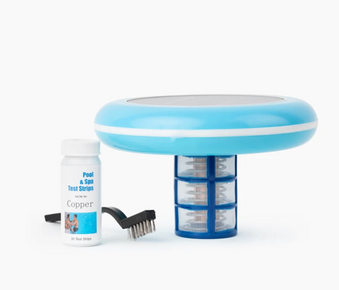
Für eine langfristige Algenprävention, die den Bedarf an extremen Behandlungen wie Swamp Treat reduziert, sollten Sie einen Solar-Pool-Ionisator in Betracht ziehen, der mithilfe von Solarenergie kontinuierlich Kupfer- und Silberionen freisetzt, den Chlorbedarf um bis zu 85 % reduziert und gleichzeitig die gesamte Saison über Algen- und Bakterienprävention bietet, was dazu beiträgt, Ihren Pool klar zu halten und die schweren Algenblüten zu verhindern, die eine Behandlung mit Swamp Treat erfordern.