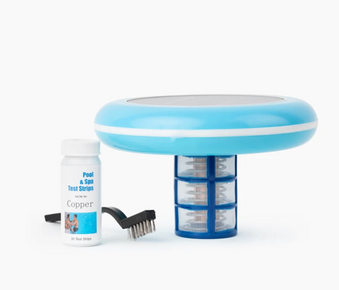
TL;DR : Oui, les taches de cuivre peuvent être causées par les ionisateurs solaires de piscine lorsque les niveaux d'ions de cuivre dépassent 0,5 ppm ou lorsque la chimie de l'eau est mal équilibrée. Cependant, les taches sont entièrement évitables grâce à une surveillance appropriée, une gestion du pH et le maintien des niveaux de cuivre dans la plage de sécurité de 0,2 à 0,4 ppm. Ce guide complet explique comment identifier les taches de cuivre, les prévenir, éliminer les taches existantes et optimiser votre ionisateur solaire de piscine pour un fonctionnement sans taches. Apprenez à maintenir la stabilité de l'eau de votre piscine pour profiter de tous les avantages de l'ionisation sans vous soucier des taches.
Résumé SEO :
Découvrez si les taches de cuivre sur votre piscine peuvent être causées par les ionisateurs solaires de piscine et apprenez à prévenir, identifier et éliminer les taches de cuivre. Ce guide complet de 2026 couvre la science derrière les taches de cuivre, la gestion appropriée du niveau d'ions, l'équilibre chimique de l'eau, les techniques d'élimination des taches et les stratégies d'optimisation pour un fonctionnement sans taches de l'ionisateur. Comprend des conseils de dépannage, des protocoles de test et les meilleures pratiques pour maintenir une eau cristalline sans décoloration ni dommages de surface.
Table des matières
- Comprendre les taches de cuivre
- Les ionisateurs solaires peuvent-ils causer des taches ?
- Identifier les taches de cuivre
- Causes et facteurs de risque
- Stratégies de prévention
- Techniques d'élimination des taches
- Gestion appropriée de l'ionisateur
- Réflexions finales et recommandations
- Points clés à retenir
Comprendre les taches de cuivre
Les taches de cuivre apparaissent lorsque le cuivre dissous dans l'eau de la piscine précipite hors de la solution et se dépose sur les surfaces de la piscine, créant une décoloration bleu-vert, sarcelle ou turquoise. Comprendre la chimie derrière ce processus est essentiel pour la prévention et le traitement.
La chimie
Le cuivre existe dans l'eau de la piscine sous forme d'ions cuivre dissous (Cu²⁺) lorsque la chimie de l'eau est correctement équilibrée. Ces ions restent invisibles et en suspension dans l'eau, assurant un contrôle des algues sans provoquer de décoloration. Cependant, lorsque certaines conditions se produisent, en particulier un pH élevé, une faible alcalinité ou une concentration excessive de cuivre, les ions cuivre s'oxydent et précipitent, formant des composés d'hydroxyde de cuivre ou de carbonate de cuivre qui se fixent sur les surfaces de la piscine sous forme de taches visibles.
Le processus est similaire à la façon dont le fer dans l'eau crée des taches de rouille. Lorsque les ions cuivre rencontrent l'oxygène dans un environnement alcalin (pH élevé), ils subissent une oxydation et forment des composés insolubles qui se déposent sur le plâtre, le vinyle, la fibre de verre ou les surfaces carrelées. Une fois déposées, ces taches peuvent être difficiles à éliminer sans un traitement approprié.
Types de taches de cuivre
Taches bleu-vert : Le type le plus courant, apparaissant comme une décoloration bleu-vert clair à foncé sur les surfaces de la piscine. Celles-ci indiquent généralement la formation d'hydroxyde de cuivre et se produisent lorsque le pH dépasse 7,8 avec des niveaux de cuivre modérés (0,4-0,8 ppm).
Taches sarcelle ou turquoise : Taches de couleur plus claire qui apparaissent souvent dans les zones de mauvaise circulation ou où la concentration de cuivre est localisée. Celles-ci peuvent indiquer une tache à un stade précoce, plus facile à éliminer que les taches plus foncées et plus établies.
Taches noires ou vert foncé : Taches graves qui se produisent avec des niveaux de cuivre très élevés (supérieurs à 1,0 ppm) combinés à un pH élevé et à un temps d'exposition prolongé. Ces taches ont pénétré plus profondément dans les surfaces poreuses et nécessitent un traitement agressif.
Surfaces affectées
Différentes surfaces de piscine ont des susceptibilités variables aux taches de cuivre. Les piscines en plâtre sont les plus vulnérables car la surface poreuse absorbe facilement les composés de cuivre, en particulier le plâtre blanc ou de couleur claire qui montre une décoloration de manière proéminente. Les revêtements en vinyle peuvent tacher mais sont généralement moins susceptibles que le plâtre ; les taches apparaissent souvent le long des coutures ou dans les zones de mauvaise circulation. Les piscines en fibre de verre résistent mieux aux taches que le plâtre mais peuvent toujours développer une décoloration avec une exposition prolongée au cuivre. Les surfaces carrelées sont les moins susceptibles mais peuvent développer des taches dans les joints de coulis ou sur les carreaux non émaillés.
Les ionisateurs solaires peuvent-ils causer des taches ?
La réponse directe est oui, les ionisateurs solaires de piscine peuvent causer des taches de cuivre, mais seulement lorsqu'ils sont mal gérés. Comprendre quand et pourquoi cela se produit vous aide à prévenir les taches tout en profitant des avantages de l'ionisation.
Quand les ionisateurs causent des taches
Les ionisateurs solaires comme le modèle haute capacité de 45 000 gallons libèrent des ions cuivre dans l'eau de la piscine comme principal mécanisme de contrôle des algues. Lorsque les niveaux de cuivre sont maintenus dans la plage recommandée de 0,2 à 0,4 ppm et que la chimie de l'eau est correctement équilibrée, les taches ne se produisent pas. Cependant, les taches deviennent un risque lorsque les niveaux de cuivre dépassent 0,5 ppm, le pH dépasse 7,8, l'alcalinité descend en dessous de 80 ppm ou la dureté calcique est mal équilibrée.
La réalité
Il est important de comprendre que les taches de cuivre provenant des ionisateurs sont un problème de gestion, pas un défaut inhérent à la technologie. Des systèmes d'ionisation correctement entretenus fonctionnent pendant des années sans aucun problème de taches. La clé est un test régulier et le maintien d'une chimie de l'eau appropriée, les mêmes principes fondamentaux requis pour tout système d'entretien de piscine. Apprenez-en davantage sur ce que sont les ionisateurs solaires de piscine et comment ils fonctionnent.
Comparaison avec d'autres sources
Les ionisateurs solaires ne sont pas la seule source de cuivre dans les piscines. Le cuivre peut également pénétrer dans l'eau de la piscine à partir d'algicides à base de cuivre (qui contiennent souvent 5 à 10 % de sulfate de cuivre), de tuyauteries en cuivre ou d'échangeurs de chaleur corrodés, d'eau de puits ou d'eau de remplissage avec une teneur en cuivre naturellement élevée, et de traitements au sulfate de cuivre pour le contrôle des algues. En fait, les algicides à base de cuivre introduisent beaucoup plus de cuivre par application que les ionisateurs n'en produisent en plusieurs semaines de fonctionnement, ce qui en fait une cause plus fréquente de taches.
Prévention
Le point crucial est que les taches de cuivre provenant des ionisateurs sont 100 % évitables grâce à une gestion appropriée. Des tests hebdomadaires des niveaux d'ions cuivre à l'aide de bandelettes réactives, le maintien du pH entre 7,2 et 7,6, le maintien de l'alcalinité entre 80 et 120 ppm, l'assurance d'une dureté calcique adéquate (200 à 400 ppm) et le retrait temporaire de l'ionisateur si le cuivre dépasse 0,4 ppm sont toutes des étapes simples qui éliminent entièrement le risque de taches.
Identifier les taches de cuivre
Une identification correcte garantit que vous traitez le bon problème, car différents types de taches nécessitent des approches d'élimination différentes.
Identification visuelle
Couleur : Les taches de cuivre apparaissent bleu-vert, sarcelle, turquoise ou bleu-verdâtre. Elles se distinguent des taches de fer (couleur marron/rouille), des taches de manganèse (violet/noir) ou des taches organiques (marron/vert dues aux feuilles ou aux algues).
Emplacement : Les taches de cuivre apparaissent souvent d'abord dans les zones de mauvaise circulation (marches, coins, derrière les échelles), sur les surfaces verticales où l'eau s'évapore et concentre les minéraux, ou dans les zones peu profondes où la lumière du soleil et la chaleur accélèrent l'oxydation.
Motif : Les taches peuvent apparaître comme une décoloration uniforme sur les surfaces, des taches ou des plaques localisées, des traînées le long des murs des jeux d'eau ou des retours, ou des anneaux à la ligne d'eau où l'évaporation concentre le cuivre.
Le test à la vitamine C
Ce simple test identifie définitivement les taches de cuivre. Écrasez un comprimé de vitamine C (acide ascorbique) et frottez-le directement sur une zone tachée sous l'eau. Si la tache s'éclaircit ou disparaît en 30 à 60 secondes, il s'agit d'une tache de cuivre. L'acide ascorbique est un agent réducteur qui convertit le cuivre oxydé en forme soluble, ce qui fait disparaître la tache. Si la tache ne réagit pas à la vitamine C, il s'agit probablement d'une tache de fer, de manganèse ou organique nécessitant un traitement différent.
Analyse de l'eau
Testez l'eau de votre piscine pour la teneur en cuivre à l'aide d'un kit de test de cuivre ou de bandelettes réactives. Des niveaux de cuivre supérieurs à 0,5 ppm suggèrent fortement le cuivre comme source de la tache. Même si les niveaux actuels sont plus bas, des niveaux élevés récents pourraient avoir causé des taches existantes. Testez également le pH (doit être de 7,2 à 7,6), l'alcalinité (80 à 120 ppm) et la dureté calcique (200 à 400 ppm) pour identifier les déséquilibres chimiques qui contribuent aux taches.
Corrélation temporelle
Considérez le moment où les taches sont apparues. Les taches sont-elles apparues peu de temps après l'installation d'un ionisateur solaire, après une période de chimie de l'eau négligée, après une forte pluie qui a dilué les produits chimiques et augmenté le pH, ou après l'ajout d'algicides à base de cuivre ? Le moment révèle souvent la cause et aide à prévenir la récurrence.
Causes et facteurs de risque
Comprendre ce qui cause les taches de cuivre vous aide à identifier et à éliminer les facteurs de risque dans votre piscine.
Niveaux de cuivre élevés
La principale cause des taches de cuivre est une concentration excessive de cuivre dans l'eau de la piscine. Lorsque les niveaux de cuivre dépassent 0,5 ppm, le risque de taches augmente considérablement, surtout si d'autres paramètres chimiques sont également déséquilibrés. Les causes d'un niveau de cuivre élevé comprennent un ioniseur surdimensionné pour le volume de la piscine, un ioniseur recevant un ensoleillement excessif (plus de 12 heures par jour), un défaut de test et de surveillance régulière des niveaux de cuivre, la combinaison d'un ioniseur avec des algicides à base de cuivre, ou de vieilles anodes en cuivre qui libèrent des ions trop rapidement.
pH élevé
Un pH supérieur à 7,8 est le facteur le plus courant dans les taches de cuivre. Un pH élevé provoque l'oxydation et la précipitation rapide des ions cuivre, formant les composés insolubles qui créent les taches. Les générateurs de chlore salin augmentent naturellement le pH au fil du temps, ce qui rend la gestion du pH essentielle pour les propriétaires de piscines au sel utilisant des ioniseurs. Un ajout insuffisant d'acide, une alcalinité élevée ou une aération due aux cascades et fontaines contribuent tous à l'augmentation du pH.
Faible alcalinité
Une alcalinité totale inférieure à 80 ppm crée un pH instable qui peut fluctuer rapidement, entraînant des périodes de pH élevé qui déclenchent la précipitation du cuivre. Une faible alcalinité réduit également la capacité tampon de l'eau, ce qui rend plus difficile le maintien d'une chimie stable. Cela est particulièrement problématique dans les piscines avec une forte dilution due à la pluie ou celles qui ont été partiellement vidangées et remplies avec de l'eau de source à faible alcalinité.
Déséquilibre calcique
Une très faible dureté calcique (inférieure à 150 ppm) et une très forte dureté calcique (supérieure à 500 ppm) augmentent le risque de taches. Une faible teneur en calcium crée une eau agressive qui attaque le plâtre et rend les surfaces plus poreuses et sensibles aux taches. Une teneur élevée en calcium peut précipiter avec le cuivre, créant des taches combinées plus difficiles à éliminer. La plage idéale de 200 à 400 ppm fournit une eau équilibrée qui résiste aux taches.
Mauvaise circulation
Les zones avec une circulation d'eau inadéquate permettent au cuivre de se concentrer localement plutôt que de se distribuer uniformément dans toute la piscine. Les zones mortes derrière les échelles, dans les coins ou sur les marches peuvent développer des concentrations de cuivre beaucoup plus élevées que l'eau en vrac, entraînant des taches localisées même lorsque les niveaux globaux de cuivre sont acceptables. Comprendre comment la circulation soutient un entretien approprié est crucial pour prévenir ce problème.
Conditions de surface
Les surfaces de piscine rugueuses, poreuses ou endommagées sont plus sensibles aux taches que les surfaces lisses et scellées. Le plâtre vieilli avec agrégats exposés, les revêtements en vinyle avec dégradation de surface ou la fibre de verre avec gelcoat oxydé offrent tous une plus grande surface pour que les composés de cuivre se fixent et pénètrent. Le nouveau plâtre est particulièrement vulnérable pendant les 30 premiers jours car il durcit et est très alcalin.
Stratégies de prévention
Prévenir les taches de cuivre est bien plus facile que de les éliminer. Ces stratégies garantissent un fonctionnement sans tache de votre système ioniseur solaire.
Tests réguliers
Protocole de test hebdomadaire :
- Testez les niveaux d'ions cuivre tous les 7 jours à l'aide de bandelettes ou d'un kit de test de cuivre
- Plage cible : 0,2-0,4 ppm (ne jamais dépasser 0,5 ppm)
- Testez le pH et ajustez-le à la plage de 7,2-7,6 avant de tester le cuivre
- Testez l'alcalinité mensuellement et maintenez-la entre 80 et 120 ppm
- Testez la dureté calcique mensuellement et maintenez-la entre 200 et 400 ppm
Fréquence de test accrue :
- Testez le cuivre 2 à 3 fois par semaine pendant la configuration initiale de l'ioniseur (premier mois)
- Testez quotidiennement si le cuivre approche 0,4 ppm pour éviter de dépasser les niveaux de sécurité
- Testez après de fortes pluies, un drainage/remplissage partiel ou tout ajustement chimique majeur
- Testez avant et après l'ajout de tout produit à base de cuivre
Gestion du pH
Maintenir le pH dans la plage de 7,2-7,6 est le facteur le plus important pour prévenir les taches de cuivre. Testez le pH 2 à 3 fois par semaine (plus fréquemment pour les piscines au sel), ajoutez de l'acide muriatique ou de l'acide sec lorsque le pH dépasse 7,6, visez 7,2-7,4 (extrémité inférieure de la plage) lorsque vous utilisez des ioniseurs et installez un contrôleur de pH automatique pour les piscines au sel qui augmentent naturellement le pH. Ne laissez jamais le pH dépasser 7,8, car le risque de taches augmente de façon exponentielle au-delà de ce niveau.
Dimensionnement approprié de l'ioniseur
Utilisez un ioniseur dont la taille est appropriée au volume de votre piscine. Les unités surdimensionnées produisent un excès de cuivre difficile à gérer. Pour les piscines de 10 000 à 35 000 gallons, utilisez le modèle de capacité standard. Pour les piscines de 35 000 à 45 000 gallons, utilisez l'unité haute capacité. N'utilisez jamais plusieurs ioniseurs à moins que le volume de la piscine ne dépasse 45 000 gallons. Consultez notre guide sur comment choisir un ioniseur solaire de piscine pour un dimensionnement approprié.
Positionnement de l'ioniseur
Positionnez l'ioniseur de manière à ce qu'il reçoive 6 à 8 heures de soleil direct par jour, pas plus. Une exposition excessive au soleil (plus de 10 à 12 heures) provoque une surproduction d'ions cuivre. Placez-le dans des zones bien circulées près des jets de retour pour assurer une distribution uniforme des ions. Évitez les zones mortes ou les coins où le cuivre peut se concentrer. Envisagez un ombrage partiel pendant les mois d'été si les niveaux de cuivre sont constamment élevés.
Séquestrants métalliques
Utilisez un agent séquestrant métallique (également appelé agent chélatant) comme assurance préventive. Ajoutez un séquestrant mensuellement à la moitié de la dose indiquée sur l'étiquette pour maintenir le cuivre en solution sans interférer avec l'efficacité de l'ioniseur. Augmentez la dose complète si les niveaux de cuivre approchent 0,5 ppm ou si le pH a été élevé. Les séquestrants se lient aux ions cuivre et les empêchent de s'oxyder et de précipiter, offrant un tampon de sécurité contre les taches.
Éviter l'empilement de cuivre
Ne combinez jamais les ioniseurs solaires avec des algicides à base de cuivre, car cela crée des niveaux excessifs de cuivre difficiles à gérer. Si vous devez utiliser un algicide, choisissez des produits à base de polyquat qui ne contiennent pas de cuivre. N'utilisez pas de traitements au sulfate de cuivre pour le contrôle des algues lorsqu'un ioniseur est installé. Testez l'eau de remplissage pour la teneur en cuivre si vous utilisez de l'eau de puits ou de l'eau municipale dans des zones riches en cuivre.
Précautions pour le nouveau plâtre
Attendez 30 à 60 jours après l'installation d'un nouveau plâtre avant d'utiliser un ioniseur solaire. Le plâtre frais est très alcalin (pH souvent de 8,5 à 9,0) et extrêmement poreux, ce qui le rend très sensible aux taches. Pendant la période de durcissement, maintenez un contrôle agressif du pH (7,2-7,4), brossez quotidiennement pour éliminer la poussière de plâtre et faites fonctionner le filtre en continu. N'installez l'ioniseur qu'une fois que le pH se stabilise naturellement en dessous de 7,8 et que le plâtre a complètement durci.
Techniques d'élimination des taches
Si des taches de cuivre sont déjà apparues, plusieurs méthodes d'élimination efficaces peuvent restaurer l'apparence de votre piscine.
Traitement à l'acide ascorbique
L'acide ascorbique (vitamine C) est la méthode la plus efficace et la plus sûre pour éliminer les taches de cuivre des surfaces de la piscine.
Traitement localisé (petites taches) :
- Abaissez le niveau d'eau sous les zones tachées si possible
- Saupoudrez de la poudre d'acide ascorbique directement sur les taches (ou frottez avec des comprimés de vitamine C écrasés)
- Laissez agir pendant 30 à 60 minutes
- Brossez doucement les zones tachées
- Les taches devraient s'éclaircir ou disparaître ; répétez si nécessaire
- Aspirez tout résidu et rétablissez le niveau d'eau
Traitement de la piscine entière (taches étendues) :
- Retirez l'ioniseur solaire de la piscine avant le traitement
- Testez et équilibrez le pH à 7,2-7,4
- Ajoutez 0,5 à 1 kg d'acide ascorbique par 10 000 gallons d'eau
- Répandez uniformément autour du périmètre de la piscine
- Faites fonctionner la pompe en continu pendant 24 à 48 heures
- Brossez toutes les surfaces tachées 2 à 3 fois pendant le traitement
- Les taches devraient s'estomper en 24 heures ; ajoutez plus d'acide ascorbique si nécessaire
- Après l'élimination des taches, ajoutez un séquestrant métallique pour éviter qu'elles ne réapparaissent
- Attendez 48 heures avant de réinstaller l'ioniseur
Traitement à l'acide citrique
L'acide citrique fonctionne de la même manière que l'acide ascorbique mais est légèrement moins efficace. Utilisez 1 à 1,5 kg par 10 000 gallons en suivant la même procédure que le traitement à l'acide ascorbique. L'acide citrique est plus facilement disponible dans les épiceries et moins cher que l'acide ascorbique, ce qui en fait une bonne alternative pour les grandes piscines ou les taches importantes.
Détachants commerciaux
Plusieurs produits commerciaux ciblent spécifiquement les taches métalliques. Recherchez des produits contenant de l'acide ascorbique, de l'acide citrique ou d'autres agents réducteurs. Suivez attentivement les instructions du fabricant, car les dosages varient selon le produit. La plupart nécessitent de retirer l'ioniseur pendant le traitement et d'ajouter un séquestrant métallique par la suite pour éviter que les taches ne réapparaissent.
Nettoyage à l'acide (dernier recours)
Pour les taches importantes sur les piscines en plâtre qui ne réagissent pas aux traitements chimiques, un nettoyage à l'acide professionnel peut être nécessaire. Cela implique de vider la piscine et d'appliquer de l'acide muriatique dilué pour dissoudre la couche supérieure du plâtre ainsi que les taches incrustées. Le nettoyage à l'acide enlève 1/32 à 1/16 de pouce de la surface du plâtre, il ne peut donc être effectué qu'un nombre limité de fois au cours de la durée de vie de la piscine. Cela devrait être un dernier recours après l'échec des traitements chimiques.
Protocole post-traitement
Après avoir réussi à enlever les taches, suivez ces étapes pour prévenir leur réapparition. Ajoutez un séquestrant métallique à dosage complet immédiatement après le traitement. Testez quotidiennement les niveaux de cuivre pendant une semaine pour vous assurer qu'ils restent inférieurs à 0,4 ppm. Maintenez le pH strictement entre 7,2 et 7,4 pendant au moins deux semaines. Réinstallez l'ioniseur seulement après avoir confirmé que la chimie de l'eau est parfaitement équilibrée. Envisagez de réduire l'exposition de l'ioniseur au soleil ou d'utiliser une unité plus petite si les taches réapparaissent.
Gestion appropriée de l'ioniseur
Le respect de ces bonnes pratiques garantit que votre ioniseur solaire offre un excellent contrôle des algues sans aucun problème de taches.
Plage de cuivre optimale
Maintenez les niveaux d'ions de cuivre entre 0,2 et 0,4 ppm pour un contrôle optimal des algues sans risque de taches. Le point idéal est de 0,3 ppm, suffisamment élevé pour une prévention efficace des algues, mais avec une marge de sécurité confortable en dessous du seuil de tache de 0,5 ppm. Si le cuivre dépasse constamment 0,4 ppm, prenez des mesures correctives immédiatement au lieu d'attendre qu'il atteigne 0,5 ppm.
Stratégies d'ajustement
Si le cuivre est trop élevé (au-dessus de 0,4 ppm) :
- Retirez l'ioniseur de la piscine pendant 3 à 5 jours pour permettre aux niveaux de baisser naturellement
- Positionnez l'ioniseur à l'ombre partielle pour réduire la production d'ions
- Drainez et remplissez partiellement la piscine (10-20 %) pour diluer la concentration de cuivre
- Ajoutez un séquestrant métallique pour lier l'excès de cuivre et prévenir les taches
- Envisagez de passer à un ioniseur de plus petite capacité s'il est surdimensionné
Si le cuivre est trop bas (en dessous de 0,2 ppm) :
- Assurez-vous que l'ioniseur reçoit suffisamment de soleil (6 à 8 heures par jour)
- Nettoyez les électrodes pour éliminer l'accumulation de calcium qui réduit la production d'ions
- Vérifiez que l'anode de cuivre n'est pas épuisée ; remplacez-la si nécessaire
- Vérifiez que l'ioniseur est correctement dimensionné pour le volume de la piscine
- Envisagez d'ajouter une deuxième unité si la piscine dépasse la capacité nominale de l'ioniseur
Ajustements saisonniers
La production de cuivre varie en fonction de l'intensité et de la durée de l'ensoleillement. Pendant le pic de l'été (juin-août), les ioniseurs produisent le maximum de cuivre ; surveillez chaque semaine et soyez prêt à retirer temporairement l'unité si les niveaux augmentent. Au printemps et à l'automne (avril-mai, septembre-octobre), la production diminue ; testez tous les 10 à 14 jours et assurez-vous que les niveaux ne baissent pas trop. En hiver (novembre-mars), retirez et rangez l'ioniseur dans les climats où il gèle ; dans les climats chauds, réduisez les tests à une fois par mois car la pression des algues diminue.
Entretien des électrodes
Nettoyez les électrodes toutes les 4 à 6 semaines pour maintenir une production d'ions constante. Retirez l'ioniseur de la piscine, inspectez les électrodes pour détecter les dépôts de calcium blancs, frottez doucement avec une brosse douce et une solution de vinaigre dilué (rapport 1:1), rincez abondamment à l'eau claire et réinstallez immédiatement. Remplacez le kit d'électrodes toutes les 2-3 saisons en utilisant un kit de remplacement d'ioniseur de piscine solaire de qualité pour assurer des performances optimales.
Intégration avec d'autres systèmes
Les ioniseurs solaires fonctionnent bien avec la plupart des systèmes de désinfection lorsqu'ils sont correctement gérés. Pour les piscines au chlore, maintenez 1 à 3 ppm de chlore libre ; l'ioniseur gère les algues tandis que le chlore désinfecte. Pour les piscines au sel, réduisez la production de la cellule de sel de 50 % et maintenez 0,5 à 1,5 ppm de chlore ; apprenez-en davantage sur les stratégies de désinfection de piscine plus intelligentes. Pour les systèmes minéraux, assurez-vous que le cuivre total de toutes les sources ne dépasse pas 0,4 ppm. Ne jamais combiner avec des algicides à base de cuivre ou des traitements au sulfate de cuivre.
Tenue de registres
Tenez un journal des niveaux de cuivre, du pH, de l'alcalinité et de tout ajustement effectué. Cela aide à identifier les tendances, à prédire quand le cuivre atteindra les niveaux seuils et à résoudre les problèmes si des taches apparaissent. Notez les conditions météorologiques, les fortes pluies et l'utilisation de la piscine qui affectent la chimie. Examinez les registres mensuellement pour optimiser la gestion de l'ioniseur et prévenir les problèmes avant qu'ils ne surviennent.
Réflexions finales et recommandations
Oui, les taches de cuivre sur votre piscine peuvent être causées par un ioniseur solaire de piscine, mais seulement lorsque le système est mal géré. La bonne nouvelle est que les taches de cuivre sont entièrement évitables grâce à des tests réguliers, une gestion appropriée du pH et le maintien des niveaux de cuivre dans la plage sûre de 0,2 à 0,4 ppm. Des milliers de propriétaires de piscines utilisent avec succès des ioniseurs solaires année après année sans aucun problème de taches en suivant ces protocoles simples.
La clé est de comprendre que les ioniseurs solaires ne sont pas une technologie "installez-le et oubliez-le". Ils nécessitent des tests hebdomadaires et des ajustements occasionnels, tout comme tout système d'entretien de piscine. Cependant, l'effort requis est minime par rapport aux avantages : un contrôle supérieur des algues, une réduction de l'utilisation de chlore, une eau plus douce et des coûts d'exploitation réduits. Lorsqu'ils sont correctement gérés, les ioniseurs offrent ces avantages sans aucun risque de taches ou de dommages aux surfaces.
Si vous avez rencontré des taches de cuivre, n'abandonnez pas la technologie d'ionisation. Au lieu de cela, enlevez les taches en utilisant un traitement à l'acide ascorbique, identifiez et corrigez la cause sous-jacente (généralement un pH élevé ou des niveaux excessifs de cuivre), et mettez en œuvre des protocoles de gestion appropriés à l'avenir. La plupart des problèmes de taches sont des événements ponctuels qui surviennent lors de l'installation initiale avant que les propriétaires ne comprennent la gestion appropriée des niveaux de cuivre.
Pour les nouveaux utilisateurs d'ioniseur, commencez prudemment. Testez les niveaux de cuivre 2 à 3 fois par semaine pendant le premier mois, maintenez le pH strictement entre 7,2 et 7,4, utilisez un séquestrant métallique comme assurance préventive et n'hésitez pas à retirer temporairement l'ioniseur si le cuivre approche 0,5 ppm. Une fois que vous comprenez comment votre piscine spécifique réagit à l'ionisation, la gestion devient routinière et les préoccupations concernant les taches disparaissent.
Choisissez des ioniseurs de qualité auprès de fabricants réputés comme le RiverPure Solar Pool Ionizer ou le Vivlly Solar Pool Ionizer qui offrent une production d'ions constante et prévisible. Les unités de taille appropriée avec des électrodes de qualité sont plus faciles à gérer et moins susceptibles de provoquer des taches que les alternatives bon marché et mal conçues.
N'oubliez pas que les taches de cuivre sont un problème de gestion, pas un défaut technologique. Avec une attention particulière à la chimie de l'eau et des tests réguliers, vous pouvez profiter de tous les avantages de l'ionisation solaire (contrôle supérieur des algues, produits chimiques réduits et eau cristalline) sans aucun problème de taches. Les principes des pratiques de nettoyage de piscine écologiques s'appliquent ici : travailler avec les processus naturels, maintenir l'équilibre et tester régulièrement pour des résultats optimaux.
Points clés à retenir
- Oui, les ioniseurs solaires peuvent provoquer des taches de cuivre lorsque les niveaux de cuivre dépassent 0,5 ppm ou que le pH dépasse 7,8, mais les taches sont 100 % évitables grâce à une gestion appropriée, des tests réguliers et le maintien du cuivre dans la plage sûre de 0,2 à 0,4 ppm.
- Un pH élevé est le principal déclencheur des taches de cuivre car il provoque l'oxydation et la précipitation des ions de cuivre sur les surfaces de la piscine ; maintenez le pH entre 7,2 et 7,6 (idéalement 7,2 et 7,4) pour maintenir le cuivre dissous et prévenir les taches.
- Testez les niveaux de cuivre chaque semaine à l'aide de bandelettes de test et ne laissez jamais les niveaux dépasser 0,4 ppm ; si le cuivre approche ce seuil, retirez temporairement l'ioniseur pendant 3 à 5 jours pour permettre aux niveaux de baisser naturellement.
- Identifiez les taches de cuivre à l'aide du test à la vitamine C : Frottez une tablette de vitamine C écrasée sur la zone tachée sous l'eau. Si elle s'éclaircit en 60 secondes, il s'agit d'une tache de cuivre qui peut être enlevée avec un traitement à l'acide ascorbique.
- Enlevez les taches de cuivre avec de l'acide ascorbique : Utilisez 0,5 à 1 kg pour 10 000 gallons pour un traitement de toute la piscine, faites fonctionner la pompe en continu pendant 24 à 48 heures, brossez régulièrement les surfaces et ajoutez un séquestrant métallique par la suite pour éviter la réapparition des taches.
- Prévenez les taches grâce à une gestion appropriée de l'ioniseur : Utilisez une unité de taille correcte pour le volume de la piscine, positionnez-la pour recevoir 6 à 8 heures (pas plus) d'ensoleillement quotidien, maintenez le pH à 7,2-7,4, maintenez l'alcalinité à 80-120 ppm et utilisez un séquestrant métallique mensuellement comme assurance.
- Ne jamais combiner les ioniseurs avec des algicides à base de cuivre car cela crée des niveaux de cuivre excessifs difficiles à gérer et augmente considérablement le risque de taches ; choisissez des algicides polyquaternaires si un contrôle supplémentaire des algues est nécessaire.
En gérant attentivement les niveaux de cuivre, le pH et le placement de l'ioniseur, vous pouvez prévenir et contrôler efficacement les taches de cuivre. Des tests réguliers, une exposition adéquate au soleil et l'utilisation de séquestrants métalliques garantissent que votre piscine reste propre et sûre, tout en évitant les risques associés à la combinaison des ioniseurs avec des algicides à base de cuivre. Grâce à ces pratiques, les ioniseurs solaires restent une solution fiable et peu coûteuse pour le contrôle des algues sans compromettre la qualité de l'eau ou l'esthétique.