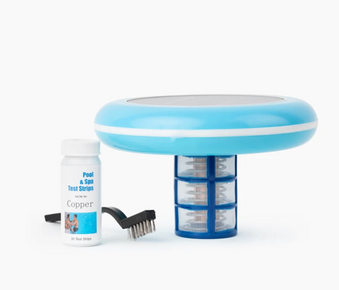
En bref : Une circulation inégale est l'un des problèmes les plus difficiles à gérer pour les propriétaires de piscines, créant des zones mortes où les débris s'accumulent, les algues s'installent et la qualité de l'eau se dégrade. Les piscines au chlore traditionnelles rencontrent des difficultés avec ces zones car le désinfectant doit être constamment circulé pour atteindre toutes les parties de la piscine. Les ioniseurs solaires de piscine offrent un avantage fondamental : les ions de cuivre persistent dans l'eau et se diffusent naturellement, assurant l'assainissement même dans les zones à faible débit. Ce guide explore comment l'ionisation solaire aborde la circulation inégale, la science derrière la distribution des ions et les stratégies pratiques pour optimiser la qualité de l'eau dans les piscines présentant des défis de circulation.
Résumé SEO : Guide 2026 sur l'ioniseur solaire de piscine pour les piscines à circulation inégale : persistance des ions, traitement des zones mortes, principes de diffusion et stratégies pour les modèles de circulation difficiles.
Table des matières
- Comprendre la circulation inégale
- Pourquoi le chlore a du mal avec les zones mortes
- Persistance des ions : l'avantage fondamental
- Comment les ions se diffusent dans l'eau
- Traitement des zones mortes existantes
- Stratégies de prévention pour une circulation inégale
- Considérations de conception pour un meilleur débit
- Solutions de rénovation pour les piscines existantes
- Techniques de surveillance de la qualité de l'eau dans les zones problématiques
- Conclusion et points clés à retenir
Comprendre la circulation inégale
Une circulation inégale affecte d'innombrables piscines, créant des zones où l'eau se déplace lentement ou pas du tout. Ces zones mortes deviennent des terreaux pour les problèmes qui affectent l'ensemble de la piscine. Comprendre pourquoi la circulation est importante est la première étape pour y remédier efficacement.
- Les zones mortes sont des zones où le mouvement de l'eau est minimal. Les emplacements courants comprennent derrière les échelles, sous les marches, dans les coins opposés aux retours et dans les zones peu profondes avec un mauvais positionnement des retours. L'eau de ces zones peut prendre des heures ou des jours pour se mélanger complètement au reste de la piscine.
- L'accumulation de débris est le problème le plus visible dans les zones mortes. Feuilles, saletés et autres débris s'installent dans ces zones et y restent, se décomposant et libérant des nutriments dans l'eau. Cela crée des problèmes localisés qui peuvent se propager.
- L'établissement des algues commence presque toujours dans les zones mortes. Avec une eau stagnante, des températures chaudes et des nutriments accumulés, les algues trouvent des conditions idéales. Une fois établies, elles peuvent se propager au reste de la piscine.
- La stratification de la température peut se produire dans les piscines à faible circulation. L'eau de surface se réchauffe tandis que l'eau plus profonde reste fraîche, créant des couches qui inhibent davantage le mélange. Cela peut affecter le confort des nageurs et la distribution des produits chimiques.
- La distribution des produits chimiques est compromise lorsque la circulation est inégale. Le désinfectant ajouté à l'équipement peut ne jamais atteindre les zones mortes en concentrations adéquates, laissant ces zones sans protection.
- La formation de biofilm s'accélère dans les zones à faible débit. Les bactéries et autres micro-organismes s'attachent aux surfaces et créent des films protecteurs qui résistent à l'assainissement. Une fois établi, le biofilm peut être difficile à éliminer.
Les ioniseurs solaires de piscine abordent la circulation inégale par des mécanismes fondamentalement différents du chlore. La comparaison complète entre l'ioniseur solaire de piscine et les systèmes traditionnels en 2026 explique pourquoi la persistance des ions rend l'ionisation plus efficace dans des conditions de circulation difficiles.
Pourquoi le chlore a du mal avec les zones mortes
Les limites du chlore dans la gestion des zones mortes sont inhérentes à son fonctionnement. Comprendre ces limites aide à expliquer pourquoi l'ionisation solaire est une solution supérieure pour les piscines à circulation inégale.
- Le chlore est consommé à mesure qu'il agit. Chaque réaction avec la matière organique, chaque destruction de bactéries ou d'algues, consomme du chlore. Au moment où le chlore atteint une zone morte, une grande partie peut déjà être épuisée. Le mélange lent dans les zones mortes signifie que le chlore qui arrive est rapidement consommé sans être reconstitué.
- Le chlore se dissipe avec le temps. La lumière du soleil le décompose. La chaleur accélère sa dégradation. L'aération des jeux d'eau le fait sortir de la solution. Dans les zones mortes où l'eau stagne, ces mécanismes de dissipation continuent d'opérer tandis que le réapprovisionnement est lent.
- Le chlore doit être continuellement circulé pour être efficace. Sans débit, les niveaux de chlore dans les zones mortes diminuent rapidement. Cela crée des fenêtres de vulnérabilité lorsque ces zones ne sont pas protégées.
- Le test du chlore au niveau de l'équipement vous renseigne peu sur les zones mortes. Un échantillon de la ligne de retour peut montrer un chlore adéquat alors que l'eau derrière l'échelle est complètement épuisée. Cette fausse assurance permet aux problèmes de se développer inaperçus.
- Les traitements de choc n'apportent qu'un soulagement temporaire. Même une dose massive de chlore peut ne pas pénétrer efficacement les zones mortes, et tous les avantages sont de courte durée car le chlore est consommé et se dissipe.
- Les algicides et les clarifiants rencontrent les mêmes problèmes de distribution. Tout produit chimique ajouté à la piscine doit être mis en circulation pour atteindre toutes les zones, et les zones mortes sont les dernières à recevoir le traitement.
Les limites du chlore dans les zones mortes sont fondamentales à sa chimie. La discussion sur la transformation de la stabilité de l'eau grâce à un ioniseur solaire de piscine en 2026 explique comment l'eau ionisée évite ces limitations.
Persistance des ions : l'avantage fondamental
L'avantage clé des ioniseurs solaires de piscine pour remédier à la circulation inégale est la persistance des ions. Les ions de cuivre et d'argent restent actifs indéfiniment, assurant un assainissement continu même dans les zones à faible débit.
- Les ions ne sont pas consommés par le processus d'assainissement. Lorsqu'un ion de cuivre tue une cellule d'algue ou perturbe une bactérie, il reste actif et peut continuer à agir. C'est fondamentalement différent du chlore, qui est consommé à chaque réaction.
- Les ions ne se dissipent pas avec le temps. La lumière du soleil n'a aucun effet sur les ions de cuivre. La chaleur ne les dégrade pas. L'aération ne les fait pas sortir de la solution. Une fois qu'un ion est dans l'eau, il y reste jusqu'à ce qu'il soit physiquement retiré par filtration ou précipitation.
- Les ions se diffusent naturellement dans l'eau. Même sans débit, les gradients de concentration provoquent une lente propagation des ions des zones de plus forte concentration vers les zones de plus faible concentration. Cette diffusion, bien que lente, distribue finalement les ions dans toute la piscine.
- Le champ ionique se construit avec le temps. À mesure que les ions s'accumulent, ils créent un réservoir de capacité d'assainissement. Même dans les zones mortes, ce réservoir assure une protection continue.
- Les mécanismes d'élimination sont lents. Les ions sont principalement éliminés lorsqu'ils s'attachent à des particules qui sont ensuite filtrées. Cette élimination progressive signifie qu'une fois qu'un champ ionique est établi, il persiste pendant des jours ou des semaines même sans production active.
- Plusieurs ions offrent une redondance. Le cuivre s'occupe des algues, l'argent des bactéries. Ensemble, ils assurent un assainissement à large spectre qui continue de fonctionner dans toutes les zones de la piscine.
La persistance des ions transforme la façon dont les piscines à circulation inégale peuvent être gérées. Les systèmes d'ionisation solaire de piscine favorisant une eau plus propre en 2026 fournissent des informations détaillées sur la façon dont la persistance des ions contribue à la qualité globale de l'eau.
Comment les ions se diffusent dans l'eau
Comprendre comment les ions se déplacent dans l'eau aide à expliquer pourquoi l'ionisation solaire fonctionne même dans les piscines avec une circulation imparfaite. La diffusion est un processus physique qui fonctionne indépendamment du débit.
- La diffusion est entraînée par les gradients de concentration. Les ions se déplacent naturellement des zones de plus forte concentration vers les zones de plus faible concentration. Ce mouvement se produit même dans l'eau complètement immobile, entraîné par le mouvement thermique aléatoire des molécules.
- Les vitesses de diffusion sont lentes mais efficaces avec le temps. Bien que la diffusion soit beaucoup plus lente que le mélange par écoulement, elle fonctionne en continu. Sur des heures et des jours, les ions se distribueront dans les plus grandes piscines.
- La température affecte les vitesses de diffusion. L'eau plus chaude augmente le mouvement moléculaire, accélérant la diffusion. C'est bénéfique car l'activité biologique augmente également avec la température, ce qui signifie que les ions se propagent plus rapidement lorsqu'ils sont le plus nécessaires.
- Les gradients de concentration sont maintenus par l'ioniseur. À mesure que les ions sont éliminés dans les zones mortes par filtration ou précipitation, la concentration y diminue légèrement. Cela crée un gradient qui attire plus d'ions des zones de plus forte concentration, maintenant le champ ionique.
- Les points d'entrée multiples améliorent la distribution. Bien qu'une seule chambre d'ioniseur fournisse des ions en un point, la libération continue crée une source persistante qui entraîne la diffusion dans toute la piscine.
- La diffusion fonctionne de concert avec la circulation existante. Même un débit minimal provenant d'un fonctionnement occasionnel de la pompe améliore la diffusion, déplaçant les ions plus rapidement que la diffusion seule.
La diffusion garantit que les ions atteignent toutes les zones de la piscine, même celles avec un débit minimal. La discussion sur la transformation de la stabilité de l'eau grâce à un ioniseur solaire de piscine en 2026 explique comment ce processus naturel complète le fonctionnement de l'ioniseur.
Traitement des zones mortes existantes
Pour les piscines déjà confrontées à des problèmes de zones mortes, une approche systématique peut restaurer la qualité de l'eau et prévenir la récidive. L'ionisation solaire fournit les outils, mais une intervention active peut être nécessaire initialement.
- Identifiez toutes les zones mortes de votre piscine. Les emplacements courants comprennent derrière les échelles, sous les marches, dans les coins opposés aux retours, autour des niches d'éclairage et dans les zones aux formes complexes. Faites le tour de la piscine et notez où les débris s'accumulent et où les algues ont tendance à apparaître en premier.
- Brossez vigoureusement les zones mortes pour déloger tout biofilm ou algue existant. Cette action physique expose les organismes aux ions en circulation et les rend plus faciles à filtrer. Portez une attention particulière aux coins et derrière les accessoires.
- Augmentez temporairement la circulation pour aider à distribuer les ions. Faites fonctionner la pompe en continu pendant plusieurs jours pendant que le champ ionique s'établit. Si vous avez une pompe à vitesse variable, envisagez de la faire fonctionner à une vitesse plus élevée pour améliorer le mélange.
- Envisagez l'ajout manuel d'ions si les zones mortes sont graves. Certains propriétaires augmentent temporairement la production d'ioniseurs pour accélérer l'établissement du champ ionique dans les zones problématiques. Surveillez attentivement les niveaux de cuivre pour éviter de dépasser 0,5 ppm.
- Testez directement la qualité de l'eau dans les zones mortes. Prélevez des échantillons derrière les échelles et d'autres zones problématiques pour vérifier que les niveaux de cuivre sont adéquats. Cela peut nécessiter des techniques d'échantillonnage créatives mais fournit des informations précieuses.
- Résolvez tout problème sous-jacent qui contribue aux zones mortes. Si les retours sont mal positionnés, envisagez d'ajouter des retours supplémentaires ou d'ajuster ceux qui existent. Si les marches ou les accessoires créent des obstructions, évaluez si des modifications sont possibles.
- Surveillez attentivement les zones traitées pendant plusieurs semaines. Les zones mortes qui ont été problématiques peuvent nécessiter une attention particulière jusqu'à ce que le champ ionique soit complètement établi. Un brossage hebdomadaire pendant cette période est bénéfique.
Le traitement des zones mortes existantes demande un effort initial, mais les résultats sont durables. Les directives opérationnelles pour l'ioniseur solaire de piscine en 2026 fournissent des protocoles détaillés pour traiter les zones problématiques.
Stratégies de prévention pour une circulation inégale
Une fois les zones mortes sous contrôle, les stratégies de prévention les maintiennent ainsi. L'ionisation solaire facilite la prévention, mais l'attention à la circulation reste importante.
- Maintenez des niveaux de cuivre constants dans la plage cible de 0,2 à 0,4 ppm. Cela garantit que le champ ionique reste suffisamment puissant pour pénétrer toutes les zones de la piscine. Des tests hebdomadaires et un ajustement occasionnel de la sortie maintiennent les niveaux optimaux.
- Brossez les zones mortes chaque semaine à titre préventif. Cette pratique simple perturbe toute formation précoce de biofilm et garantit que même les zones à faible débit restent propres. Quelques minutes de brossage chaque semaine préviennent les problèmes.
- Assurez un temps de fonctionnement suffisant de la pompe pour votre piscine. Bien que les ions se diffusent naturellement, une certaine circulation aide à les distribuer plus rapidement. Le temps de fonctionnement minimal qui maintient votre piscine claire est généralement suffisant.
- Vérifiez périodiquement les buses de refoulement pour vous assurer qu'elles sont correctement ajustées. Les refoulements doivent être orientés de manière à favoriser une bonne circulation, et non simplement dirigés vers le bas ou vers la surface. Expérimentez avec différents angles pour trouver ce qui fonctionne le mieux.
- Surveillez visuellement les zones à problèmes lors des vérifications régulières de la piscine. Recherchez tout signe d'accumulation d'algues ou de débris. Une détection précoce permet d'intervenir avant que les problèmes ne se propagent.
- Envisagez des ajustements saisonniers de la circulation. Pendant l'été, lorsque l'activité biologique est la plus élevée, l'augmentation légère du temps de fonctionnement de la pompe peut aider à assurer une distribution ionique adéquate dans toutes les zones.
- Maintenez une chimie de l'eau appropriée pour tous les paramètres. Un pH stable, une alcalinité adéquate et un calcium équilibré soutiennent tous le champ ionique et préviennent les conditions qui pourraient entraîner des problèmes de zones mortes.
Les stratégies de prévention sont simples et prennent un minimum de temps. La ressource assurer un entretien prévisible de la piscine avec un ionisateur solaire fournit des approches systématiques pour maintenir des conditions optimales dans toute la piscine.
Considérations de conception pour une meilleure circulation
Pour les nouvelles piscines ou les rénovations majeures, les choix de conception peuvent considérablement améliorer la circulation et réduire les zones mortes. L'ionisation solaire s'associe à une bonne conception pour créer des conditions optimales.
- Le placement des refoulements est essentiel pour une bonne circulation. Les refoulements doivent être positionnés de manière à créer un flux doux et continu qui atteint toutes les zones de la piscine. Plusieurs refoulements sont préférables à un seul, permettant de diriger le flux de manière stratégique.
- Les buses de refoulement doivent être réglables afin que la direction du flux puisse être ajustée avec précision. Les buses orientables permettent d'expérimenter différents motifs et de trouver ce qui convient le mieux à la forme spécifique de votre piscine.
- Le placement de l'écumeur affecte la circulation de surface. Les écumeurs doivent être positionnés pour capter efficacement les débris de surface, généralement du côté sous le vent de la piscine où le vent et les courants poussent naturellement les débris.
- Les bondes de fond contribuent à la circulation de l'eau au fond. Bien que moins critiques que les refoulements, des bondes de fond correctement positionnées aident à assurer la circulation de l'eau plus profonde.
- La conception des marches et des bancs peut créer des zones mortes si elle n'est pas soigneusement étudiée. Les marches qui dépassent dans le flux peuvent créer des tourbillons derrière elles. Les conceptions de marches intégrées qui permettent la circulation de l'eau en dessous aident à prévenir cela.
- Les niches d'éclairage et autres équipements doivent être conçus pour minimiser l'obstruction du flux. Les lumières encastrées avec des profils lisses créent moins de problèmes que les équipements saillants.
- Les jeux d'eau comme les fontaines et les cascades peuvent en fait améliorer la circulation en créant un mouvement d'eau supplémentaire. Leur placement doit tenir compte des avantages pour la circulation, et pas seulement de l'esthétique.
Une bonne conception rend tout système d'assainissement plus efficace. La ressource sur les ionisateurs solaires alimentant la nouvelle génération de piscines explore comment la conception moderne des piscines s'intègre aux technologies d'assainissement avancées.
Solutions de rénovation pour les piscines existantes
Pour les piscines existantes présentant des problèmes de circulation, des options de rénovation peuvent améliorer le flux et renforcer l'efficacité de l'ionisation solaire.
- Des lignes de refoulement supplémentaires peuvent être ajoutées dans les zones à problèmes. Bien que cela nécessite des travaux de plomberie, l'ajout d'un refoulement derrière une échelle problématique ou dans un coin peut considérablement améliorer la circulation dans cette zone.
- Les déviateurs de ligne de refoulement vous permettent d'ajuster la distribution du flux. Si certaines zones reçoivent trop de flux tandis que d'autres en reçoivent trop peu, les déviateurs peuvent équilibrer le système.
- Des pompes d'appoint peuvent être ajoutées pour des zones spécifiques. Dans les grandes piscines ou celles avec des zones mortes particulièrement problématiques, une petite pompe dédiée peut assurer la circulation là où c'est nécessaire.
- Les raccords directionnels peuvent remplacer les refoulements standard. Les raccords orientables qui permettent un ciblage précis sont une amélioration facile qui peut améliorer considérablement les modèles de flux.
- Les refoulements de fond ou les systèmes de nettoyage intégrés au sol assurent la circulation au fond de la piscine. Ces systèmes, bien que principalement conçus pour le nettoyage, améliorent également la circulation globale.
- Les pompes de circulation à vitesse variable vous permettent d'ajuster le débit pour une distribution optimale. Fonctionner à des vitesses plus élevées pendant une partie de la journée peut aider à atteindre les zones mortes, tandis que des vitesses plus faibles économisent de l'énergie le reste du temps.
- Les nettoyeurs robotisés, bien qu'ils n'améliorent pas directement la circulation, aident à maintenir les zones mortes propres en brossant et en aspirant physiquement les zones que le flux n'atteint pas.
Les solutions de rénovation vont du simple au complexe, mais même de petites améliorations peuvent faire la différence. La ressource "comment moderniser votre piscine avec un ionisateur solaire en 2026" fournit des conseils sur l'intégration des améliorations de circulation avec l'installation de l'ionisateur.
Techniques de surveillance de la qualité de l'eau dans les zones à problèmes
Une surveillance régulière garantit que les zones mortes restent saines. Des techniques simples peuvent vérifier que le champ ionique atteint toutes les zones de la piscine.
- L'inspection visuelle est la première ligne de défense. Recherchez la croissance d'algues, l'accumulation de débris ou la turbidité dans les zones à problèmes. Tout problème visible indique que la zone nécessite une attention.
- Les tests de cuivre dans les zones mortes fournissent des données définitives. Prélevez des échantillons d'eau derrière les échelles, sous les marches et dans les coins. Comparez les niveaux de cuivre à ceux du corps d'eau principal. Des différences de plus de 0,1 ppm indiquent un mélange insuffisant.
- Le test de pH à plusieurs endroits peut révéler une stratification. Si le pH diffère significativement entre les zones, la circulation est insuffisante.
- La surveillance de la température peut identifier la stratification. Des différences de température significatives entre la surface et le fond, ou entre différentes zones, indiquent un mauvais mélange.
- Le test colorimétrique fournit une confirmation visuelle des schémas de circulation. Le colorant non tachant libéré dans différentes zones montre comment l'eau se déplace et où se trouvent les zones mortes.
- Le brossage régulier sert à la fois de traitement et de surveillance. Si vous brossez une zone morte chaque semaine et ne trouvez jamais d'algues, vous savez que la zone est saine. Si vous trouvez occasionnellement de la croissance, vous savez qu'il faut augmenter l'attention.
- La tenue de registres des observations des zones à problèmes aide à identifier les tendances. Notez quelles zones ont tendance à développer des problèmes à différentes périodes de l'année, et ajustez vos stratégies de prévention en conséquence.
Les techniques de surveillance sont simples mais fournissent des informations précieuses. La ressource Améliorer la clarté quotidienne de l'eau avec un ionisateur solaire de piscine 2026 comprend des conseils sur une évaluation complète de la qualité de l'eau.
Conclusion et points clés à retenir
Une circulation inégale est un défi courant que les piscines au chlore traditionnelles ont du mal à surmonter. Les zones mortes deviennent des zones de problèmes récurrents, nécessitant une attention et un traitement constants. Les ionisateurs solaires de piscine offrent un avantage fondamental grâce à la persistance des ions : les ions restent actifs indéfiniment, se diffusent naturellement et fournissent une désinfection continue même dans les zones à faible débit.
Pour les piscines déjà confrontées à des zones mortes, une approche systématique combinant traitement initial, stratégies de prévention et surveillance peut restaurer et maintenir la qualité de l'eau dans toute la piscine. Pour les nouvelles piscines, les choix de conception peuvent minimiser les problèmes de circulation dès le départ.
Le résultat est que les piscines avec une circulation inégale peuvent obtenir la même eau cristalline que celles avec un flux parfait. La persistance des ions compense les limitations de circulation, offrant une protection là où elle est le plus nécessaire.
Points clés à retenir
- Une circulation inégale crée des zones mortes où les débris s'accumulent, les algues s'établissent et la qualité de l'eau se dégrade. Ces zones sont à l'origine de nombreux problèmes récurrents de piscine.
- Le chlore a du mal avec les zones mortes car il est consommé, se dissipe et doit être continuellement mis en circulation. Les zones mortes deviennent en permanence sous-désinfectées dans les piscines au chlore.
- La persistance des ions est l'avantage fondamental des ionisateurs solaires. Les ions restent actifs indéfiniment, ne sont pas consommés et ne se dissipent pas, offrant une protection continue.
- La diffusion garantit que les ions atteignent toutes les zones de la piscine, même celles avec un débit minimal. Les gradients de concentration entraînent le mouvement des ions, et la température affecte les taux de diffusion.
- Le traitement des zones mortes existantes nécessite l'identification, le brossage, une augmentation temporaire de la circulation et éventuellement des apports manuels d'ions. Les directives opérationnelles pour l'ionisateur solaire de piscine en 2026 fournissent des protocoles détaillés.
- Les stratégies de prévention comprennent le maintien de niveaux de cuivre constants, un brossage hebdomadaire, un temps de fonctionnement adéquat de la pompe, un réglage correct du refoulement et une surveillance régulière.
- Les considérations de conception pour les nouvelles piscines comprennent un placement correct du refoulement, des raccords réglables, le positionnement de l'écumeur et une conception des marches qui minimise les obstructions.
- Les solutions de rénovation pour les piscines existantes comprennent des refoulements supplémentaires, des déviateurs, des pompes d'appoint, des raccords directionnels et des pompes à vitesse variable.
- Les techniques de surveillance telles que l'inspection visuelle, les tests de cuivre dans les zones mortes, les tests de pH et les tests de colorant vérifient que toutes les zones reçoivent une désinfection adéquate.
- Les ionisateurs solaires de piscine facilitent la gestion de la circulation inégale. La persistance et la diffusion des ions compensent les limitations de flux, assurant la protection de toutes les zones de la piscine. La ressource planification à long terme avec les systèmes d'ioniseurs solaires de piscine en 2026 démontre comment cette fiabilité contribue à une tranquillité d'esprit durable.
Chaque propriétaire de piscine mérite une eau toujours claire et saine dans toute la piscine, et pas seulement dans les zones bien circulées. Les ionisateurs solaires de piscine rendent cela possible grâce à une technologie qui utilise les propriétés naturelles de l'eau pour assurer une protection partout.