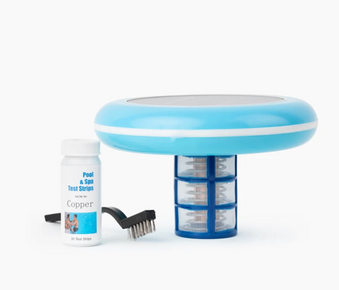
TL;DR: New Water's 01034613 Replacement Chlorine Cycler Pacs provide automated pool chlorination through slow-dissolving tablets. Install in pool skimmer or floating dispenser, use 1 to 3 tablets per week depending on pool size and usage. Replace pacs when depleted, maintain proper water chemistry, test chlorine 2 to 3 times weekly. This guide covers complete installation and maintenance procedures for automated chlorination.
Table of Contents
What are New Water's 01034613 Replacement Chlorine Cycler Pacs?
New Water's 01034613 Replacement Chlorine Cycler Pacs are slow-dissolving chlorine tablets designed for automated pool sanitization systems. These trichlor tablets provide continuous chlorine release to maintain consistent sanitizer levels without daily manual dosing. The pacs are specifically formulated as replacement tablets for New Water chlorine cycler systems, offering convenient, hands-off pool chlorination that keeps water clean and clear with minimal effort.
Key Features of Chlorine Cycler Pacs
- Slow dissolving: Provides continuous chlorination
- Trichlor formula: Concentrated chlorine for effective sanitization
- Stabilized chlorine: Contains cyanuric acid to protect from sunlight
- Automated delivery: Reduces need for daily chlorine additions
- Convenient tablets: Easy to handle and install
- Long lasting: Each pac provides days of chlorination
- Compatible: Works with skimmers and floating dispensers
- Professional strength: Used by pool service professionals
How Chlorine Cycler Pacs Work
Chlorine Cycler Pacs slowly dissolve in pool water, releasing trichlor (trichloroisocyanuric acid) that provides free chlorine for sanitization. As water flows through the skimmer or dispenser containing the pacs, chlorine is gradually released into the pool circulation system, maintaining consistent sanitizer levels. This automated approach eliminates the need for daily chlorine additions while providing reliable sanitization.
Why Use Chlorine Cycler Pacs?
Benefits of Automated Chlorination
- Convenient: Reduces daily pool maintenance
- Consistent chlorination: Maintains steady sanitizer levels
- Time saving: No daily chlorine additions needed
- Effective sanitization: Kills bacteria and algae
- Cost effective: Efficient chlorine delivery
- Easy to use: Simple installation and replacement
- Stabilized formula: Protects chlorine from sunlight degradation
- Reliable: Provides continuous protection
Cycler Pacs vs Manual Chlorination
Chlorine Cycler Pacs provide automated, continuous chlorination compared to manual daily additions of liquid or granular chlorine. While manual chlorination offers more precise control, cycler pacs are more convenient for busy pool owners and provide more consistent sanitizer levels between manual additions.
Installation Methods
Skimmer Installation (Most Common)
Installing pacs in the pool skimmer is the most common method:
- Simple installation process
- Uses existing pool equipment
- Chlorine disperses through circulation system
- No additional equipment needed
- Easy to monitor and replace
Floating Dispenser Installation
Alternative method using a floating chlorine dispenser:
- Floats freely in pool
- Adjustable chlorine release rate
- Useful when skimmer access is limited
- Requires separate dispenser purchase
- Easy to remove when shocking pool
Automatic Chlorinator Installation
For pools with inline automatic chlorinators:
- Professional installation recommended
- Precise chlorine control
- Plumbed into circulation system
- Most automated option
- Higher initial cost
Step by Step Installation Guide
Step 1: Test and Balance Water Chemistry
Before installing cycler pacs, ensure proper water balance:
- pH: 7.2 to 7.6
- Total Alkalinity: 80 to 120 ppm
- Calcium Hardness: 200 to 400 ppm
- Cyanuric Acid: 30 to 50 ppm (will increase with trichlor use)
- Free Chlorine: 1 to 3 ppm
Learn about how to maintain your pool's pH balance.
Step 2: Clean Pool and Equipment
Prepare pool for cycler pac installation:
- Skim surface to remove debris
- Brush pool walls and floor
- Vacuum pool if needed
- Empty skimmer basket
- Clean filter if pressure is high
- Ensure pump is operating properly
Follow pool cleaning checklist for beginners.
Step 3: Determine Number of Pacs Needed
Dosage guidelines based on pool size and usage:
Standard Dosage
Pool Size Based:
- Up to 10,000 gallons: 1 pac per week
- 10,000 to 20,000 gallons: 2 pacs per week
- 20,000 to 30,000 gallons: 3 pacs per week
- Above 30,000 gallons: 3 to 4 pacs per week
Usage Adjustments
- Heavy use: Add 1 extra pac
- Hot weather: May need additional pacs
- Light use: May reduce by 1 pac
- Monitor chlorine levels and adjust accordingly
Step 4: Install Pacs in Skimmer
For skimmer installation:
- Turn off pool pump
- Remove skimmer basket
- Place appropriate number of pacs in skimmer
- Replace skimmer basket over pacs
- Turn pump back on
- Verify water is flowing through skimmer
Step 5: Install Pacs in Floating Dispenser
For floating dispenser installation:
- Open floating dispenser
- Place appropriate number of pacs inside
- Adjust dispenser vents for desired chlorine release rate
- Close dispenser securely
- Place in pool away from skimmer and returns
- Allow to float freely
Step 6: Run Pump and Monitor
Ensure proper circulation:
- Run pump 8 to 12 hours daily
- Verify water is circulating properly
- Check that pacs are dissolving
- Monitor chlorine levels daily for first week
- Adjust number of pacs if needed
Learn about how pool circulation supports proper maintenance.
Ongoing Maintenance Schedule
Daily Maintenance
Every Day:
- Check that pump is running
- Verify dispenser or skimmer has pacs
- Skim surface debris
- Visual inspection of water clarity
Weekly Maintenance
2 to 3 Times Per Week:
- Test chlorine levels (should be 1 to 3 ppm)
- Test pH and adjust if needed
- Check pac dissolution rate
- Add more pacs if depleted
Once Per Week:
- Test all water chemistry parameters
- Brush pool walls and floor
- Vacuum pool
- Empty skimmer basket
- Check filter pressure
- Shock pool if needed
Follow weekly pool cleaning routines for clear water.
Monthly Maintenance
- Deep clean or backwash filter
- Test cyanuric acid levels
- Inspect all pool equipment
- Clean pool tiles and waterline
- Check chemical inventory and restock
Seasonal Considerations
Summer (High Use):
- May need additional pacs due to heat and usage
- Test chlorine more frequently
- Monitor water clarity closely
- Shock pool weekly
Spring/Fall (Moderate Use):
- Standard pac dosage usually sufficient
- Test chlorine 2 to 3 times weekly
- Adjust pacs based on temperature
Pro Tips for Maximum Effectiveness
Expert Tips from Pool Professionals
- Monitor cyanuric acid: Trichlor adds stabilizer, test monthly
- Don't overdose: More pacs doesn't mean better chlorination
- Remove when shocking: Take out pacs or dispenser before shocking
- Balance pH first: Proper pH ensures chlorine effectiveness
- Run pump adequately: 8 to 12 hours daily for proper distribution
- Store properly: Keep pacs in cool, dry location
- Use skimmer basket: Prevents pacs from entering pump
- Test regularly: Don't rely solely on automated system
- Clean filter: Good filtration supports chlorination
Avoid Common Mistakes
- Not testing chlorine: Automated doesn't mean maintenance-free
- Overdosing pacs: Can cause high chlorine and low pH
- Ignoring cyanuric acid: Can build up and cause chlorine lock
- Not removing when shocking: Reduces shock effectiveness
- Poor circulation: Inadequate pump runtime reduces effectiveness
- Neglecting pH: High pH reduces chlorine effectiveness significantly
- Using in spa: Trichlor not recommended for hot tubs
- Storing improperly: Moisture reduces pac effectiveness
Maximizing Cycler Pac Performance
Water Chemistry: Maintain pH between 7.2 and 7.6 for optimal chlorine effectiveness. Monitor cyanuric acid monthly.
Circulation: Run pump 8 to 12 hours daily to ensure proper chlorine distribution throughout pool.
Filtration: Clean filter regularly to remove particles and maintain water clarity.
Testing: Test chlorine 2 to 3 times weekly and adjust pac quantity as needed.
Frequently Asked Questions
How many chlorine cycler pacs should I use?
Use 1 pac per week for pools up to 10,000 gallons, 2 pacs for 10,000 to 20,000 gallons, and 3 pacs for 20,000 to 30,000 gallons. Adjust based on usage and chlorine test results.
How long do chlorine cycler pacs last?
Each pac typically lasts 3 to 7 days depending on water temperature, circulation, and pool usage. Monitor dissolution rate and replace when depleted.
Can I use cycler pacs in my skimmer?
Yes, skimmer installation is the most common method. Place pacs in skimmer with basket in place to prevent them from entering the pump.
Will cycler pacs lower my pH?
Yes, trichlor is acidic and will gradually lower pH. Test pH 2 to 3 times weekly and adjust with soda ash or pH increaser as needed.
Can I shock my pool with cycler pacs installed?
Remove pacs or floating dispenser before shocking for best results. Reinstall after shock has dissipated (chlorine below 5 ppm).
What is cyanuric acid and why does it matter?
Cyanuric acid is chlorine stabilizer that protects from sunlight. Trichlor contains stabilizer, so levels will increase over time. Keep between 30 and 50 ppm; high levels cause chlorine lock.
Can I use cycler pacs with a saltwater pool?
While possible, it's not recommended. Saltwater pools generate their own chlorine. Using cycler pacs can interfere with the salt system and cause chemistry imbalances.
How do I store unused cycler pacs?
Store in original container in cool, dry location away from children, pets, and other chemicals. Keep tightly sealed and away from moisture.
Why won't my chlorine levels stay up?
Low chlorine retention can indicate high cyanuric acid (chlorine lock), high organic load, or insufficient pacs. Test cyanuric acid, shock pool, and increase pac quantity if needed.
Can I use cycler pacs with a solar pool ionizer?
Yes! Solar pool ionizers work alongside chlorine to prevent algae, allowing you to reduce chlorine needs by up to 85%. Use fewer cycler pacs while maintaining 0.5 to 1.0 ppm chlorine.
Explore what does a pool ionizer do and pool ionizer pros and cons.
Conclusion
New Water's 01034613 Replacement Chlorine Cycler Pacs provide convenient, automated pool chlorination that maintains consistent sanitizer levels with minimal daily effort. By installing the appropriate number of pacs in your skimmer or floating dispenser, running your pump adequately, and testing water chemistry 2 to 3 times weekly, you can enjoy clean, clear pool water throughout the swimming season. Remember to monitor cyanuric acid levels monthly and adjust pac quantity based on pool size, usage, and test results for optimal performance.
For pool owners seeking to reduce chlorine usage while maintaining excellent water quality, consider adding a solar pool ionizer which uses solar power to release copper and silver ions for natural algae and bacteria prevention, allowing you to reduce chlorine needs by up to 85% while working alongside your cycler pac system for comprehensive, eco-friendly pool sanitization.