TL;DR: In The Swim Super Pool Opening Kit provides comprehensive chemicals for spring pool opening. The kit includes shock, algaecide, clarifier, stain preventer, and enzyme treatment. Follow proper sequence: remove cover, clean pool, balance water chemistry, add chemicals from kit, run pump 24 hours, test and adjust. This guide covers complete spring pool opening procedures using the Super kit.
Table of Contents
What is the In The Swim Super Pool Opening Kit?
The In The Swim Super Pool Opening Kit is a premium, comprehensive chemical package designed to simplify and enhance spring pool opening. This all-in-one kit contains five essential chemicals needed to shock, clarify, prevent algae, protect pool surfaces, and break down organic contaminants during the critical opening process. The Super kit provides everything needed for a professional quality pool opening, ensuring your pool starts the season clean, clear, and properly balanced.
Why Use the Super Pool Opening Kit?
- Comprehensive: Five essential chemicals in one package
- Cost effective: Better value than buying chemicals separately
- Properly formulated: Chemicals work together synergistically
- Simplified process: Takes guesswork out of spring opening
- Time saving: Everything you need in one purchase
- Professional results: Designed for superior pool start-up
- Enhanced treatment: Includes enzyme for organic breakdown
When to Use the Super Kit
Use the In The Swim Super Pool Opening Kit when opening your pool for the swimming season, typically in spring (March through May depending on your location). The kit is designed for pools that have been properly winterized and covered, providing comprehensive chemicals needed to restore water quality and prepare for summer use.
Learn about the optimal time to install a solar pool ionizer during pool opening.
What's Included in the Super Kit
Shock Treatment
The kit includes calcium hypochlorite shock (typically 2 to 3 lbs) to kill bacteria, destroy organic contaminants, and oxidize pool water. Shocking is the critical first step in restoring water quality after winter.
Algaecide
A preventative algaecide (typically polyquat based) helps prevent algae growth during the opening process and throughout the early season. This non-metallic formula won't stain pool surfaces.
Clarifier
Pool clarifier helps filter capture small particles, improving water clarity by binding microscopic debris together so your filter can remove them more effectively.
See how to use pool clarifiers for additional clarity tips.
Stain and Scale Preventer
Metal sequestrant prevents staining from metals in the water and helps control scale formation on pool surfaces and equipment during the opening process.
Enzyme Treatment
Natural enzymes break down non-living organic contaminants like oils, lotions, and other organic matter, reducing chlorine demand and improving water quality.
Pre-Opening Preparation
Timing Your Pool Opening
Open your pool when daytime temperatures consistently reach 60 to 70°F. Opening too early wastes chemicals and energy, while opening too late allows algae to establish. Most pool owners open in April or May depending on their climate.
Gather Necessary Equipment
- Pool brush
- Skimmer net
- Vacuum and hose
- Water test kit or strips
- Garden hose
- Bucket for mixing chemicals
- Safety goggles and gloves
Inspect Pool Equipment
Before opening, inspect:
- Pool cover for damage
- Filter system for cracks or leaks
- Pump and motor operation
- Skimmer and return fittings
- Pool surface for damage
- Safety equipment and ladders
Step-by-Step Opening Process
Step 1: Remove and Clean Pool Cover
- Remove standing water from cover with pump or siphon
- Sweep off debris and dirt
- Carefully remove cover to avoid debris falling into pool
- Clean cover with mild soap and water
- Dry completely before storing
- Store in cool, dry location
Step 2: Remove Winter Accessories
- Remove winterizing plugs from returns and skimmers
- Remove ice compensator or winter floats
- Reinstall return fittings and skimmer baskets
- Remove winter cover from pump and filter
- Inspect all equipment for damage
Step 3: Fill Pool to Proper Level
- Add water to bring level to middle of skimmer opening
- Check for leaks while filling
- Ensure proper water level for equipment operation
Step 4: Clean Pool Thoroughly
- Remove large debris with skimmer net
- Brush walls, steps, and floor thoroughly
- Vacuum pool to remove settled debris
- Empty skimmer and pump baskets
- Clean waterline with pool tile cleaner
Follow pool cleaning checklist for beginners.
Step 5: Start Up Pool Equipment
- Prime pump if necessary
- Turn on pump and check for proper operation
- Check for leaks at all connections
- Verify water is circulating through returns
- Set filter to appropriate setting
- Run pump continuously during opening process
Learn about how pool circulation supports proper maintenance.
Step 6: Test Water Chemistry
Test initial water parameters:
- pH
- Total Alkalinity
- Calcium Hardness
- Free Chlorine
- Total Chlorine
- Cyanuric Acid (if applicable)
Chemical Application Guide
Order of Chemical Addition
Add chemicals in this specific order for best results:
1. Balance pH and Alkalinity First
- Adjust Total Alkalinity to 80 to 120 ppm
- Adjust pH to 7.2 to 7.6
- Wait 4 hours between adjustments
- Retest before proceeding
Learn about how to maintain your pool's pH balance.
2. Add Stain and Scale Preventer
- Pour around pool perimeter with pump running
- Distribute evenly
- Allow to circulate for 1 hour
3. Add Enzyme Treatment
- Pour around pool perimeter
- Helps break down organic contaminants
- Allow to circulate for 1 hour
4. Shock the Pool
- Dissolve shock in bucket of water (if granular)
- Pour around pool perimeter in evening
- Keep pump running
- Do not swim for 8 to 12 hours
- Brush pool after adding shock
5. Add Algaecide
- Wait 24 hours after shocking
- Pour around pool perimeter
- Brush pool surfaces
- Run pump for 8 to 12 hours
6. Add Clarifier
- Add after algaecide has circulated
- Pour near return jets for better distribution
- Run pump continuously for 24 hours
- Clean filter when pressure rises
Dosage Guidelines
Follow package directions for your specific pool size. Typical dosages:
- Shock: 1 lb per 10,000 gallons (use full amount in kit)
- Algaecide: Follow label instructions (usually 16 oz per 10,000 gallons)
- Clarifier: Follow label instructions (usually 4 to 8 oz per 10,000 gallons)
- Stain Preventer: Follow label instructions
- Enzyme: Follow label instructions
Safety Precautions
- Wear safety goggles and gloves
- Never mix chemicals together
- Add chemicals to water, not water to chemicals
- Store chemicals in cool, dry location
- Keep chemicals away from children and pets
- Follow all label instructions
Water Chemistry Balancing
Target Ranges
Maintain these levels for optimal water quality:
- pH: 7.2 to 7.6
- Total Alkalinity: 80 to 120 ppm
- Calcium Hardness: 200 to 400 ppm
- Free Chlorine: 1 to 3 ppm
- Cyanuric Acid: 30 to 50 ppm (outdoor pools)
Adjusting Water Chemistry
To Raise pH:
- Add soda ash (sodium carbonate)
- Follow package directions for dosage
- Retest after 4 hours
To Lower pH:
- Add muriatic acid or dry acid (sodium bisulfate)
- Add slowly around pool perimeter
- Retest after 4 hours
To Raise Alkalinity:
- Add sodium bicarbonate (baking soda)
- Dissolve in bucket of water first
- Pour around pool perimeter
To Raise Calcium Hardness:
- Add calcium chloride
- Dissolve in bucket of water
- Pour around pool perimeter
Testing Schedule
During opening process:
- Test daily for first week
- Test every other day for second week
- Test 2 to 3 times per week once balanced
- Test after heavy rain or pool parties
Troubleshooting Common Issues
Problem: Green or Cloudy Water
Solutions:
- Shock pool with double or triple dose
- Brush pool surfaces vigorously
- Run pump 24 hours continuously
- Clean filter frequently
- Add additional algaecide if needed
- Vacuum pool to waste if very dirty
See how to fix green pool quickly and how to handle cloudy water in swimming pools.
Problem: Staining on Pool Surfaces
Solutions:
- Test for metals in water
- Add additional metal sequestrant
- Maintain proper pH (7.2 to 7.6)
- Use stain remover for existing stains
- Consider using metal-free water source
Problem: Low Chlorine Levels
Solutions:
- Shock pool to establish chlorine residual
- Check for high cyanuric acid (chlorine lock)
- Verify pump is running adequate hours
- Test for phosphates and remove if high
- Add chlorine stabilizer if needed
Problem: High pH or Alkalinity
Solutions:
- Add muriatic acid or dry acid
- Test and adjust gradually
- Check for source of high pH (new plaster, etc.)
- Retest after 4 hours
Frequently Asked Questions
When should I open my pool?
Open your pool when daytime temperatures consistently reach 60 to 70°F, typically in April or May depending on your climate. Opening too early wastes chemicals and energy.
How long does the opening process take?
The complete opening process typically takes 3 to 5 days from removing the cover to achieving balanced, swimmable water. Most of this time is waiting for chemicals to work and water to clear.
Can I swim immediately after adding opening chemicals?
No. Wait at least 8 to 12 hours after shocking, and ensure chlorine levels are below 5 ppm before swimming. Water should be clear and properly balanced.
Do I need to drain my pool before opening?
No. You should not drain your pool for opening. Simply remove the cover, clean, balance chemistry, and add opening chemicals. Draining can damage pool structure.
What if my pool is green when I open it?
If your pool is green at opening, you'll need to shock heavily (double or triple dose), brush thoroughly, run pump continuously, and clean filter frequently. The Super kit chemicals will help, but severe algae may require additional shock.
How often should I run my pump during opening?
Run your pump continuously (24 hours per day) for the first 3 to 5 days during opening. This ensures proper chemical distribution and filtration of debris.
Can I use the Super kit with a saltwater pool?
Yes, the In The Swim Super Pool Opening Kit is compatible with saltwater pools. Follow the same procedures, but don't turn on your salt chlorine generator until water is balanced and clear.
What should I do with leftover chemicals?
Store leftover chemicals in their original containers in a cool, dry location away from children and pets. Keep chemicals separate and never mix them together.
How is the Super kit different from the Basic kit?
The Super kit includes enzyme treatment in addition to the chemicals in the Basic kit (shock, algaecide, clarifier, stain preventer). Enzymes help break down organic contaminants for superior water quality.
Should I add a solar pool ionizer during opening?
Yes, adding a solar pool ionizer during or after opening provides season-long algae prevention and reduces chlorine needs by up to 85%. Install once water is balanced and clear.
Learn about what does a pool ionizer do.
Conclusion
The In The Swim Super Pool Opening Kit provides a comprehensive, premium solution for spring pool opening, containing all essential chemicals plus enzyme treatment needed to restore superior water quality after winter. By following the proper sequence of cover removal, cleaning, water balancing, and chemical application, you can efficiently open your pool and prepare it for the swimming season with professional results. Consistent testing, proper chemical dosing, and adequate pump operation ensure your pool will be clean, clear, and ready for enjoyment.
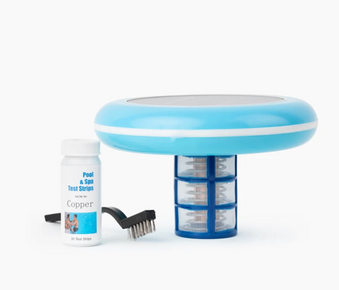
For season-long algae prevention and reduced chemical maintenance after opening your pool, consider adding a solar pool ionizer which uses solar power to release copper and silver ions continuously, reducing chlorine needs by up to 85% while providing natural algae and bacteria prevention throughout the swimming season with minimal ongoing maintenance.