Doheny's Chlorine Di-Chlor Shock is a fast-dissolving, pH-neutral shock treatment for pools and spas. Add 1 lb per 10,000 gallons for routine shocking, or 2 lbs for heavy contamination. Dissolve in bucket, pour around perimeter, circulate 8 hours, wait until chlorine drops below 5 ppm before swimming. This guide covers complete dosing, application, safety, and troubleshooting for effective pool and spa shocking.
Table of Contents
What is Di-Chlor Shock?
Doheny's Chlorine Di-Chlor Shock is a granular pool and spa shock treatment made from sodium dichloro-s-triazinetrione (dichlor). This fast-dissolving, stabilized chlorine shock provides powerful oxidation and sanitization while being pH-neutral, making it ideal for both routine maintenance shocking and treating contaminated water.
Key Features of Di-Chlor Shock
- Fast dissolving granules: Dissolves quickly in water for rapid treatment
- pH neutral (6.8 to 7.0): Won't significantly affect pool pH
- Stabilized chlorine: Contains cyanuric acid to protect from UV degradation
- 56% available chlorine: Concentrated formula for effective oxidation
- Multi purpose: Works for both shocking and daily sanitization
- Safe for all surfaces: Compatible with vinyl, fiberglass, plaster, and tile
- Suitable for pools and spas: Effective in both applications
- Quick swim time: Can swim 15 minutes to 8 hours after treatment (depending on dosage)
When combined with proper weekly pool cleaning routines, di-chlor shock helps maintain pristine water quality and prevents algae growth.
When to Shock Your Pool or Spa
Routine Shocking Schedule
Regular shocking is essential for maintaining water quality:
- Weekly shocking: Recommended for most pools during swim season
- Every 1 to 2 weeks for spas: Depending on usage frequency
- After heavy rain: Rainwater introduces contaminants
- After pool parties: Heavy bather load requires shocking
- When water appears dull or cloudy: Indicates organic buildup
- Strong chlorine smell: Indicates chloramines, not free chlorine
- Algae appearance: Shock immediately to kill algae
- Spring opening: Shock pool after winter closure
Signs Your Pool Needs Shocking
- Cloudy or hazy water despite proper chlorine levels
- Strong chlorine odor (indicates chloramines)
- Eye or skin irritation from swimmers
- Algae growth or green tint to water
- Combined chlorine above 0.5 ppm
- After heavy use or contamination
- Water lacks sparkle or appears dull
For comprehensive pool maintenance, follow weekly pool cleaning routines for clear water and avoid common pool cleaning mistakes.
💡 Tired of Buying Chemicals Every Season?
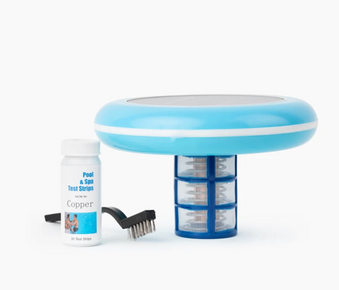
Solar pool ionizers reduce chlorine use by 85–90% — using NASA-proven copper-silver ion technology to keep your pool clean with minimal chemicals. No more weekly shock treatments. No more algaecide bills.
| Factor | Chemical Treatment | Solar Ionizer |
|---|---|---|
| Annual chemical cost | $600–$1,200+ | ~$50–$80 |
| Chlorine level needed | 1–3 ppm | 0.1–0.5 ppm |
| Skin & eye irritation | Common | Minimal |
| Ongoing effort | Weekly treatments | Set & forget |
The ionizer works alongside a small amount of chlorine — so you still shock occasionally, but far less often. Most pool owners recoup the cost within one season.
Step by Step Application Guide
Step 1: Test Your Water Chemistry
Before shocking, test your pool or spa water:
- Free Chlorine: Note current level
- Combined Chlorine: Should be below 0.5 ppm
- pH: 7.2 to 7.6 (adjust if needed before shocking)
- Total Alkalinity: 80 to 120 ppm
- Calcium Hardness: 200 to 400 ppm
Proper pH is critical for shock effectiveness. Learn about balanced pool water for optimal results.
Step 2: Calculate Your Pool or Spa Volume
Accurate dosage depends on knowing your water volume:
Rectangular Pools:
Length (ft) × Width (ft) × Average Depth (ft) × 7.5 = Gallons
Round Pools:
Diameter (ft) × Diameter (ft) × Average Depth (ft) × 5.9 = Gallons
Spas:
Check owner's manual for exact capacity (typically 200 to 600 gallons)
Example: A 20ft × 40ft pool with 5ft depth = 20 × 40 × 5 × 7.5 = 30,000 gallons
Step 3: Determine Di-Chlor Shock Dosage
Doheny's Di-Chlor Shock dosage guidelines:
Routine Shocking: Weekly Maintenance
Pools: 1 lb per 10,000 gallons
- 15,000 gallon pool: 1.5 lbs
- 20,000 gallon pool: 2 lbs
- 25,000 gallon pool: 2.5 lbs
- 30,000 gallon pool: 3 lbs
Spas: 1 to 2 oz per 250 gallons
- 300 gallon spa: 1.5 to 2.5 oz
- 400 gallon spa: 2 to 3 oz
- 500 gallon spa: 2.5 to 4 oz
Heavy Shocking: Algae, Cloudy Water, Heavy Use
Pools: 2 lbs per 10,000 gallons
Spas: Double the routine dose
Super Chlorination: Severe Problems
Pools: 3 to 4 lbs per 10,000 gallons
Spas: Triple the routine dose
Step 4: Prepare Di-Chlor Shock Solution
Proper preparation ensures safe and effective application:
- Fill a clean plastic bucket with pool or spa water (3 to 5 gallons)
- Measure the correct amount of di-chlor shock
- Slowly add shock to water (never add water to shock)
- Stir gently with a plastic or wooden stick until dissolved
- Let solution sit for 1 to 2 minutes to ensure complete dissolution
Important: Always add chemicals to water, never water to chemicals. This prevents dangerous reactions and splashing.
Step 5: Add Shock to Pool or Spa
For Pools:
- Turn on pool pump and ensure it's running
- Pour dissolved shock solution around pool perimeter
- Walk around pool, distributing evenly
- Pour near return jets for better distribution
- Brush pool surfaces after adding
- Run pump continuously for 8 to 24 hours
For Spas:
- Turn on spa jets
- Pour dissolved shock solution evenly across spa surface
- Run jets for 15 to 20 minutes to circulate
- Leave cover off for 20 to 30 minutes to allow off-gassing
- Run circulation for 8 hours minimum
Step 6: Wait Before Swimming
Allow time for chlorine levels to drop to safe levels:
- Routine shocking (1 lb per 10,000 gal): 15 minutes to 2 hours
- Heavy shocking (2 lbs per 10,000 gal): 4 to 8 hours
- Super chlorination (3 to 4 lbs): 12 to 24 hours
- Always test chlorine before swimming: must be below 5 ppm
- Ideal swimming range: 1 to 3 ppm free chlorine
Step 7: Test and Adjust
After the waiting period:
- Test free chlorine level (should be 1 to 3 ppm)
- Test pH (should be 7.2 to 7.6)
- Test combined chlorine (should be below 0.5 ppm)
- Check water clarity
- Adjust chemistry if needed
- Pool is ready for swimming once chlorine is below 5 ppm
Safety Precautions
Handling Di-Chlor Shock Safely
- Always wear gloves and safety goggles when handling
- Work in well-ventilated area
- Never mix di-chlor with other chemicals
- Add chemicals to water, never water to chemicals
- Keep away from children and pets
- Store in cool, dry place away from other chemicals
- Keep container tightly sealed
- Never use metal containers or utensils
- Wash hands thoroughly after handling
- Don't breathe dust or fumes
Storage Guidelines
- Store in original container with lid tightly closed
- Keep in cool, dry location (below 80°F)
- Store away from acids, bases, and other pool chemicals
- Keep away from heat sources and direct sunlight
- Don't store near flammable materials
- Check container regularly for damage or leaks
- Use within one year of opening for best results
Emergency Procedures
Skin Contact: Rinse immediately with plenty of water for 15 minutes. Remove contaminated clothing. Seek medical attention if irritation persists.
Eye Contact: Rinse immediately with water for 15 minutes, holding eyelids open. Seek immediate medical attention.
Inhalation: Move to fresh air immediately. If breathing is difficult, seek medical attention.
Ingestion: Do not induce vomiting. Drink water or milk. Seek immediate medical attention.
Shocking Schedule and Maintenance
Weekly Pool Shocking Routine
Best Time to Shock: Evening or night (sunlight degrades chlorine)
Weekly Schedule:
- Test water chemistry (pH, alkalinity, chlorine)
- Adjust pH to 7.2 to 7.6 if needed
- Calculate and measure shock dosage
- Dissolve shock in bucket of pool water
- Add to pool with pump running
- Run pump overnight (8 to 12 hours)
- Test chlorine next morning before swimming
Follow comprehensive weekly pool cleaning routines for best results.
Spa Shocking Routine
Frequency: After each use or weekly minimum
Spa Shocking Steps:
- Remove spa cover
- Test water chemistry
- Add shock with jets running
- Run jets for 15 to 20 minutes
- Leave cover off for 20 to 30 minutes
- Test chlorine before use (must be below 5 ppm)
- Replace cover once chlorine is safe
Seasonal Considerations
Summer: High Use
- Shock weekly without fail
- May need to shock twice weekly during peak use
- Shock after pool parties or heavy use
- Monitor chlorine levels more frequently
Spring Opening:
- Shock pool with double dose after opening
- May need multiple shock treatments for green water
- Clean filter thoroughly before and after shocking
Fall and Winter:
- Continue weekly shocking if pool remains open
- Reduce frequency to every 2 weeks if usage is minimal
- Shock before closing pool for winter
Pro Tips for Maximum Effectiveness
Expert Tips from Pool Professionals
- Shock at night: Sunlight degrades chlorine, evening shocking is most effective
- Balance pH first: Shock works best when pH is 7.2 to 7.6
- Pre-dissolve shock: Always dissolve in bucket before adding to pool
- Run pump continuously: 8 to 24 hours circulation after shocking
- Brush after shocking: Helps distribute shock and dislodge contaminants
- Clean filter before shocking: Ensures optimal circulation and filtration
- Test before swimming: Always verify chlorine is below 5 ppm
- Don't overdose: More shock doesn't mean better results
- Monitor cyanuric acid: Di-chlor adds stabilizer with each use
- Use quality tools: Employ the best pool brushes for maintenance
Avoid Common Shocking Mistakes
- Shocking during day: Sunlight reduces effectiveness
- Not pre-dissolving: Undissolved granules can bleach surfaces
- Adding shock to skimmer: Concentrated chlorine damages equipment
- Not running pump long enough: Minimum 8 hours circulation required
- Swimming too soon: Wait until chlorine drops below 5 ppm
- Ignoring pH: High pH reduces shock effectiveness by 50% or more
- Mixing with other chemicals: Never mix shock with other products
- Using old shock: Shock loses potency over time
Avoid common pool cleaning mistakes that reduce shock effectiveness.
Maximizing Shock Performance
Water Chemistry: Maintain proper balance for optimal shock performance. High pH dramatically reduces chlorine effectiveness.
Filtration: Run pump 8 to 24 hours after shocking for proper circulation and contaminant removal.
Debris Removal: Skim, brush, and vacuum before shocking to remove organic matter that consumes chlorine.
Timing: Shock in evening or at night when UV degradation is minimal and pool isn't in use.
Troubleshooting Common Issues
Problem: Water Still Cloudy After Shocking
Solutions:
- Shock again with double dose
- Lower pH to 7.2 to 7.4 before shocking
- Clean or backwash filter thoroughly
- Run pump continuously for 24 to 48 hours
- Add clarifier to help filter capture particles
- May need algaecide if algae is present
For severe cloudiness, see how to fix green pool quickly.
Problem: Strong Chlorine Smell After Shocking
Solutions:
- This indicates you need MORE shock, not less
- Shock with double or triple dose to break chloramine bond
- Test combined chlorine: should be below 0.5 ppm
- Run pump with cover off to allow off-gassing
- Continue shocking until combined chlorine is eliminated
Problem: Algae Returns Quickly After Shocking
Solutions:
- Shock dosage may have been insufficient
- Add algaecide (like No Mor Problems Algaecide or Pool RX Algaecide)
- Brush pool surfaces vigorously daily
- Maintain proper chlorine levels (1 to 3 ppm) between shockings
- Check for high phosphates (algae food source)
- Consider adding solar pool ionizer for continuous algae prevention
For mustard algae specifically, learn about treating resistant algae types.
Problem: Bleached or Damaged Pool Surfaces
Prevention:
- Always pre-dissolve shock in bucket before adding
- Never add shock directly to pool
- Brush pool after adding shock to distribute evenly
- Pour shock solution while walking around pool perimeter
Problem: Cyanuric Acid Too High
Solutions:
- Test cyanuric acid monthly
- If above 80 ppm, partially drain and refill pool (25 to 50%)
- Consider alternating with unstabilized shock (cal-hypo)
- High stabilizer reduces chlorine effectiveness
Combining Di-Chlor Shock with Solar Pool Ionizers
Di-chlor shock works well with solar pool ionization systems. Solar ionizers provide continuous algae and bacteria prevention, while periodic shocking oxidizes organic contaminants and maintains water clarity.
Benefits of the Combination
- Reduced shocking frequency: May only need to shock monthly instead of weekly
- Lower chemical costs: Use less shock throughout the season
- Superior water quality: Ionizer prevents algae while shock oxidizes contaminants
- Gentler water: Lower chlorine levels with ionizer assistance
- Continuous protection: Ionizer works 24/7 between shock treatments
Learn about what pool ionizers do and what is a solar pool ionizer.
How to Use Together
- Install solar ionizer in pool according to instructions
- Allow 48 to 72 hours for ion levels to establish
- Remove ionizer before shocking pool
- Shock pool as needed (monthly or as required)
- Wait until chlorine drops below 5 ppm
- Return ionizer to pool
- Test copper levels monthly (maintain 0.2 to 0.4 ppm)
Read our detailed guide on using a solar ionizer after shocking.
Frequently Asked Questions
How much di-chlor shock do I need for my pool?
For routine shocking, use 1 lb per 10,000 gallons. For heavy shocking (algae, cloudy water), use 2 lbs per 10,000 gallons. For super chlorination, use 3 to 4 lbs per 10,000 gallons.
How long after shocking can I swim?
Wait time depends on dosage. Routine shocking: 15 minutes to 2 hours. Heavy shocking: 4 to 8 hours. Super chlorination: 12 to 24 hours. Always test chlorine: must be below 5 ppm before swimming.
Can I use di-chlor shock in my spa?
Yes! Di-chlor is ideal for spas. Use 1 to 2 oz per 250 gallons for routine shocking. Spas can typically be used 15 to 30 minutes after shocking once chlorine drops below 5 ppm.
What's the difference between di-chlor and cal-hypo shock?
Di-chlor is pH-neutral, fast-dissolving, and contains stabilizer. Cal-hypo is unstabilized, raises pH, and is more powerful. Di-chlor allows faster swim times and is gentler on equipment.
Should I shock at night or during the day?
Always shock at night or evening. Sunlight degrades chlorine rapidly, reducing shock effectiveness. Evening shocking allows chlorine to work overnight without UV degradation.
Why does my pool smell like chlorine after shocking?
Strong chlorine smell indicates chloramines (combined chlorine), not free chlorine. This means you need MORE shock to break the chloramine bond, not less. Shock with double dose.
Can I add shock directly to my pool?
No. Always pre-dissolve shock in a bucket of pool water first. Adding shock directly can bleach surfaces and damage pool finishes. Never add shock to skimmer.
How often should I shock my pool?
Shock weekly during swim season for routine maintenance. Shock more frequently after heavy use, rain, or if water appears cloudy. With a solar ionizer, you may only need monthly shocking.
Will di-chlor shock raise my cyanuric acid?
Yes. Di-chlor contains stabilizer (cyanuric acid). Test cyanuric acid monthly. If above 80 ppm, partially drain and refill pool. Consider alternating with unstabilized shock.
Can I shock and add algaecide at the same time?
No. Shock first, wait 24 hours, then add algaecide. High chlorine levels from shocking will deactivate algaecide if added simultaneously.
Conclusion
Doheny's Chlorine Di-Chlor Shock provides effective, fast-acting oxidation and sanitization for pools and spas. Its pH-neutral formula, fast dissolution, and quick swim times make it an excellent choice for routine shocking and treating contaminated water. By following proper dosing guidelines, safety precautions, and shocking schedules, you can maintain crystal-clear, sanitized water all season long.
Key Takeaways
- Routine shocking: 1 lb per 10,000 gallons weekly
- Heavy shocking: 2 lbs per 10,000 gallons for algae or cloudy water
- Always pre-dissolve shock in bucket before adding
- Shock at night or evening for maximum effectiveness
- Balance pH to 7.2 to 7.6 before shocking
- Run pump 8 to 24 hours after shocking
- Wait until chlorine drops below 5 ppm before swimming
- Test combined chlorine: should be below 0.5 ppm
- Monitor cyanuric acid monthly (di-chlor adds stabilizer)
- Remove solar ionizer before shocking, return after chlorine drops
For enhanced pool care with reduced chemical usage, consider adding a Solar Pool Ionizer to your maintenance routine for continuous algae prevention and superior water quality.