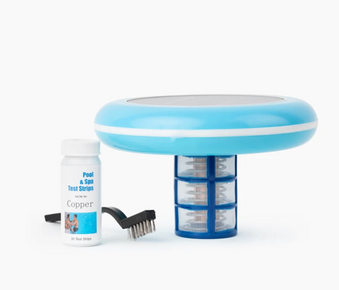
TL;DR: Proper water chemistry balance is the single most important factor in extending the lifespan of your solar pool ionizer and all connected pool equipment. Maintaining optimal pH (7.2-7.6), alkalinity (80-120 ppm), and calcium hardness (200-400 ppm) prevents electrode scaling, copper staining, and premature component failure. In 2026, smart monitoring systems and proactive balancing strategies can extend electrode life from 1-2 years to 4-6 years, while protecting pumps, heaters, and surfaces from chemical damage that drives costly replacements.
SEO Summary: Learn how balancing pool chemistry with a 2026 solar pool ionizer reduces equipment replacements. This guide covers pH control, alkalinity management, calcium scaling prevention, and electrode life extension.
Table of Contents
- The Direct Connection Between Chemistry & Equipment Life
- pH Control: The Master Variable
- Alkalinity: The pH Buffer That Protects Your Investment
- Calcium Hardness Management & Scale Prevention
- Maximizing Electrode Life Through Chemistry
- Copper Ion Control & Staining Prevention
- Phosphate Management & System Efficiency
- Smart Monitoring & Predictive Chemistry Management
- Seasonal Chemistry Strategies for Longevity
- Conclusion & Key Takeaways
The Direct Connection Between Chemistry & Equipment Life
Pool equipment replacement is expensive. A new pump costs $500-$1,200, a heater $1,500-$3,000, and a full pool liner or plaster refinishing $3,000-$7,000. Yet most pool owners don't realize that these premature replacements are often directly caused by improper water chemistry not normal wear and tear. Solar pool ionizers are gentler on equipment than traditional chlorine systems, but they still require proper water balance to deliver their full longevity benefits.
The chemistry-equipment connection operates through three primary damage mechanisms:
- Corrosion: Low pH or low alkalinity creates acidic water that aggressively dissolves metal components, etches plaster, and degrades seals and gaskets.
- Scaling: High pH or high calcium hardness causes mineral deposits that insulate heaters, clog filters, and create rough surfaces that harbor bacteria.
- Staining: Improperly balanced water allows copper ions from your ionizer to precipitate out of solution, creating unsightly stains on pool surfaces that may require expensive professional treatment.
When you maintain proper chemistry, your solar ionizer not only works more effectively but actively protects your equipment investment. The system's gentle, non-corrosive sanitation eliminates the chemical assault that destroys traditional pool components, while proper balancing prevents the scale and stain issues that plague even well-maintained ionizer systems. Understanding this relationship is the first step toward reducing replacements across your entire pool system. For a comprehensive overview of how solar ionizers change maintenance, see our chemical-free maintenance guide.
pH Control: The Master Variable
pH is the single most important chemical parameter affecting both your ionizer's performance and your equipment's lifespan. It measures how acidic or basic your pool water is on a scale of 0-14, with 7.2-7.6 being the ideal range for ionized pools. When pH drifts outside this range, multiple problems emerge that directly lead to equipment failure and premature replacement.
Low pH (Below 7.2): Corrosive Destruction
- Metal Component Damage: Acidic water aggressively attacks copper heat exchangers in heaters, pump impellers, ladder anchors, and light fixtures. A pH of 6.8 is approximately 250% more corrosive than pH 7.5.
- Plaster and Grout Etching: Low pH dissolves calcium from plaster surfaces, creating rough, porous finishes that stain easily and require premature resurfacing.
- Seal and Gasket Deterioration: O-rings, pump seals, and gaskets soften and fail faster in acidic water, leading to leaks and mechanical failures.
- Electrode Accelerated Wear: While some ionizers benefit from slightly lower pH, excessive acidity causes overly rapid copper release, depleting electrodes in months rather than years.
High pH (Above 7.8): Scale Formation
- Heater Insulation: Calcium carbonate scale deposits on heat exchanger surfaces act as thermal insulation, forcing heaters to run longer and hotter to achieve desired temperatures. Scale of just 1/16 inch can reduce heating efficiency by 20-30%.
- Filter Clogging: Precipitated minerals clog filter media, increasing pressure, reducing flow, and requiring more frequent cleaning and earlier replacement.
- Electrode Insulation: Scale coats ionizer electrodes, dramatically reducing ion output and forcing the system to work harder to maintain sanitation.
- Water Cloudiness: High pH causes calcium precipitation that creates persistent cloudiness, leading owners to run pumps longer accelerating wear.
The 2026 pH Management Strategy: Test pH weekly using a reliable digital meter or high-quality liquid test kit. Adjust with muriatic acid to lower pH or aeration to raise pH naturally. In ionized pools, pH tends to be remarkably stable one of the system's greatest advantages but weekly verification remains essential. For deeper insights into how pH affects your specific system components, read our analysis of how chemistry affects replacement schedules.
Alkalinity: The pH Buffer That Protects Your Investment
Total Alkalinity (TA) measures the water's ability to resist pH changes essentially, its buffering capacity. Proper alkalinity prevents the pH swings that damage equipment and shorten component life. For solar-ionized pools, the ideal TA range is 80-120 ppm, though some pools perform better at slightly lower levels (70-90 ppm).
Low Alkalinity (Below 80 ppm): pH Instability
- pH Bounce: Water with insufficient buffering capacity experiences wild pH swings from small chemical additions or environmental factors like rain or bather load.
- Corrosion Acceleration: These pH swings frequently dip into corrosive territory, accelerating metal degradation and surface etching.
- Inconsistent Sanitation: Fluctuating pH affects copper ion solubility, creating periods of under-sanitation followed by over-correction.
High Alkalinity (Above 120 ppm): pH Drift
- Constant pH Rise: Excessively buffered water resists pH reduction, causing perpetual upward drift that keeps pH in the scaling range.
- Acid Overuse: Owners fighting high alkalinity add excessive acid, increasing chemical costs and total dissolved solids that eventually necessitate water replacement.
- Scale Persistence: Despite acid additions, pH remains high enough to promote ongoing scale formation on equipment.
The 2026 Alkalinity Management Strategy: Test TA monthly. To raise alkalinity, add sodium bicarbonate (baking soda). To lower alkalinity, add muriatic acid while aggressively aerating the water. The aeration drives off carbon dioxide, allowing pH to stabilize at lower TA levels without becoming corrosive. This technique is particularly important for ionized pools, where stable chemistry directly translates to extended equipment life. For maintenance scheduling guidance, see our article on solar ionizer cleaning frequency.
Calcium Hardness Management & Scale Prevention
Calcium hardness measures the concentration of dissolved calcium in your pool water. While some calcium is necessary to prevent water from becoming aggressive and leaching calcium from plaster surfaces, excessive calcium leads directly to the scale deposits that destroy heater efficiency and shorten equipment life.
Low Calcium (Below 200 ppm): Water Aggression
- Plaster Etching: Soft water aggressively dissolves calcium from plaster surfaces, creating pitting, roughness, and premature aging.
- Metal Corrosion: Under-saturated water seeks calcium from any available source, including heater exchangers and metal fittings.
- Surface Staining: Etched plaster surfaces are more porous and prone to absorbing copper ions, creating permanent staining.
High Calcium (Above 400 ppm): Scale Formation
- Heater Failure: Scale accumulation on heat exchangers causes overheating, pressure buildup, and premature heater failure often within 3-5 years instead of 8-12.
- Electrode Scaling: Calcium carbonate coats ionizer electrodes, reducing ion output and forcing the system to operate at higher power to compensate.
- Filter Restriction: Scale crystals clog filter media, increasing pressure and reducing flow efficiency.
- Surface Roughness: Scale deposits create rough surfaces that trap debris and harbor algae, increasing sanitation demands.
The 2026 Calcium Management Strategy: Test calcium hardness quarterly. For low calcium, add calcium chloride increaser. For high calcium, partial drain and dilution is the only practical solution prevention through source water management is critical. In areas with naturally hard water, consider using a hose-end softener when filling or topping off. Maintaining calcium in the 200-300 ppm range provides adequate plaster protection while minimizing scale risk. This balanced approach is essential for the longevity of both your ionizer and your entire pool system, as explored in our complete pool strategy guide.
Maximizing Electrode Life Through Chemistry
The electrode cartridge is the only consumable component in your solar ionizer system, and proper chemistry management can extend its life from 1-2 years to 4-6 year a 200-300% improvement. Given that replacement cartridges cost $80-$150, this represents significant long-term savings.
Chemical Factors Affecting Electrode Life:
- pH Balance (Critical): Optimal pH (7.2-7.6) provides ideal conditions for controlled, even copper release. Low pH accelerates release, depleting electrodes rapidly. High pH slows release but causes scaling that insulates electrodes and reduces efficiency.
- Calcium Control (Essential): Calcium scale physically coats electrode surfaces, reducing the effective surface area for ion generation. Even thin scale layers can reduce output by 30-50%, causing the system to run longer and consume electrodes faster.
- Phosphate Levels (Important): High phosphates increase biological demand, requiring higher ion output and accelerating electrode consumption.
- Water Temperature (Influential): Warmer water accelerates both biological activity and electrochemical reactions, increasing electrode wear. Some advanced systems automatically adjust output based on temperature to optimize electrode life.
The 2026 Electrode Life Extension Protocol:
- Maintain pH at 7.4-7.6 the ideal balance between release rate and scale prevention.
- Keep calcium hardness below 300 ppm to minimize scaling potential.
- Test and manage phosphates quarterly, treating when levels exceed 500 ppb.
- Clean electrodes only when visual inspection confirms significant scale buildup excessive cleaning accelerates mechanical wear.
- Monitor copper levels weekly during peak season and adjust output to maintain 0.2-0.4 ppm rather than running at maximum output.
Following this protocol typically extends electrode life well beyond manufacturer estimates. Many 2026 ionizer owners report 4-5 seasons on a single cartridge with consistent water quality. For more on this topic, read our specialized guide on copper testing and troubleshooting.
Copper Ion Control & Staining Prevention
Copper ions are your pool's primary defense against algae, but uncontrolled copper leads to staining—a problem that often requires expensive professional treatment or even surface replacement. Proper chemistry management prevents staining while maintaining effective sanitation.
The Chemistry of Copper Staining:
- pH Relationship: Copper remains soluble and effective at pH below 7.8. As pH rises above 7.8, copper begins to precipitate out of solution, forming copper hydroxide that deposits on pool surfaces.
- Oxidation State: Free chlorine oxidizes copper ions, causing them to precipitate more readily. In ionized pools with minimal chlorine, staining risk is naturally lower.
- Surface Affinity: Etched or rough plaster surfaces have more surface area and more binding sites for copper deposition.
- Concentration Threshold: Maintaining copper between 0.2-0.4 ppm provides effective sanitation while keeping concentrations below staining thresholds.
The 2026 Copper Control Protocol:
- Weekly Testing: Use high-quality copper test strips or a digital copper meter to verify levels remain in target range.
- Output Adjustment: Adjust ionizer output based on test results rather than seasonal guesses. If copper exceeds 0.5 ppm, reduce output immediately.
- pH Vigilance: Never allow pH to exceed 7.8 when copper is present above 0.2 ppm.
- Sequestering Agent Strategy: In pools with existing staining risk or naturally high copper levels, use a sequestering agent specifically formulated for copper. Apply only when needed, as these agents break down over time and require reapplication.
- Drain Considerations: When partially draining for calcium reduction, test copper levels afterward and adjust output dilution can reduce copper below effective levels.
Proper copper management not only prevents unsightly stains but also ensures your ionizer operates at peak efficiency. Overly high copper levels don't improve sanitation they just waste electrode material and create staining risk. For comprehensive troubleshooting of copper-related issues, consult our complete guide to copper staining prevention.
Phosphate Management & System Efficiency
Phosphates are a critical but often overlooked factor in both water quality and equipment longevity. These nutrients enter pools through fertilizers, lawn chemicals, tap water, and even airborne dust. While phosphates don't directly damage equipment, they create conditions that force your ionizer and filtration system to work much harder.
How Phosphates Increase Equipment Wear:
- Algae Food Supply: Phosphates are the primary food source for algae. High phosphate levels (above 500-1000 ppb) allow algae to thrive despite adequate copper levels.
- Increased Ion Demand: To combat phosphate-fed algae, your ionizer must produce more copper ions, accelerating electrode depletion.
- Extended Pump Runtime: Algae outbreaks require extended filtration and additional treatment cycles, adding hours of operation to your pump and increasing mechanical wear.
- Additional Chemical Treatments: Severe phosphate problems may require algaecides or phosphate removers additional chemicals that add to total dissolved solids and may eventually require water replacement.
The 2026 Phosphate Management Strategy:
- Test Quarterly: Use a phosphate test kit designed for pool water. Natural levels vary regionally, but any reading above 500 ppb warrants attention.
- Preventive Treatment: Apply phosphate remover at season opening in high-risk areas, regardless of test results. This proactive approach prevents problems before they force system overwork.
- Source Control: Rinse pool toys and floats before introducing them to the pool, minimize nearby fertilizer use, and consider a pre-filter on garden hoses used for topping off.
- Post-Bloom Protocol: After any algae treatment, always test and address phosphates. Algae consume phosphates as they grow, then release them back into the water when killed, creating a food source for the next bloom.
Effective phosphate management is one of the highest-ROI activities in reducing equipment replacement costs. The $20-$40 annual investment in phosphate remover can extend electrode life by 1-2 years and significantly reduce pump runtime. This proactive approach aligns with the efficiency principles in our guide to smarter pool ownership.
Smart Monitoring & Predictive Chemistry Management
In 2026, the most effective chemistry management for reducing replacements involves smart monitoring systems that track parameters continuously and alert owners before problems develop. These systems transform reactive chemistry adjustment into predictive maintenance, preventing the conditions that lead to equipment damage.
Available Monitoring Technologies:
- Continuous pH/ORP Monitors: Inline sensors that provide real-time pH readings and alert you to dangerous drift. Some models can automatically dose acid or carbon dioxide to maintain ideal pH.
- Connected Copper Testers: Digital meters that log copper readings and track trends, predicting when electrodes will need replacement based on consumption rates.
- Flow and Pressure Sensors: Monitor filter performance and alert you to increasing pressure that indicates scale buildup or filter loading.
- Integrated Automation Platforms: Systems that combine data from multiple sensors, identify correlation patterns, and recommend specific chemistry adjustments.
The Predictive Chemistry Advantage:
- Early Warning: Receive alerts when pH is trending upward before it reaches the corrosive or scaling range.
- Trend Analysis: Identify patterns in your water chemistry such as consistent pH rise after certain activities and address root causes.
- Consumption Forecasting: Predict electrode replacement needs within weeks rather than discovering failure when water clarity declines.
- Remote Management: Monitor chemistry while traveling and arrange for adjustments before returning home.
While smart monitoring systems represent an initial investment ($300-$800 for comprehensive setups), they typically pay for themselves within 2-3 years through extended equipment life and reduced chemical waste. For pools with expensive equipment or owners seeking maximum longevity, these systems are increasingly considered essential rather than optional. For more on integrating these technologies, see our guide on modern pool system integration.
Seasonal Chemistry Strategies for Longevity
Equipment replacement risk varies significantly by season, and adjusting your chemistry strategy accordingly can substantially extend component life. The 2026 approach to seasonal chemistry management recognizes that different seasons present different challenges.
Spring Opening Strategy:
- Test calcium hardness and address before full heating season begins once water warms, calcium scaling accelerates dramatically.
- Verify phosphate levels and treat if elevated before algae season begins.
- Inspect electrodes and clean if significant scale is visible from the previous season.
- Begin with ionizer output at 70-80% of expected summer setting, then adjust upward based on copper testing.
Summer Peak Strategy:
- Increase testing frequency to weekly as water temperature rises and bather load increases.
- Pay special attention to pH, which tends to rise faster in warm water with heavy use.
- Monitor copper levels more frequently higher temperatures increase both biological demand and copper release rates.
- Consider running pump during cooler morning hours to reduce heat input to water while maintaining circulation.
Fall Transition Strategy:
- As water temperature drops below 60°F, gradually reduce ionizer output to match reduced biological activity.
- Address any accumulated scale on electrodes before winter storage.
- Test calcium hardness and adjust if necessary—cold water can hold less calcium in solution, increasing precipitation risk.
Winter Protection Strategy:
- In freeze zones, properly winterize the ionizer chamber to prevent ice damage.
- Remove and store electrodes indoors in climate-controlled space to prevent degradation.
- Cover or store solar panel to protect from snow and ice damage.
This seasonal approach recognizes that optimal chemistry isn't a single target but a range that shifts with environmental conditions. By adjusting your strategy throughout the year, you maximize protection during demanding periods while reducing wear during low-demand seasons. For comprehensive seasonal guidance, reference our step-by-step pool care workflow.
Conclusion & Key Takeaways
Balancing pool chemistry is not merely about water clarity it is a direct investment in equipment longevity and replacement cost avoidance. Every pH test, every alkalinity adjustment, and every calcium hardness measurement translates into extended life for your ionizer electrodes, pump, heater, filter, and pool surfaces. Solar pool ionizers provide the ideal foundation for this chemistry management because they eliminate the aggressive chemical environment that accelerates equipment destruction in traditional pools. However, they still require attentive chemistry management to deliver their full longevity benefits.
The 2026 approach to pool chemistry is proactive, data-driven, and seasonal. It recognizes that preventing chemistry problems is far less expensive than replacing equipment damaged by unbalanced water. With proper chemistry management, your solar ionizer system can deliver 5-7 years of electrode life, 12-15 years of pump and heater operation, and 20+ years of pool surface life far exceeding industry averages.
Key Takeaways
- pH Control Is Paramount: Maintain pH at 7.2-7.6 to prevent both corrosion (low pH) and scaling (high pH) that destroy equipment and shorten component life.
- Alkalinity Stabilizes Everything: Keep total alkalinity at 80-120 ppm to prevent pH bounce and reduce the chemical adjustments that increase total dissolved solids.
- Calcium Management Prevents Scale: Maintain calcium hardness at 200-300 ppm to protect plaster while minimizing the scale that insulates heaters and coats electrodes.
- Electrode Life Extension: Proper chemistry can extend electrode life from 1-2 years to 4-6 years, saving $80-$150 per replacement cycle.
- Copper Control Prevents Staining: Maintain copper at 0.2-0.4 ppm and pH below 7.8 to prevent the staining that requires expensive professional remediation.
- Phosphate Management Reduces Wear: Keep phosphates below 500 ppb to prevent the algae outbreaks that force extended pump runtime and increased ion production.
- Smart Monitoring Enables Prediction: Continuous chemistry monitoring transforms reactive adjustment into predictive maintenance, preventing problems before they damage equipment.
- Seasonal Strategies Optimize Protection: Adjust chemistry targets and testing frequency seasonally to match changing environmental conditions and equipment demands.
The financial case for diligent chemistry management is undeniable. Every hour spent testing and adjusting water chemistry delivers returns through extended equipment life, reduced replacement costs, lower chemical consumption, and consistent water quality. In 2026, the most cost-effective pool owners aren't those who spend the least on chemicals they're those who invest the right effort in chemistry management to maximize the lifespan of every component in their pool system.